Installation guide
 Owner’s manual
 Error Codes


How to fix f11 Whirlpool dishwasher?
On a Whirlpool WDF110PABB5 dishwasher, an F11-style fault is typically handled by resetting power and then correcting the most common causes: a drain problem, a fill problem, or a control that is not completing the cycle. Start with a reset, then check draining and filling basics.
Step 1: Reset the dishwasher (quickest first)
- Turn the dishwasher off at the breaker (or unplug it) for 1 minute.
- Restore power.
- Start a short cycle and listen for drain, then fill.
- If the unit will not run, follow the reset steps in the WDF110PABB5 owner’s manual.
Step 2: Check the two most common root causes
Most “won’t complete cycle” faults come from either not draining or not filling.
- Not draining: Check the sink air gap (if you have one) and the drain path for blockage.
- Not filling: Confirm the water supply valve under the sink is fully open.
- Kinked/looped hose: Make sure the drain hose is not kinked and is routed correctly.
- Standing water: After starting a cycle, there should be some water in the bottom of the tub shortly after fill begins.
Quick symptom guide
| What you notice | Most likely area to check first | Common fix |
|---|---|---|
| Water left in tub | Drain path or drain pump | Clear blockage; replace pump if weak |
| No water entering | Water inlet valve or supply | Open supply; replace valve if not opening |
| Hums but no movement | Pump obstruction | Clear debris; inspect pump |
Parts that commonly solve drain or fill-related faults
If checks point to a failed component, these are common replacements for this model:
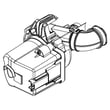
- Dishwasher drain pump W10876537 (drain-out problems)
- Dishwasher water inlet valve W11175771 (no/low fill)
Why it matters
When the dishwasher cannot drain or fill correctly, the control can stop the cycle to prevent poor washing results and to protect the motor and heater from running under the wrong conditions.
Last updated: February 2026
How to replace door gasket on a Whirlpool dishwasher?
To replace the door gasket on your Whirlpool dishwasher model WDF110PABB5, we remove the old seal from the tub channel and press the new gasket in evenly, making sure the shaped lip faces toward the center of the tub so the door seals without leaks. See the WDF110PABB5 owner’s manual for gasket placement details.
Before you start (safety and prep)
- Turn off power at the breaker; do not work around live wiring.
- Let the dishwasher cool completely if it was recently run.
- Open the door and remove the lower rack for easier access.
- Wipe the tub rim clean so the new gasket seats fully.
- If the old gasket is brittle, pull slowly to avoid leaving pieces behind.
Steps to replace the door gasket
- Open the door fully and locate the gasket pressed into the tub’s perimeter channel.
- Starting at a top corner, pull the old gasket straight out of the channel.
- Clean the channel with a damp cloth; remove soap film and debris.
- Press the new gasket into the channel starting at the top center, working down both sides.
- Keep the gasket relaxed (do not stretch it); stretching can cause gaps later.
- Confirm the gasket’s formed lip is oriented toward the center of the tub.
- Close the door and check for even contact all the way around.
Quick checks after installation
| What to check | What “good” looks like | If it’s not right |
|---|---|---|
| Door closing feel | Firm, even resistance | Reseat gasket; look for twists |
| Corners | No puckers or gaps | Start over from top center |
| First wash | No drips at bottom corners | Verify lip orientation; inspect channel |
Why it matters
A properly seated door gasket keeps wash water inside the tub, protects the door insulation and wiring area, and helps your WDF110PABB5 maintain normal wash pressure for better cleaning.
Last updated: February 2026
What is the average lifespan of a Whirlpool dishwasher?
A Whirlpool dishwasher typically lasts 10 to 12 years. For your Whirlpool WDF110PABB5, regular cleaning, correct detergent use, and keeping the filter system clear are the biggest factors that help you reach (or beat) that average; see the WDF110PABB5 user manual for the recommended care routine.
What affects lifespan the most
A dishwasher’s service life is usually determined by heat, water quality, and how hard the wash system works each cycle.
- Hard water and low rinse aid use can increase mineral buildup and strain performance
- Skipping monthly cleaning can leave residue that reduces wash efficiency over time
- Frequent heavy loads and long cycles add wear to pumps, seals, and the heating system
- Poor draining (clogs, air gap issues) can lead to repeated stress on the drain system
- Small leaks can damage components if not corrected quickly
Maintenance that extends life (high impact)
The WDF110PABB5 is designed for energy-efficient operation, which often means longer cycles; good maintenance keeps those long cycles from turning into extra wear.
- Use rinse aid consistently for better drying and to reduce hard-water deposits
- Clean the interior monthly with a dishwasher cleaning product (per the manual guidance)
- Check and clean the filter area regularly so water flow stays strong
- If draining is slow, check and clean the drain air gap (if your setup has one)
- Before vacations or long periods without use, shut off water and power to the dishwasher
Common “end-of-life” symptoms and likely systems involved
| Symptom | What it often points to | Example part for this model (when applicable) |
|---|---|---|
| Dishes not drying well | Rinse aid use, heating performance | Element assembly W10518394 |
| Not draining | Drain path restriction, drain pump issue | Dishwasher drain pump W10876537 |
| Not filling or fills slowly | Water supply, inlet valve | Dishwasher water inlet valve W11175771 |
| Poor cleaning | Filter restriction, circulation issues | Dishwasher filter WPW10463906 |
Why it matters
Knowing the 10 to 12 year average helps you decide whether to repair or replace. If your WDF110PABB5 is within that window, routine maintenance and targeted part replacement (like a drain pump, inlet valve, or heater) often restores reliable performance.
Last updated: February 2026
What is the code for a leak in a Whirlpool dishwasher?
On the Whirlpool WDF110PABB5 dishwasher, a leak is commonly indicated by an F2-type fault (often shown as F2/E2 on some Whirlpool platforms). This code points to water detected where it should not be, so the next step is to remove the water from the base and locate the source of the leak.
What to do right away
- Cancel the cycle and keep the door closed for a minute to stop active filling.
- Shut off the water supply to the dishwasher.
- Turn off power at the breaker before inspecting underneath.
- Dry the base pan area (if accessible) so you can confirm where fresh water appears.
- Use the WDF110PABB5 user guide for the exact key sequence and indicator behavior for your control panel.
Most common leak sources to check
- Water inlet connection or valve seepage (look for drips during fill); consider the dishwasher water inlet valve W11175771.
- Drain hose or clamp leaks (especially at the sink/disposer connection).
- Pump or sump seals (slow leaks often show as mineral trails).
- Door seal or door alignment (leaks at the corners during wash).
- Over-sudsing from wrong detergent (can mimic a leak by pushing water past seals).
Quick symptom-to-check table
| When you see water | Most likely area | What to look for |
|---|---|---|
| Only during fill | Inlet valve, supply fitting | Drips at valve body or compression fitting |
| Mid-cycle spraying | Door seal, tub edge | Wet corners, warped seal, misleveling |
| End of cycle / drain | Drain hose, drain pump | Wet hose joints, pump weep |
Why it matters
A true leak can trigger the float or leak-detection logic, stop the cycle, and protect your kitchen from water damage. Drying the base and then watching for the first return of water is the fastest way to pinpoint the failing part.
Last updated: February 2026
What's the most common problem with a Whirlpool dishwasher?
The most common Whirlpool dishwasher problem is poor draining caused by a clogged filter area, a blocked drain path (including the air gap, if you have one), or a failing drain pump. On the Whirlpool WDF110PABB5, regular filter cleaning and checking the drain air gap prevents many “won’t drain” complaints; see the WDF110PABB5 owner’s manual.
Most common symptoms and what they usually mean
- Water left in the bottom: filter/sump debris, drain hose restriction, air gap clog, or drain pump issue
- Stops mid-cycle: door not fully latched, cycle pauses (normal on some cycles), or power interruption
- Clean light flashing: often tied to a condition the unit wants you to correct (for example, float movement)
- Poor cleaning: low water fill, blocked spray action, or heavy residue buildup
- White film or spots: detergent residue and hard-water minerals; needs cleaning and rinse aid
Quick checks we recommend first (fast, high success rate)
- Clean the filters and make sure the upper filter locks fully in place (it should not spin freely when seated).
- Check the drain air gap (if installed) and clear any blockage.
- Confirm the water shutoff valve is on and the dishwasher is filling normally.
- Verify power at the breaker or fuse if the dishwasher will not run.
- Run monthly cleaning to reduce residue that can affect performance.
Common causes vs. likely fix (at a glance)
| What you notice | Most common cause | Typical fix |
|---|---|---|
| Standing water after cycle | Clogged filter or drain path | Clean filters; clear air gap; inspect drain hose routing |
| Hums but won’t drain | Drain pump struggling | Check for obstruction; replace dishwasher drain pump W10876537 if needed |
| Dishes not getting clean | Low fill or weak wash action | Check fill; consider dishwasher water inlet valve W11175771 if fill is poor |
| White residue inside/tub | Detergent and mineral buildup | Use a dishwasher cleaner monthly; use rinse aid |
Why it matters
Drain and filter restrictions force the dishwasher to recirculate dirty water, which leads to odor, poor cleaning, longer cycle times, and extra strain on the pump and motor.
Last updated: February 2026