





Is a higher mph or CFM better for a leaf blower?
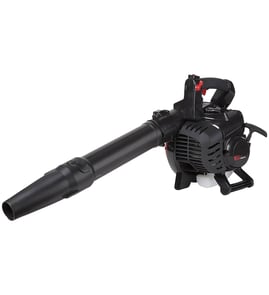
For the Craftsman 358794743 gas leaf blower, higher CFM is better for moving lots of dry leaves fast, while higher MPH is better for breaking loose wet, stuck, or heavier debris. The best choice depends on whether you need more “volume” (CFM) or more “punch” (MPH).
Quick guide: what each rating does
- CFM (cubic feet per minute): how much air the blower moves; best for clearing wide areas quickly.
- MPH (miles per hour): how fast the air exits the nozzle; best for stubborn debris.
- High CFM + a wide nozzle: efficient for piles of dry leaves.
- High MPH + a narrow nozzle: better for wet leaves, gravel, and debris in cracks.
- Technique matters: sweeping side-to-side and working with the wind often beats raw numbers.
Which should you prioritize?
| Your cleanup job | Prioritize | Why |
|---|---|---|
| Large lawn, dry leaves | Higher CFM | Moves more material per pass |
| Wet leaves, matted grass | Higher MPH | Lifts and dislodges stuck debris |
| Mulch beds, tight corners | Higher MPH | More control and targeted force |
| General weekly cleanup | Balanced CFM and MPH | Versatility across conditions |
How to get more “MPH feel” from the same blower
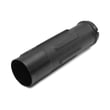
A nozzle change can make airflow feel more focused (often improving control on stubborn debris).
- Inspect the tube and nozzle for cracks or loose fit
- Make sure the tube sections lock together tightly
- Consider using a narrower nozzle when you need more precision
Helpful model-matched part:
Why it matters
Choosing the right rating saves time and reduces strain on the engine because you are using the airflow that matches the job. For example, chasing wet leaves with low MPH usually takes longer than stepping up to a more focused nozzle and using controlled bursts.
Last updated: February 2026
What is the life expectancy of a gas leaf blower?
A gas leaf blower typically lasts about 10 years with normal homeowner use and basic maintenance. For the Craftsman 358794743 gas leaf blower, keeping the fuel system clean and replacing wear items on time is what most directly determines how long it runs reliably.
What affects lifespan the most
- Fuel quality and storage: fresh, properly mixed fuel (for 2-cycle engines) and draining or stabilizing fuel before storage
- Airflow and cooling: keeping the air intake and cooling fins clear of debris
- Ignition and starting system condition: good switch, spark, and starter components
- Fuel system wear: cracked fuel lines, hardened primer bulb, or carburetor varnish
- Operating habits: avoiding long wide-open runs when airflow is restricted
Maintenance schedule (simple and realistic)
| Task | Typical interval | What it prevents |
|---|---|---|
| Inspect fuel lines and primer bulb | Every season | Air leaks, hard starting, stalling |
| Clean air intake areas | Every use | Overheating, power loss |
| Check fasteners and tubes/nozzles | Every season | Vibration damage, poor airflow |
| Run dry or stabilize fuel for storage | End of season | Carburetor clogging |
Parts that commonly extend blower life
If your blower starts getting hard to start or won’t stay running, these are common, high-impact fixes:
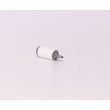
- Replace a cracked or soft fuel line such as ayp lawn & garden equipment fuel line, large 530069216
- Replace a stiff or leaking primer bulb such as ayp leaf blower primer bulb 530035497
- If fuel delivery is still inconsistent, inspect the carb mounting and consider the ayp lawn blower carburetor adapter 545084901
Why it matters
Most “worn out” gas blowers are actually suffering from fuel system air leaks or old-fuel carburetor buildup. Addressing those early usually restores starting and power, and helps your Craftsman 358794743 reach the full 10-year lifespan.
Last updated: February 2026
How to find Craftsman leaf blower model number?
On a Craftsman gas leaf blower, the model number is printed on the product ID label; for model 358794743, that label is typically on the engine housing (often on the side), or on the rear or underside of the unit.
Where to look on the blower
Check these common label locations first:
- Side of the engine/motor casing near the starter housing
- Rear of the blower body near the handle
- Underside of the housing (you may need to tip the unit)
- Near the fuel tank area (on the plastic shroud)
- Around the fan housing or intake cover
What the model number looks like
For Craftsman handheld blowers, the model number is usually a string of numbers (often 8 to 10 digits). For this page, the model is 358794743.
| What to find | Example | Why you need it |
|---|---|---|
| Model number | 358794743 | Ensures diagrams and parts match your exact blower |
| Part name | Primer bulb, fuel line, switch | Helps narrow the correct repair part |
| Part ID | 530035497, 530069216 | Confirms the exact replacement item |
If the label is missing or unreadable
Use these practical workarounds:
- Compare your blower to parts diagrams by matching a distinctive part (like the primer bulb or nozzle)
- If you are replacing fuel system parts, match by size and routing (large vs small fuel line)
- Start with the most commonly replaced items for this model, such as the ayp leaf blower primer bulb 530035497 or the ayp lawn & garden equipment fuel line, large 530069216
Why it matters
Craftsman blowers can look similar across multiple series, but small differences in the carburetor, fuel line routing, or start/stop switch can change the correct part. Using the exact model number prevents wrong-part returns and repeat repairs.
Last updated: February 2026
Who makes Craftsman leaf blowers?
Craftsman is a brand owned by Stanley Black & Decker; Craftsman leaf blowers are manufactured for the Craftsman brand by various suppliers depending on the specific model and production run. For Craftsman model 358794743, we recommend matching parts by the model number and the exact part ID to ensure proper fit.
What this means for parts and repairs
Even when the “maker” varies, parts selection stays straightforward when you use the model number and the correct replacement part listing.
- Use the full model number 358794743 when searching parts
- Match by part ID and part name, not just a description like “fuel line”
- Replace common wear items first (primer bulb, fuel line, switch)
- Use fresh, properly mixed fuel (2-cycle engines) to reduce hard-start issues
- Inspect air leaks in fuel lines and carb connections before replacing major assemblies
Common parts customers replace on model 358794743
These are examples of model-matched parts that often solve starting, running, or performance problems:
| Symptom | Likely part to check | Example model-matched part |
|---|---|---|
| Hard starting, won’t prime | Primer bulb | Ayp leaf blower primer bulb 530035497 |
| Starts then stalls, fuel smell, cracked line | Fuel line | Ayp lawn & garden equipment fuel line, large 530069216 |
| No start, intermittent shutoff | Start/stop switch | Craftsman, poulan leaf blower start/stop switch kit 545081830 |
Why it matters
Craftsman branding can span multiple manufacturers over time, so the safest way to get the right blower parts is to rely on the model number 358794743 and the exact part ID (for example, a primer bulb or fuel line) rather than the brand name alone.
Last updated: February 2026
Why does my leaf blower run for 5 minutes then dies?
When a Craftsman leaf blower model 358794743 runs for a few minutes and then dies, the most common cause is fuel delivery breaking down as the engine warms up. We focus first on stale fuel, restricted fuel lines, a failing primer bulb, or a carburetor that is partially clogged.
Quick checks that fix most “runs then dies” problems
- Drain old fuel and refill with fresh, properly mixed fuel (2-cycle mix) and a clean container.
- Loosen the fuel cap slightly and test; a plugged cap vent can create vacuum in the tank.
- Inspect the fuel lines for cracks, soft spots, or loose connections; replace if questionable.
- Check the primer bulb for cracks or a bulb that will not refill; replace if it stays collapsed.
- Verify the choke is fully off after starting; a partially closed choke can flood the engine after warm-up.
Parts that commonly solve fuel starvation on this model
If the blower starts strong and then fades out, these parts are frequent fixes:
- Ayp lawn & garden equipment fuel line, large 530069216
- Ayp leaf blower primer bulb 530035497
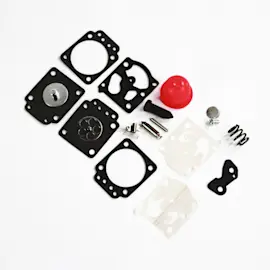
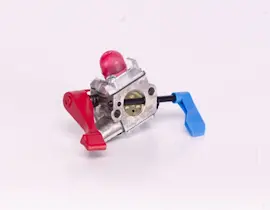
- Ayp lawn and garden equipment engine carburetor assembly 501092801
What the symptoms usually mean
| Symptom after 3 to 10 minutes | Most likely cause | What to do next |
|---|---|---|
| Engine slowly loses power, then quits | Fuel restriction (line, filter in tank, cap vent) | Replace fuel line, check cap vent, confirm fuel pickup/filter is not blocked |
| Quits suddenly like the switch was turned off | Ignition heat failure or switch/wiring issue | Inspect stop switch and wiring; test spark when hot |
| Runs only with partial choke | Carburetor metering issue or air leak | Clean/rebuild carburetor or replace carburetor assembly |
Why it matters
A blower that dies after warming up is usually running lean (not enough fuel) or losing spark when hot. Running lean can overheat the engine and damage internal parts, so it is best to correct the fuel delivery issue before extended use.
Last updated: February 2026