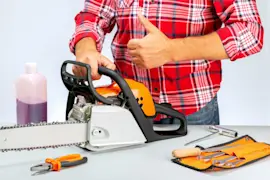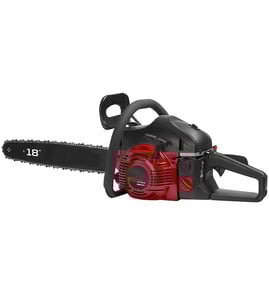

Are McCulloch chainsaws good quality?
Yes. Mcculloch gas chainsaws deliver solid cutting performance and durability when they are maintained correctly; for the MAC model shown here, day-to-day “quality” depends most on chain sharpness, correct fuel mix, clean airflow, and consistent bar-and-chain lubrication.
What “good quality” looks like in real use
- Starts reliably hot and cold
- Idles smoothly and accelerates without bogging
- Holds chain tension and cuts straight with a sharp chain
- Oils the bar consistently (no dry chain)
- Feels controllable with manageable vibration
Quick checks before blaming the saw
Many performance complaints come from fuel, chain condition, or basic setup.
| Symptom | Most common cause | First fix |
|---|---|---|
| Hard starting | Old fuel, wrong 2-cycle mix, fouled plug | Refresh fuel mix; inspect/replace spark plug |
| Bogging in the cut | Dull chain, clogged air filter | Sharpen/replace chain; clean air filter |
| Chain not oiling | Empty oil tank, clogged bar oil holes | Fill bar oil; clean bar groove and holes |
| Crooked cutting | Uneven cutter filing, worn bar rails | File evenly; flip/inspect bar |
Maintenance that protects durability
- Use fresh fuel with the correct 2-cycle oil mix
- Keep the chain sharp; touch up often
- Set chain tension snug (still moves by hand with gloves)
- Clean the air filter regularly
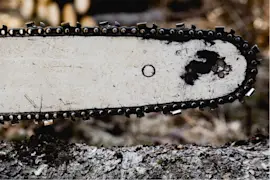
- Clean the bar groove and oil holes; flip the bar periodically
Why it matters
A sharp, properly oiled chain reduces kickback risk, cuts faster, and lowers engine load; that directly extends the life of the clutch, sprocket, bar, and engine.
Parts and model match tip
Match parts to the exact identification on your saw. If you need help finding the model tag so you can choose the correct chain, bar, or fuel-system parts, use how to find your appliance model number (and what it means for parts). For ordering, start with the parts list for this model, or search by model on Sears PartsDirect.
Last updated: February 2026
How do I know what model McCulloch chainsaw I have?
To identify your Mcculloch chainsaw model, we look for the model identification stamp on the saw itself, then match that exact model number to a parts list. For this page, the model number shown is MAC, so confirming the full stamped model on your saw is the key step.
Where to find the model number on a Mcculloch chainsaw
Check these common locations first:
- Underside of the crankcase or engine housing (often stamped into the metal)
- Bottom side of the case near the handle mount or chassis area
- Starter housing or recoil cover area (sometimes a label, sometimes a stamp)
- Bar side of the chassis near the clutch cover (less common)
- A worn label plate near the rear handle (if your saw originally had one)
How to use the numbers you find
Once you locate the stamp or tag, write it down exactly (including dashes). Then use it to choose the correct parts breakdown.
| What you find on the saw | What it usually means | What to do next |
|---|---|---|
| A clear model name/number | The exact model identifier | Use that exact model to search parts |
| A stamped code on the case | A production or model-family identifier | Use it to narrow down the model |
| Only partial or worn digits | Incomplete identification | Clean the area and re-check under good light |
Tips to make the stamp readable
- Brush off sawdust and oil; then wipe with a rag
- Use a flashlight at a low angle to highlight stamped characters
- Take a close-up photo and zoom in
- Avoid aggressive sanding; it can remove shallow stamping
Why it matters
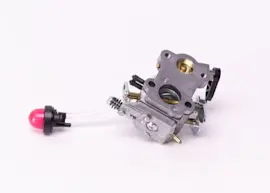
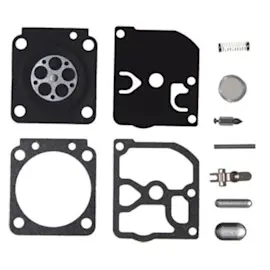
Mcculloch chainsaws can look similar across different series, but parts like the carburetor, ignition module, fuel lines, and clutch components can vary by model. Using the exact stamped model helps prevent ordering the wrong chainsaw parts.
Ordering parts
After you confirm the exact model number from the saw, use the parts list for that model. If you need to search beyond this model page, we recommend using Sears PartsDirect and entering the full model exactly as stamped.
Last updated: February 2026
How do I troubleshoot my MAC?
For your Mcculloch MAC gas chainsaw, troubleshoot by matching the symptom (no-start, stalls, won’t oil, chain won’t move) to the fuel, spark, air, and bar-and-chain systems. Most issues are caused by stale fuel, a fouled spark plug, a clogged air filter, or an incorrectly adjusted chain.
Quick safety first
- Shut the engine off and let it cool before touching the bar, chain, or muffler
- Engage the chain brake before checks and adjustments
- Wear gloves when handling the chain
- Work in a ventilated area when checking fuel
Symptom-based checks (fastest path)
- Won’t start: verify fresh 2-cycle fuel mix, set choke correctly, check spark plug condition and gap, clean/replace air filter
- Starts then dies: clean air filter, check fuel filter and fuel lines for cracks, confirm idle speed is not set too low
- Runs rough or lacks power: clean spark arrestor screen (if equipped), inspect muffler outlet for carbon, confirm correct fuel mix ratio
- Chain won’t move: release chain brake, check chain tension, inspect clutch drum/sprocket for wear
- Not oiling bar/chain: confirm oil tank is filled, clean bar oil holes and groove, check for sawdust blockage at the oiler outlet
Step-by-step: no-start basics
- Fuel: drain old fuel; refill with fresh, properly mixed 2-cycle fuel.
- Spark: remove plug, dry it if wet, clean or replace if fouled; confirm the plug wire is firmly seated.
- Air: remove and clean the air filter; a restricted filter can flood the engine.
- Flooded engine: set choke off, hold throttle open, pull starter several times to clear.
What to inspect and what it tells you
| What you see | Likely cause | What to do |
|---|---|---|
| Plug is wet with fuel | Flooding, too much choke | Dry plug, clear cylinder, restart with less choke |
| Plug is dry | Fuel not reaching carburetor | Check fuel filter, lines, tank vent |
| Chain smokes, bar is hot | No oil or chain too tight | Fill bar oil, clean bar, set correct tension |
Why it matters
A gas chainsaw depends on correct fuel mix, clean airflow, and proper bar-and-chain lubrication. Fixing the root cause prevents hard starting, premature clutch wear, and bar/chain damage.
For help confirming the correct model identification before ordering parts, use [how to find your appliance model number (and what it means for parts)].
Last updated: March 2026