Owner’s manual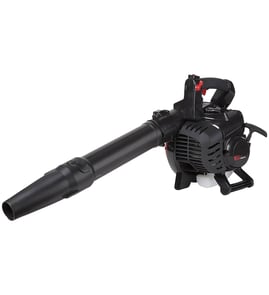







What is the life expectancy of a gas leaf blower?
A Craftsman gas leaf blower like model 358797550-BLOWER typically lasts about 10 years with normal homeowner use and consistent maintenance (fresh fuel mix, clean air filter, and periodic tune-ups). Heavy use, poor fuel storage, and dirty intake air shorten engine life.
What affects lifespan the most
- Fuel quality and storage: old fuel and stale 2-cycle mix cause hard starting and carburetor issues.
- Air filtration: a clogged air cleaner makes the engine run rich and wear faster.
- Cooling airflow: debris buildup around the engine can lead to overheating.
- Operating habits: running at full throttle is normal, but running with restrictions or clogs is not.
- Routine tune-ups: spark plug and general adjustments keep performance stable.
Maintenance schedule we recommend
Use the 358797550-BLOWER owner's manual for the exact intervals and procedures for your unit.
| Task | Typical interval | Why it helps |
|---|---|---|
| Replace/clean air filter | Every season (or sooner in dust) | Prevents dirt ingestion and wear |
| Refresh fuel mix | Every 30 days (don’t store long-term) | Reduces varnish and carb problems |
| Inspect fuel lines | Each season | Prevents leaks and lean running |
| Check spark plug | Each season | Improves starting and power |
Quick signs your blower is nearing end-of-life
- Starts only with repeated priming or won’t restart hot
- Runs rough, surges, or stalls under load
- Noticeable power loss even after basic tune-up
- Excessive vibration or unusual mechanical noise
Parts that commonly extend service life
If you’re seeing fuel seepage, cracking, or soft lines, replacing the fuel line is a high-impact fix on older units.
Why it matters
A gas blower engine wears fastest when it runs lean (air leaks, restricted fuel flow) or ingests dirt. Keeping the fuel system tight and the intake clean is the simplest way to get a full, long service life from your Craftsman blower.
Last updated: February 2026
How to find Craftsman leaf blower model number?
For a Craftsman gas blower, the model number is printed on the unit’s ID label; for this blower it appears as 358.797550 (often entered online as 358797550). Use the full model number exactly as shown to match the correct parts and manual for 358797550-BLOWER.
Where to look on the blower
Check these common label locations first (clean off dust and oil so the print is readable):
- Rear of the housing near the handle
- Bottom of the unit near the air intake area
- Near the fuel tank or recoil starter cover
- On a decal or metal tag attached to the main housing
What to write down (so parts match)
Record the information exactly as it appears on the label.
- Model number (example from the manual: 358.797550)
- Any dashes or suffixes (example: 358797550-BLOWER)
- Serial number (helpful for production changes)
- Brand name (Craftsman)
Quick format guide
| What you see on the label | How it’s commonly entered | Why it matters |
|---|---|---|
| 358.797550 | 358797550 | Dots are often omitted in search fields |
| 358797550-BLOWER | 358797550-BLOWER | Suffix helps match the exact model page |
Why it matters
Parts can vary by model and production run. Using the exact model number helps ensure you get the right fuel system parts, starter parts, and engine components for your Craftsman blower.
Helpful next step
Use the exploded views and specs in the 358797550-BLOWER owner’s manual to confirm the model identification and locate the correct part diagrams before ordering.
Last updated: February 2026
Who makes Craftsman leaf blowers?
Craftsman is a brand name used on tools and outdoor power equipment, including the Craftsman gas blower model 358797550-BLOWER. Craftsman products have been produced by different manufacturers over time, so the exact maker can vary by model and production run; the most reliable way to confirm what applies to your unit is to reference the identification and documentation for your specific model in the 358797550-BLOWER owner's manual.
How to identify the maker for your specific blower
We recommend using the model and ID information on the unit to match parts and service information correctly.
- Check the model tag on the blower housing for the full model number and any additional ID codes
- Compare the model number to the parts list and diagrams in the manual
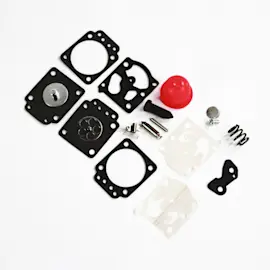
- Use the same model number when ordering common maintenance parts (fuel line, carburetor, starter parts)
- If the blower has been rebuilt, verify the engine and fuel system parts match what is currently installed
- Keep a record of the model number and any serial or date codes for future parts lookups
What “Craftsman” means when you are buying parts
For parts ordering and repair, what matters most is the model number and the part number/part ID, not the brand name alone.
| What you have | What it tells us | Best use |
|---|---|---|
| Craftsman brand name | Product line/branding | General compatibility clues |
| Model 358797550-BLOWER | Exact configuration | Correct parts diagrams and procedures |
| Part ID/part number | Exact replacement part | Ordering the right component |
Why it matters
Different manufacturers and production runs can use different fuel systems, carburetor linkages, and starter designs. Confirming details from the model documentation helps prevent ordering the wrong part and speeds up troubleshooting.
Last updated: February 2026
Why does my leaf blower keep dying when I give it gas?
When your Craftsman gas blower model 358797550-BLOWER idles but dies as you squeeze the throttle, the engine is usually going lean under load (not enough fuel, too much air, or restricted airflow). Start with fresh 40:1 fuel mix, then check the fuel lines, carburetor, and intake for restrictions using the 358797550-BLOWER owner's manual.
Quick checks that fix most “dies on throttle” problems
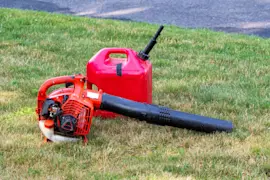
- Drain old fuel and refill with fresh unleaded gas mixed 40:1 with quality 2-cycle air-cooled oil (3.2 oz oil per 1 gallon gas).
- Make sure the choke is fully off after warm-up; a partially closed choke can bog and stall.
- Inspect the fuel tank venting (cap vent); a plugged vent can starve fuel as RPM increases.
- Check for cracked, soft, or loose fuel lines and fittings.
- Clear debris from the air intake and tubes; restricted airflow can cause poor running.
Fuel and airflow: what to look for
The manual specifies a 40:1 fuel mix and warns that alcohol-blended fuels can create fuel-system issues during storage. If the blower sat with fuel in it, varnish in the carburetor is a common cause of stalling on acceleration.
| Symptom when you squeeze throttle | Most likely cause | What to do first |
|---|---|---|
| Dies immediately | Fuel starvation (lines, vent, carb) | Check fuel cap vent, then fuel lines |
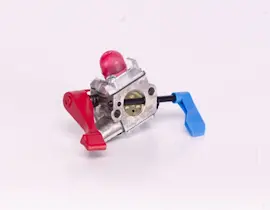
| Bogs, then dies | Dirty carburetor circuits | Clean or rebuild carburetor |
| Runs only on choke | Lean condition (air leak or restricted fuel) | Inspect fuel lines and carb mounting |
Parts that commonly solve it
If you find the fuel line is brittle, swollen, or leaking, replacing it is a strong first repair because air leaks in the fuel system show up most when you open the throttle.
Why it matters
Running lean at higher RPM can overheat a 2-cycle engine and accelerate wear on internal parts (piston and ring). Fixing the fuel delivery issue quickly helps protect performance and engine life.
Last updated: February 2026
What is the best gas-powered leaf blower on the market?
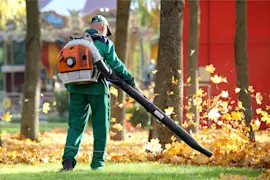
If you want the “best” gas-powered leaf blower, match the tool to the job: backpack blowers deliver the most sustained power for large yards, while handheld blowers are lighter and easier for quick cleanup. For your Craftsman model 358797550-BLOWER, our 358797550-BLOWER owner's manual confirms it is rated at 200 MPH and 400 CFM, which is a solid residential benchmark.
How we recommend choosing “best”
Use these factors first, then compare brands and models within your budget:
- Air volume (CFM): higher CFM moves more leaves at once
- Air speed (MPH): higher MPH helps lift wet or stuck debris
- Type: handheld vs backpack (backpack is best for long sessions)
- Weight and balance: reduces fatigue and improves control
- Noise and neighborhood rules: choose the quietest option that still does the job
- Serviceability: easy access to fuel lines, carburetor, and starter parts
Quick comparison: handheld vs backpack
| Feature | Handheld gas blower | Backpack gas blower |
|---|---|---|
| Best for | Driveways, patios, small yards | Large yards, heavy leaf season |
| Typical feel | Lighter, more maneuverable | More power, less arm fatigue |
| Tradeoff | Less sustained output | Higher cost, more storage space |
Where your Craftsman 358797550-BLOWER fits
Based on the manual rating (200 MPH/400 CFM), this Craftsman gas blower is best for routine residential cleanup like dry leaves, grass clippings, and light debris on hard surfaces. For heavier workloads (large lots, wet leaves, long run times), a higher-output backpack blower is typically the better “best on the market” choice.
Why it matters
Buying by CFM/MPH and blower type prevents disappointment: the right match clears faster, runs at lower throttle, and reduces wear on the fuel system and engine.
Last updated: February 2026
Are gas leaf blowers being phased out?
Yes. Gas leaf blowers are being phased out in many U.S. areas through local noise and emissions rules, and the market is steadily shifting toward electric models; your Craftsman 358797550-BLOWER can still be used where allowed, but you should follow local ordinances and the operating guidance in the 358797550-BLOWER owner's manual.
What “phased out” usually means
Most phase-outs happen in two ways: restrictions on sale (new equipment) and restrictions on use (when and where you can run it).
- Sales restrictions: Some jurisdictions stop the sale of new gas-powered outdoor equipment.
- Use restrictions: Many cities limit operating hours, noise levels, or specific locations.
- Gradual transitions: Rules often include a future effective date or exemptions.
- Enforcement varies: Some areas focus on complaints and noise ordinances.
- Electric adoption: Battery blowers keep improving, so many homeowners switch voluntarily.
What your Craftsman 358797550-BLOWER manual already tells you
Your manual specifically calls out being considerate of neighbors and complying with local ordinances, including “reasonable hours” guidance for operating power equipment. That is the same type of rule many communities use when regulating leaf blower use. See the 358797550-BLOWER owner's manual for the safety and operating recommendations.
Quick comparison: gas vs. battery blowers
| Feature | Gas blower (like 358797550-BLOWER) | Battery blower |
|---|---|---|
| Runtime | Long with refueling | Limited by battery capacity |
| Maintenance | Fuel system, spark plug, air filter | Mostly battery care, less engine service |
| Noise | Typically louder | Typically quieter |
| Emissions | Exhaust present | No on-tool exhaust |
Why it matters
If your area tightens rules, the biggest impacts are when you can use your blower and whether you can buy a new gas unit later. Staying compliant avoids nuisance complaints and helps you plan for future replacement.
If you are troubleshooting fuel-related issues
A blower that leaks fuel or runs rough can draw extra attention due to odor and smoke. If you suspect a fuel line problem, our how to replace leaf blower fuel lines guide is a good next step; for model-matched replacement, the ayp lawn & garden equipment fuel line, large 530069216 is a common fuel system wear item on this model.
Last updated: February 2026