Installation guide
 Owner’s manual
 Error Codes



Does my Kenmore top load washer have a filter?
Yes, Kenmore top load washer model 11021302010 uses drain-path filtering, but it typically does not have a single, front-access “lint filter” like many front-load washers. Most routine “filter” maintenance is cleaning the drain pump area and checking the drain hose for clogs; see the 11021302010 installation guide for drain setup details.
What “filter” means on this washer
On many Kenmore top load designs, filtering is handled by the wash action and the drain system rather than a removable lint screen.
Common places debris collects:
- The drain pump inlet area (coins, hair pins, small socks)
- The drain hose and standpipe/laundry tub connection
- The tub-to-pump hose (if equipped)
- The lid lock area (items preventing proper closure)
Quick checks you can do safely
Before any inspection, unplug the washer and turn off both water supplies.
- Confirm the drain hose is not kinked or crushed
- Make sure the drain hose is not pushed too far down the standpipe (helps prevent siphoning)
- Run a Drain/Spin cycle and listen for the pump; a loud hum with little water movement points to a restriction
- Check for slow drain symptoms: water left in tub, long drain time, wet loads
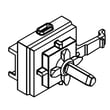
- If the washer will not spin and the lid will not lock, inspect the washer lid lock assembly W10404050
When a “filter issue” is really a drain pump problem
If the washer drains slowly or not at all, the drain pump can be blocked or failing. For this model, the replacement part is the washer drain pump assembly WPW10276397.
| Symptom | Most likely cause | What to check first |
|---|---|---|
| Won’t drain | Pump jam or blockage | Pump inlet, hose restrictions |
| Drains slowly | Partial clog | Drain hose routing, standpipe height |
| Loud grinding during drain | Debris in pump | Pump impeller area |
| Won’t spin, lid error behavior | Lid lock issue | Lid strike alignment, lid lock |
Why it matters
A restricted drain path can cause no-drain, no-spin, or out-of-balance behavior and can leave water in the tub, which leads to odors and poor cleaning results.
Last updated: February 2026
How do I reset my Kenmore washer?
For Kenmore washer model 11021302010, the most reliable reset is a power reset: unplug the washer for 1 to 5 minutes, then plug it back in and start a cycle. This clears many control glitches and lets the washer reinitialize normally; see the 11021302010 owner's manual for model-specific control steps.
Quick reset steps (recommended)
- Press Power/Cancel to stop the current cycle.
- Unplug the washer (or switch the breaker off).
- Wait 1 to 5 minutes.
- Plug back in (or turn breaker on).
- Select a Rinse/Spin or Drain/Spin cycle and press Start.
- If the washer will not start, confirm the lid is fully closed and latched.
If the washer still will not run
A reset will not fix a mechanical or safety-interlock problem. These checks solve the most common “won’t start” situations:
- Make sure the washer is plugged into a grounded 3-prong outlet (no adapter or extension cord).
- Confirm the outlet has power (test with a lamp).
- Verify the washer is level; excessive vibration can interrupt operation.
- Check that the drain hose is installed correctly and not kinked.
- If the lid will not lock, inspect the washer lid lock assembly W10404050.
What a reset does (and does not do)
| What you are seeing | What a reset helps | What to check next |
|---|---|---|
| Control panel acting “stuck” | Clears a temporary control glitch | Power supply, cycle selection |
| Cycle stops mid-wash | Sometimes | Drain/standpipe, load balance, leveling |
| Won’t start and lid won’t lock | Usually not | Lid lock, wiring, control |
| Won’t drain/spin | Usually not | Drain hose, pump, clogs |
Why it matters
Resetting is a fast first step because it restores normal control-board logic without disassembly. If the issue returns right away, the washer is usually reacting to a real condition (lid lock, drain problem, or vibration from poor leveling).
Last updated: February 2026
How many cubic feet is a Kenmore Model 11021302010 washer?
Kenmore washer model 11021302010 is a top-load washer; its capacity is typically in the 3.2 to 3.5 cu. ft. range for this style and era. For the exact cubic-foot rating for your specific unit, we recommend confirming it in the 11021302010 owner's manual.
How to confirm the exact capacity on your washer
Use these quick checks to get the precise number without guessing:
- Look in the Specifications section of the 11021302010 owner's manual.
- Check the model and serial tag (often under the lid or along the rim) and compare to the spec listing.
- If your washer has a use and care guide, capacity is often listed near cycle and load-size guidance.
- Measure the tub (advanced): capacity is based on tub volume, but manufacturer specs are the most reliable.
Typical capacity ranges (what most owners can expect)
This helps you understand what “normal” is for Kenmore 110-series top-load designs.
| Washer type | Typical capacity range | Best for |
|---|---|---|
| Traditional top-load (agitator) | 3.0 to 3.5 cu. ft. | Medium loads, everyday laundry |
| High-efficiency top-load (washplate) | 3.5 to 4.8 cu. ft. | Larger loads, bulky items |
Why it matters
Capacity affects load size, cycle performance, and detergent amount. Overloading a smaller-capacity tub can lead to poor cleaning, out-of-balance spinning, and extra wear on drive components like the washer drive belt WPW10006384 and washer motor drive pulley W10721967.
Last updated: February 2026
How to identify a Kenmore washer model?
Your Kenmore washer model number is printed on the appliance’s model and serial tag. On Kenmore model 11021302010, you’ll typically find that tag under the lid (top-load) or on the cabinet frame near the opening; once you have the full number, we can match the correct parts and diagrams.
Where to look on the washer
Check these common locations first (in order):
- Under the lid, around the tub opening or on the underside of the lid
- On the cabinet frame near the lid opening (front edge or side edge)
- On the back panel near the power cord entry
- Along the rear of the control console (less common)
If the tag is dirty or faded, wipe it with a damp cloth and use a flashlight to read the characters.
What the model number should look like
For Kenmore washers, the model number is usually a long numeric string. For this unit, it should match 11021302010 exactly.
| What to capture | Example for this washer | Why we need it |
|---|---|---|
| Model number | 11021302010 | Ensures the part fits your exact design |
| Serial number | (varies) | Helps confirm production run details |
| Type | Top-load washer | Guides troubleshooting and installation info |
Why it matters
Kenmore model numbers can look similar, but small differences change the drive system, lid lock style, and drain setup. Using the exact model number prevents ordering the wrong items like a washer lid lock assembly W10404050 or a washer drive belt WPW10006384.
Helpful next steps
- Compare the tag to the model number shown on your receipt or warranty paperwork
- Write the model and serial number down before the label wears further
- Use the 11021302010 installation guide for location, spacing, and setup checks if the washer was recently moved
Last updated: February 2026
What is the average lifespan of a Kenmore washer?
A Kenmore washer typically lasts 10 to 15 years. For the Kenmore 11021302010 top-load washer, reaching the high end of that range comes down to correct installation, avoiding chronic overloading, and fixing wear items (like the drive belt, lid lock, or drain pump) before they cause bigger damage.
Typical lifespan and what changes it
Most washers land in the same general window, but real-world life varies based on load size, cycle frequency, and vibration.
- Light use (1 to 3 loads/week): often closer to 15 years
- Average use (4 to 7 loads/week): commonly 10 to 15 years
- Heavy use (multiple loads/day): often closer to 8 to 12 years
- Poor leveling or frequent off-balance loads: shortens life by stressing the suspension and drive system
- Water left in the machine in freezing temps: can cause damage; winterizing guidance is in the 11021302010 owner's manual
Parts that most often determine “repair vs replace”
When a washer starts slipping, not spinning, not draining, or not locking, these are common repair points on this model family.
| Symptom | Common wear area | Example part for this model |
|---|---|---|
| Won’t spin or slips | Belt and drive pulley | Washer drive belt WPW10006384, washer motor drive pulley W10721967 |
| Won’t start or lid won’t lock | Lid lock system | Washer lid lock assembly W10404050 |
| Won’t drain or leaves water | Drain pump or drain path | Washer drain pump assembly WPW10276397 |
Why it matters
A washer that is out of level, overloaded, or running with a slipping belt works harder every cycle. That extra strain accelerates wear on the gear case, suspension, and electronic control, which are typically the most expensive repairs.
Quick habits that extend washer life
- Keep loads balanced and avoid packing the tub tightly
- Use the right detergent amount to reduce residue buildup
- Periodically check hoses and connections during routine cleaning
- If you hear squealing, grinding, or repeated banging, stop and inspect before continuing
- Follow spacing, leveling, and electrical requirements in the 11021302010 installation guide
Last updated: February 2026