Installation guide
 Owner’s manual



What is the capacity of the Maytag medc215ew1?
The Maytag MEDC215EW1 electric dryer has a 7.0 cu. ft. drum capacity, which is considered a full-size dryer capacity for everyday family laundry loads. For cycle and loading guidance specific to this model, see the MEDC215EW1 use and care guide.
What “7.0 cu. ft.” means in real use
A 7.0 cu. ft. dryer drum is designed to handle typical mixed loads efficiently, as long as items can tumble freely.
- One full basket of everyday clothes is usually a good match
- Bulky items (comforters, blankets) may fit, but dry best with extra space
- Overloading can increase dry time and cause wrinkles
- Underloading can cause some items to over-dry on sensor cycles
Loading tips for best drying performance
We recommend these habits to get the most from the MEDC215EW1’s Sensor Dry/Automatic Dry and Timed Dry cycles:
- Clean the lint screen before every load
- Load loosely; do not pack items down
- Mix similar fabric weights together (towels with towels, not towels with T-shirts)
- Use the correct temperature setting for the fabric type
- Check venting if dry times suddenly get longer
Quick reference: capacity and what to watch for
| Item type | Usually fits in 7.0 cu. ft.? | Best practice |
|---|---|---|
| Everyday mixed laundry | Yes | Use Sensor Dry/Automatic Dry |
| Towels | Yes | Avoid mixing with lightweight items |
| Comforter/blanket | Often | Leave extra room; expect longer dry time |
| Small load | Yes | Consider Timed Dry to prevent early shutoff |
Why it matters
Correctly matching load size to capacity helps the dryer maintain airflow, improves energy efficiency, and reduces wear on key moving parts like the drum support system.
Last updated: January 2026
What is the average lifespan of a Maytag dryer?
A Maytag electric dryer like model MEDC215EW1 typically lasts 10 to 15 years with normal household use. Consistent airflow maintenance (lint screen and venting) and fixing small wear items early are the biggest factors in reaching the high end of that range; see the MEDC215EW1 use and care guide.
What affects lifespan the most
A dryer’s life is usually determined by heat stress, airflow restriction, and normal wear on moving parts.
- Clean the lint screen before every load and keep the lint chute area clear
- Keep the exhaust vent clear and properly sized (4-inch heavy metal venting is best)
- Avoid overloading; heavy loads strain the drive system and motor
- Use Sensor Dry/Automatic Dry when available to reduce over-drying
- Address new noises early (squeal, thump, rumble) before they damage other components
Common wear items that can extend service life
If your MEDC215EW1 starts making noise or the drum movement feels rough, these are typical maintenance-type repairs that often restore normal operation.
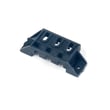
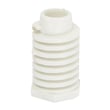
- Drum support rollers and shafts
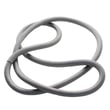
- Drive belt and idler components (often sold together as a kit)
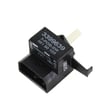
- Door switch or push-to-start switch (if the dryer will not run)
Helpful examples of compatible parts for this model include the dryer drum support roller WPW10314173 and the dryer drum belt WPW10198086.
Quick “repair vs. replace” guide
| If your dryer is… | Usually worth repairing | Usually time to consider replacement |
|---|---|---|
| Under ~10 years old | Yes, especially for belts, rollers, switches | Rarely |
| 10 to 15 years old | Often, if the cabinet and drum are in good shape | If multiple major issues stack up |
| Over 15 years old | Sometimes, if it is a simple airflow or wear-item fix | More often, depending on condition |
Why it matters
A restricted vent or neglected lint buildup can shorten dryer life by increasing heat and run time. Keeping airflow strong helps your MEDC215EW1 dry faster, run cooler, and reduce strain on the motor and heating system.
Last updated: January 2026
How do you know if a thermal fuse is blown?
On a Maytag MEDC215EW1 electric dryer, we confirm a blown thermal fuse by unplugging the dryer and testing the fuse with a multimeter on continuity (or ohms): a good fuse reads closed (beep or near 0 Ω), and a blown fuse reads open (no beep or OL). A blown fuse often causes the dryer to not run at all.
How to test it safely
- Disconnect power (unplug the dryer or switch off the breaker).
- Access the thermal fuse and remove at least one wire from the fuse terminal.
- Set your multimeter to continuity (or the lowest ohms range).
- Touch one probe to each fuse terminal.
- Read the result and compare to the table below.
| Multimeter result | What it means | Next step |
|---|---|---|
| Beep or ~0 Ω | Fuse is good (closed circuit) | Keep troubleshooting other causes |
| No beep, OL, or very high Ω | Fuse is blown (open circuit) | Replace the fuse and fix airflow issues |
Symptoms that commonly point to a blown thermal fuse
On the MEDC215EW1, a blown thermal fuse is most often associated with a no-start condition. You may also notice:
- Dryer will not start even though the door is closed
- Drum light may work but the motor will not run
- Dryer stopped mid-cycle and will not restart
- Burning smell or very hot cabinet (often tied to restricted venting)
Why it matters (and what to do next)
The thermal fuse is a one-time safety device designed to open if the dryer overheats. If you replace the fuse but do not correct the overheating cause, the new fuse can blow again quickly.
We recommend checking these airflow items right away:
- Clean the lint screen and confirm it seats properly
- Inspect the vent hose for crushing, kinks, or lint buildup
- Confirm the outside exhaust hood opens fully and has strong airflow
- Use 4-inch heavy metal venting and keep the run as short as practical
Parts and documentation for this model
- Use the MEDC215EW1 installation guide for venting requirements and airflow best practices.
- If you need the correct replacement fuse for this model, match it to the dryer thermal fuse WP3392519.
- For step-by-step replacement help, follow how to replace a thermal fuse in an electric dryer.
Last updated: January 2026