 Installation guide
 Owner’s manual
 Error Codes



What is the most common problem with GE dishwashers?
The most common GE dishwasher issue we see on models like GE GDT625PSJ4SS is a “won’t run” or “won’t drain” complaint caused by a simple power interruption, a door that is not fully latched, or a drain restriction. Start with the quick checks in the GDT625PSJ4SS owner’s manual.
Most common symptoms and what usually causes them
- Dishwasher won’t start: tripped breaker, wall switch off, control lock enabled, or a failed door latch
- Not draining: kinked/blocked drain hose, clogged sump area, or a weak drain pump
- Not cleaning well: spray arm blockage, loading issues, or detergent cup blocked by tall items
- Suds/foam in the tub: wrong detergent (hand soap) or rinse aid spill
- Odors or film: food debris buildup, hard water minerals, or lack of periodic cleaning
Quick checks we recommend first (fast, no tools)
- Confirm the breaker is on and any nearby wall switch is on (some installs power the dishwasher through a switch).
- Make sure the door closes firmly; if it feels loose or won’t latch, inspect the latch.
- Use only automatic dishwasher detergent (tablets or packets work well); never use hand dish soap.
- Check that large utensils are not blocking the detergent dispenser.
- If you have hard water film, run a cleaner cycle (citric acid or dishwasher cleaner) and use rinse aid.
Parts that commonly solve these problems on GDT625PSJ4SS
| Symptom | Common part to inspect | What it affects |
|---|---|---|
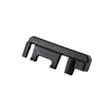
| Won’t start or stops mid-cycle | GE dishwasher door latch lock WD21X10490 | Door must be sensed “closed” to run |
| Not drying or poor heating | Dishwasher heating element WD05X30818 | Water heating and drying performance |
| Poor wash coverage | Dishwasher spray arm, lower WD22X33499 | Water spray pattern and pressure |
Why it matters
Catching the root cause early prevents repeat cycles, standing water, and detergent residue. It also helps you avoid replacing good parts when the real issue is a latch, a blocked spray arm, or a drain restriction.
Last updated: January 2026
Is GE profile considered high end?
Yes. GE Profile is generally considered GE’s higher-end appliance line; it typically adds more premium features, upgraded finishes, and more advanced controls than GE’s standard lines. For your GE dishwasher model GDT625PSJ4SS, the exact feature set is listed in the GDT625PSJ4SS owner's manual.
What “high end” usually means with GE Profile
GE Profile models are positioned as an upgrade tier within GE Appliances. In practical terms, that usually includes:
- More wash options and cycle customization
- Quieter operation compared with entry-level models
- More advanced electronic controls and indicators
- More premium rack features and adjustability
- More design-forward finishes and handle styles
How to confirm where your dishwasher fits
The most reliable way to judge “high end” is to compare features and noise rating across GE lines.
- Check the cycle and option list (heated dry, sanitize, bottle jets, etc.)
- Look for the published sound rating (dBA) in the specs section
- Compare rack layout and adjustability (upper rack height, third rack, fold-down tines)
- Review control style (top control vs front control) and indicator lights
- Match any displayed codes to GE guidance if performance issues appear
If you’re troubleshooting or comparing control features, our GE electronic dishwasher error codes guide helps you interpret what the dishwasher is reporting.
Quick comparison: GE vs GE Profile (typical)
| Feature area | Standard GE (typical) | GE Profile (typical) |
|---|---|---|
| Controls | Basic electronic | More advanced electronic options |
| Noise | Moderate | Quieter designs more common |
| Cycles/options | Core cycles | More specialty cycles/options |
| Fit and finish | Standard | More premium styling |
Why it matters
Knowing the product tier helps set expectations for cycle length, noise level, and feature availability. It also helps when choosing replacement parts and diagnosing issues, since higher-tier models often use more complex controls and sensors.
Last updated: January 2026
What is the average lifespan of a GE dishwasher?
A GE dishwasher typically lasts 10 to 12 years. For a GE GDT625PSJ4SS, consistent cleaning, correct detergent use, and fixing small issues early (like poor draining or weak spray) are the biggest factors that help it reach or exceed that average.
What affects dishwasher lifespan most
- Hard water and mineral buildup; scale shortens heater and pump life
- Clogging and debris in the sump and spray arms
- Overloading or blocking spray patterns (leads to re-washes and extra wear)
- Heat and drying performance; weak heating can leave moisture and residue behind
- Leaks; even small leaks can damage components over time
Maintenance that helps you get the full 10 to 12 years
Use these habits to reduce wear on key parts like the circulation pump, heating element, and spray arms:
- Clean the interior periodically with citric acid or a dishwasher cleaner (helps remove mineral film)
- Wipe the control panel with a lightly damp cloth, then dry
- Check that spray arms spin freely and holes are not plugged
- Run hot water at the sink before starting a cycle (improves wash performance)
- Address draining issues quickly so dirty water does not recirculate
For GE care and cleaning guidance specific to this platform, follow the steps in the GDT625PSJ4SS owner’s manual.
Quick expectations by usage level
| Usage pattern | Typical lifespan | What usually fails first |
|---|---|---|
| Light (few loads/week) | 12 to 15 years | Racks, rollers, door hardware |
| Average (1 load/day) | 10 to 12 years | Pumping, heating, seals |
| Heavy (2+ loads/day) | 8 to 10 years | Pump, diverter, heating system |
Why it matters
Dishwashers are water-heating appliances; mineral buildup and restricted water flow make the machine work harder each cycle. Keeping wash water moving and heating correctly reduces strain on components such as the dishwasher heating element WD05X30818 and helps the dishwasher clean and dry better for years.
Last updated: January 2026
Can a clogged drain cause an FTD error?
Yes. On the GE GDT625PSJ4SS dishwasher, an FTD (fail to drain) error commonly happens when the drain path is restricted, so the drain pump cannot push water out through the hose, air gap, disposer connection, or plumbing.
What to check first (fast, common fixes)
- Cancel the cycle and wait a minute; then try a drain again.
- Check the sink side first: if the kitchen sink drains slowly, the dishwasher often will not drain well either.
- If you have an air gap, remove the cap and clean it.
- Clean the dishwasher filter (GE calls it the Ultra-Fine Filter).
- Inspect the drain hose for kinks or crushing where it passes through the cabinet.
- If the dishwasher drains into a garbage disposer, run the disposer to clear it.
- If the dishwasher was recently installed, confirm the disposer drain plug was removed.
Drain installation issues that trigger “won’t drain” symptoms
The installation setup matters as much as the dishwasher itself. The drain line must be routed correctly and not overly long.
| Drain setup item | What “wrong” looks like | What it causes |
|---|---|---|
| Disposer connection | Drain plug left in place | Dishwasher will not drain |
| Drain hose routing | Kinked, crushed, or sagging | Slow drain, FTD error |
| Drain height/length | Too high or too long | Weak drain performance |
For the exact routing requirements and limits for this model, follow the GDT625PSJ4SS installation guide.
When a part is likely involved
If the drain path is clear but you still get FTD, the issue is often a weak or jammed pump, or a restriction inside the sump area.
Common part-related suspects include:
- Drain pump (won’t run, hums, or runs but moves little water)
- Sump area blockage (debris near the pump inlet)
- Drain hose internal blockage
If you’re seeing standing water plus intermittent draining, replacing the drain pump assembly WD19X25187 is a common repair path.
Why it matters
FTD is a protection signal. If water cannot leave the tub, the dishwasher can stop mid-cycle, leave dirty water behind, and create odor and poor cleaning results.
Last updated: January 2026





