Installation guide
 Owner’s manual


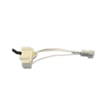
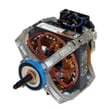
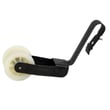
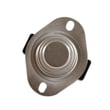
How do I know if my Kenmore dryer thermal fuse is blown?
On Kenmore gas dryer model 11072832100, a blown thermal fuse usually shows up as a dryer that will not start, or a dryer that runs but has no heat. The sure way to confirm is a continuity test with a multimeter. Use the 11072832100 owner's manual for safety steps and access guidance.
Common signs of a blown thermal fuse
- Dryer will not run even with the door closed and controls set
- Dryer tumbles but produces no heat
- Cycle stops early and the cabinet feels unusually hot
- Burning smell or very hot exhaust air (often from restricted venting)
How to test it (continuity check)
- Unplug the dryer; shut off the gas supply if you are opening the cabinet.
- Access the fuse (commonly on the blower housing or exhaust duct area).
- Remove the wires from the fuse terminals.
- Set a multimeter to continuity or the lowest ohms setting.
- Probe the fuse terminals.
| Meter result | Meaning | Next step |
|---|---|---|
| Beep or ~0 ohms | Fuse is good | Check airflow and heat circuit parts |
| No beep or OL | Fuse is blown | Replace the fuse and fix the overheating cause |
Why it blows (fix this first)
A thermal fuse opens when the dryer overheats; restricted airflow is the most common cause.
- Clean the lint screen before every load
- Clear lint from the lint screen housing
- Replace crushed or kinked vent hose
- Clean the vent run to the outside hood; confirm strong airflow
- Use rigid or semi-rigid metal venting when possible
Heat-side parts often checked on gas dryers
If airflow is good but heat is still inconsistent, we commonly test:
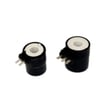
- Dryer gas valve coil kit 279834 (weak coils can stop flame after it lights)
- Dryer operating thermostat WP3387134 (can affect cycling temperature)
Why it matters
A blown thermal fuse is a safety warning that the dryer overheated. Replacing the fuse without correcting venting or lint buildup often leads to another no-heat or no-start failure.
Last updated: February 2026
What is the code F01 on a Kenmore dryer?
On Kenmore gas dryer model 11072832100, the F01 (or F1) code points to a problem in the dryer’s temperature-sensing circuit (commonly the thermistor or its wiring), which can stop the cycle or cause beeping. We recommend checking airflow first, then testing the sensor circuit per the 11072832100 owner's manual.
What to check first (fast, no parts)
- Unplug the dryer; reset by leaving it unplugged for 2 minutes, then retry a cycle.
- Clean the lint screen; confirm the exhaust hood outside opens fully.
- Inspect the vent run for kinks, crushed flex duct, or heavy lint buildup.
- Make sure the dryer is not overheating from restricted airflow (hot cabinet, burning smell, very short cycles).
- If the code returns quickly, plan to test the sensor circuit and related wiring.
Likely causes and what they mean
F01 is usually triggered when the control detects an out-of-range temperature signal.
| What’s happening | Common cause | Typical symptom |
|---|---|---|
| Temperature signal reads wrong | Thermistor issue or loose connection | Beeping, stops mid-cycle |
| Dryer overheats | Blocked venting or lint buildup | Very hot drum, shuts down |
| Safety opens due to heat | High-limit thermostat trips | No heat or intermittent heat |
Parts that commonly relate to temperature and heat control
If airflow is good and wiring checks out, these parts are often involved in heat regulation on this style of Kenmore gas dryer:
- Dryer operating thermostat WP3387134 (regulates normal cycling temperature)
- Dryer high-limit thermostat W11050897 (opens if the dryer overheats)
Why it matters
A false temperature reading can shut the dryer down, and real overheating can damage components. Keeping venting clear and verifying the thermostat/safety circuit helps prevent repeat error codes and poor drying performance.
Last updated: February 2026
Where to find model number Kenmore dryer?
On the Kenmore gas dryer model 11072832100, the model number is printed on the model and serial number plate. You will typically find that plate on the dryer cabinet opening (inside the door area) or on the back of the dryer near the top; confirm the exact location in the 11072832100 owner's manual.
Common places to check first
- Inside the door opening: look on the cabinet frame just behind the door.
- Back of the dryer: near the top edge of the rear panel.
- Model and serial number plate: a sticker or metal tag with both numbers.
- Avoid the control panel label: cycle names are not the model number.
What the label looks like (and what to copy)
The plate lists both a Model No. and a Serial No. We recommend writing down both exactly as shown because they help match the correct Kenmore parts and diagrams.
| You’ll see on the plate | What it’s used for | Example format |
|---|---|---|
| Model No. | Identifies the exact dryer design | 110XXXXXXXX |
| Serial No. | Identifies production run details | Letters and numbers |
Why it matters
Using the correct model number prevents ordering the wrong dryer drum belt, door switch, thermostat, or gas burner parts. It also helps when following wiring, venting, and gas supply requirements during service.
Quick tip for parts matching
- Match the full model number character-for-character.
- Use the model number when selecting parts like the dryer door switch WP3406107 or dryer drum belt 341241.
- If the plate is worn, check both the door opening area and the rear panel before cleaning it gently and re-reading.
Last updated: February 2026