

How to identify a Kenmore washer model?
Your Kenmore washer model number is printed on the appliance’s model and serial tag. For Kenmore washers, it often starts with 110 (like 11082983120); matching that full number is the fastest way to get the correct replacement parts and diagrams.
Where to look on the washer
Check these common tag locations first (we see these most often on Kenmore washers):
- Top-load washer: under the lid, around the tub opening
- Top-load washer: on the back panel near the power cord
- Front-load washer: inside the door opening on the cabinet frame
- Front-load washer: behind the lower access panel (if equipped)
- Any style: along the side of the control console or rear cabinet edge
What the model number should look like
For Kenmore, the model number is usually a long string of numbers (often 10 to 12 digits). For this parts page, the correct model format example is:
| Brand | Example model format | What to match exactly |
|---|---|---|
| Kenmore | 11082983120 | All digits, in the same order |
Tips to avoid ordering the wrong part
Small differences matter; one digit off can point to a different design.
- Copy the model number directly from the tag (do not use the lid decal or cycle chart)
- Include every digit (no spaces)
- If the tag is worn, take a photo and zoom in to confirm characters
- Use the model number to cross-check parts by function (agitator, pump, motor)
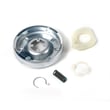
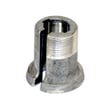
- If you are troubleshooting agitation issues, compare your parts to common wear items like the agitator dog 80040
Why it matters
Kenmore washers share similar styling across many years, but internal components (like the drive system, water pump, and clutch) can change by model. Using the exact model number ensures the part fits and the repair steps match your washer.
Last updated: February 2026
What is the average lifespan of a Kenmore washer?
A Kenmore washer typically lasts 10 to 15 years with normal household use. For Kenmore model 11082983120, consistent care (proper loading, correct detergent, and quick attention to leaks or draining issues) helps you reach the high end of that range.
What affects washer lifespan most
- Overloading (stresses the drive system, clutch, and suspension)
- Poor draining (pump strain, standing water, odor, and corrosion)
- Out-of-balance loads (wear on springs and tub support)
- Hard water and excess detergent (buildup, slow draining, residue)
- Small leaks left unchecked (rust, bearing and seal damage)
Common wear items that can shorten life
If the washer starts slipping in spin, not agitating, or not draining, these parts are frequent culprits on many Kenmore top-load designs:
| Symptom | Common cause | Example part for this model |
|---|---|---|
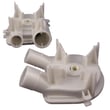
| Won’t drain or drains slowly | Clogged or failing pump | Water pump WP3363394 |
| Agitates weakly or not at all | Worn agitator dogs | Agitator dog 80040 |
| No agitation/spin, motor runs | Worn drive coupling | Coupling 285753A |
| Spins poorly or smells like burning rubber | Worn clutch | Clutch 285785 |
Maintenance that adds years (practical checklist)
- Keep loads evenly distributed; wash bulky items with a few towels to balance.
- Use the right amount of detergent; too much creates residue and extra rinsing stress.
- Inspect fill hoses and the drain hose for drips, cracks, or kinks.
- If you hear new banging, check the leveling and look for a stretched suspension spring.
- Address slow draining early; a struggling pump can overheat and fail.
Why it matters
Most “washer died early” situations come from a small issue (imbalance, slow drain, minor leak) that turns into major wear on the drive system or tub components. Catching symptoms early often prevents a bigger repair.
Last updated: February 2026
What can cause a Kenmore washer not to spin?
A Kenmore washer like model 11082983120 usually won’t spin because the lid switch isn’t proving the lid is closed, the drain system can’t pump water out, or the drive system can’t transfer motor power to the basket. Start with simple checks, then focus on the most common wear parts.
Quick checks we recommend first
- Make sure the load is balanced; redistribute heavy items and try a Spin/Drain cycle again.
- Confirm the washer drains; if the tub stays full, it typically will not spin.
- Check for a kinked or clogged drain hose and clear any lint, coins, or small socks.
- Listen for the motor: a humming motor with no movement points to a drive or pump issue.
- If the lid doesn’t “click” or the washer stops when you lift the lid, suspect the lid switch.
Most common part-related causes on this model
| Symptom | Most likely area | What it means |
|---|---|---|
| Won’t drain and won’t spin | Drain pump or blockage | Water can’t leave the tub, so spin is prevented |
| Drains but won’t spin | Lid switch or drive system | Safety interlock or power transfer problem |
| Agitates but won’t spin | Motor coupling or clutch | Motor runs, but spin drive is slipping/broken |
| Spins weakly or intermittently | Clutch or suspension | Basket can’t reach speed or load goes out of balance |
Parts that commonly fix “no spin”
- Switch W10820036
- Water pump WP3363394
- Coupling 285753A
- Clutch 285785
- Washer suspension spring WP63907
Safe troubleshooting steps (power off)
- Unplug the washer.
- Bail out water if needed, then check the drain path for clogs.
- Inspect the pump area for debris and verify the impeller turns freely.
- Check the lid switch operation; a failed switch can stop spin even if everything else is fine.
- If the motor runs but the basket does not, inspect the coupling and clutch for wear.
Why it matters
A washer that can’t drain, can’t confirm the lid is closed, or can’t transfer torque to the basket will often “protect itself” by refusing to spin. Fixing the root cause prevents repeat failures and reduces strain on the drive motor.
Last updated: February 2026
How to do a hard reset on a Kenmore washer?
For Kenmore washer model 11082983120, a hard reset is a simple power reset: unplug the washer (or switch off the breaker) for 1 minute, then restore power and start a cycle. This clears minor control glitches like a stuck cycle or unresponsive buttons.
Hard reset steps (power reset)
- Press Pause/Cancel once to stop the cycle.
- Unplug the washer from the outlet (or turn OFF the circuit breaker).
- Wait 60 seconds.
- Restore power.
- Lift and close the lid once (top-load models often “wake up” after a lid action).
- Select a Rinse/Spin or Drain/Spin cycle and press Start.
If the washer still will not run
A hard reset helps with temporary electronic lockups; if the problem returns, we focus on the system that matches the symptom.
- Will not drain or leaves water in the tub: check for a clog, then inspect the water pump WP3363394.
- Agitator not moving or weak agitation: worn agitator parts are common; check the agitator dog 80040 and the agitator cam 285748.
- Won’t spin or makes a grinding/rattling noise: inspect the drive system; the coupling 285753A is a frequent wear item.
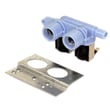
- No fill or slow fill: verify both faucets are fully open; if water supply is good, the inlet valve may be the issue.
Quick symptom-to-part guide
| Symptom | What we check first | Common related part |
|---|---|---|
| Hums but won’t drain | Pump blockage, seized impeller | Water pump |
| Agitates poorly | Worn agitator drive pieces | Agitator dog, agitator cam |
| Motor runs, tub doesn’t move | Broken drive connection | Coupling |
| Shakes or bangs | Load balance, suspension | Suspension spring |
Why it matters
A proper hard reset rules out a temporary control issue before you spend time on deeper troubleshooting. If the washer repeatedly needs resets, a mechanical drag (pump, coupling, clutch) or a fill/drain problem is usually the real cause.
Last updated: February 2026