Installation guide
 Owner’s manual
 Error Codes



Are bottom mount fridges better?
Yes for most households; a bottom-mount refrigerator like the GE PYE22PSHISS usually feels “better” because the fresh-food section sits at eye and waist level, so the items you use most (milk, produce, leftovers) are easier to see and reach while the freezer stays in a lower pull-out drawer.
When a bottom-mount is the better choice
- You cook often and want fresh-food items within easy reach.
- You prefer wide refrigerator shelves for platters and meal prep.
- You want a pull-out freezer drawer that keeps frozen items grouped.
- You want fewer bends for everyday items (produce, beverages, condiments).
- You like a cleaner organization style: fridge up top, freezer down below.
When another style may be better
Bottom-mount is not automatically best for every kitchen. Consider a different layout if these are priorities:
- You use the freezer more than the refrigerator (top-freezer can be more convenient).
- You want the lowest upfront cost (top-freezer models are often simpler).
- You need the easiest access to frozen foods without bending (side-by-side keeps freezer at mid-height).
Quick comparison
| Layout | Best for | Trade-offs |
|---|---|---|
| Bottom-mount (like PYE22PSHISS) | Fresh-food access and everyday ergonomics | Freezer items sit lower; drawer organization matters |
| Top-freezer | Value and simple storage | Fresh-food items are lower; more bending |
| Side-by-side | Equal-height access to fridge and freezer | Narrower shelves; less room for wide platters |
Why it matters
Refrigerator layout affects daily comfort and food visibility. If you open the fresh-food doors many times a day, bottom-mount designs reduce bending and make it easier to keep perishables organized, which helps cut down on forgotten food.
Model-specific tips for getting the most from your PYE22PSHISS
- Set stable temperatures and avoid overpacking vents so air can circulate.
- Keep door seals clean so the doors close tightly.
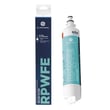
- Replace the water filter on schedule to maintain dispenser flow and taste; use the GE refrigerator water filter RPWFE.
- Use the PYE22PSHISS owner's manual for feature-specific storage guidance and control settings.
Last updated: January 2026
What is the most common problem with GE refrigerators?
Cooling problems are the most common issue we see on GE refrigerators, including the GE PYE22PSHISS. Symptoms usually show up as warm fresh food, soft ice, or temperature swings; the root cause is often airflow restriction, a defrost system problem, or a failed sensor or control.
Most common causes to check first
Start with the simple, high-impact checks before replacing parts:
- Confirm temperature settings and give the unit 24 hours to stabilize after changes.
- Make sure doors close fully; a poor seal causes warm air leaks and frost.
- Clean condenser coils and ensure the condenser fan area is not blocked.
- Check for heavy frost on the evaporator cover (a sign of a defrost failure).
- Listen for the evaporator fan; no airflow usually means a fan or ice blockage.
- Look for error codes and follow the model’s diagnostic guidance in the PYE22PSHISS owner’s manual.
Quick symptom-to-cause guide
| What you notice | Most likely area | What to do next |
|---|---|---|
| Fresh food warm, freezer OK | Airflow/evaporator fan | Check vents, listen for fan, inspect for frost buildup |
| Freezer warm, compressor runs a lot | Condenser coils/airflow | Clean coils, verify condenser fan airflow |
| Frost blanket on evaporator cover | Defrost system | Inspect heater, defrost thermostat, wiring |
| Temps swing up and down | Sensor/control | Test sensor readings, check for stored error codes |
Parts that commonly relate to cooling complaints
If basic checks point to a component issue, these parts are commonly involved on this model:
- Refrigerator temperature sensor WR55X10025 (misreads temperature and can cause overcooling or warming)
- Refrigerator evaporator fan motor and blade WR60X10352 (poor airflow to the fresh food section)
- Refrigerator defrost heater WR51X10131 (ice buildup blocks airflow)
- Refrigerator defrost bi-metal thermostat WR50X10108 (defrost cycle control and safety)
- Refrigerator electronic control board WR55X44126 (manages cooling logic and defrost timing)
Why it matters
Cooling issues can spoil food quickly and also force longer run times, which increases energy use and can accelerate wear on the sealed system. Catching airflow and defrost problems early prevents repeat icing and recurring warm-temperature complaints.
Last updated: January 2026
How to remove bottom grille on GE refrigerator?
On the GE PYE22PSHISS refrigerator (French-door with a bottom freezer), remove the bottom grille by taking out any retaining screws (if equipped) and then pulling the grille straight forward to release the tabs or clips evenly. Fastener locations are shown in the PYE22PSHISS owner's manual.
Safe, model-appropriate removal steps
- Unplug the refrigerator or switch off power at the breaker.
- Open both fresh food doors for better access.
- Look along the grille ends and top edge for Phillips screws.
- If screws are present, remove them and set them aside.
- Grip the grille near both ends and pull straight toward you.
- Work side-to-side with even pressure so clips release without cracking the plastic.
What you see vs. what to do
| What you notice | What it indicates | Best removal method |
|---|---|---|
| Phillips screws at ends/top edge | Screw-retained grille | Remove screws, then pull forward |
| No screws visible | Clip-retained grille | Pull straight forward to release clips |
| One side releases first | Uneven clip tension | Re-seat slightly, then pull evenly from both ends |
Reinstalling the grille
- Align the grille tabs with the slots along the base.
- Push straight in until it sits flush.
- Reinstall any screws you removed.
Why it matters
Removing the bottom grille gives you access to the intake area near the condenser section so you can clear dust and pet hair. Better airflow helps cooling performance and can reduce compressor run time.
Last updated: January 2026