Installation guide
 Owner’s manual


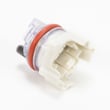
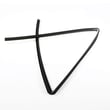
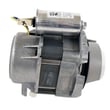
Can I replace dishwasher parts myself?
Yes, many Maytag MDBH979SAW1 dishwasher repairs are DIY-friendly if you shut off power and water first and follow the step-by-step procedures in the MDBH979SAW1 installation guide. Simple mechanical parts are usually straightforward; electrical and leak-related repairs take more care and testing.
What you can usually replace yourself
- Door-related items such as a latch or seals
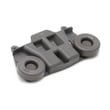
- Rack hardware such as wheels and slide rails
- Drain hose routing and clamp connections
- Some pump and valve replacements if you are comfortable removing the toe-kick and working under the tub
Repairs that often need extra skill (but are still possible)
These jobs involve wiring, water connections, or heavier assemblies:
- Water fill problems (inlet valve, float system checks)
- No-drain issues (pump, hose, disposer or air gap connection)
- No-wash or poor wash (circulation motor, sump and motor assembly)
| Repair type | Typical difficulty | What you will do |
|---|---|---|
| Rack wheels/rails | Easy | Remove rack, swap hardware |
| Drain hose | Easy to medium | Re-route hose, secure clamps |
| Drain pump | Medium | Access bottom, disconnect wiring and hose |
| Water inlet valve | Medium | Turn off water, swap valve, check for leaks |
| Sump and motor assembly | Harder | Remove larger assembly, reseal and test |
Model-specific tips from the installation instructions
- If your dishwasher does not operate after a repair, we follow the same checks used at install: confirm the breaker or fuse is on, the door is fully latched, the cycle is set correctly, and the water supply is turned on.
- For drain hookups, the guide calls out using the correct clamp at the air gap connection and not cutting the ribbed section of the drain hose.
- If the door closes too quickly or falls open, the door spring tension can be adjusted by moving the tensioner screw to matching holes on both sides.
Parts that commonly come up in DIY repairs
- Dishwasher drain pump WPW10348269 for a dishwasher that will not drain
- Dishwasher water inlet valve W11175771 for no-fill or slow-fill symptoms
- Dishwasher door latch W10619006 for a door that will not latch or start the cycle
Why it matters
Dishwashers combine electricity, sharp edges, and pressurized water. Using the correct procedure for MDBH979SAW1 helps prevent leaks, door alignment problems, and repeat failures after the repair.
Last updated: February 2026
How do you fix an E1 F9 error on a Maytag dishwasher?
On the Maytag MDBH979SAW1 dishwasher, an E1 F9 (F9E1) error points to a drain problem. We fix it by clearing the drain path (filter area, drain hose, disposer/air gap) and then checking the drain pump and hose for blockage or kinks; see the MDBH979SAW1 installation guide.
Quick checks that solve most F9E1 drain errors
- Cancel the cycle and let the unit attempt to drain.
- Remove standing water (if needed) so you can inspect the sump area.
- Clear food, labels, or glass from the filter/sump area.
- Check the sink drain connection and garbage disposer inlet for a knockout plug or clog.
- Inspect the air gap (if installed) for debris.
- Verify the drain hose is not kinked, crushed, or sagging.
Drain hose and connection checklist (installation-related)
The drain hose routing matters because a low spot or kink can slow draining and trigger the code.
| What to check | What “good” looks like | What to do if it’s not |
|---|---|---|
| Hose position in cabinet | Hose near the center, not pinched | Re-route to remove pinch points |
| Kinks/crimps | Smooth bends, no flattening | Replace the hose if damaged |
| Clamp at connector | Tight and seated between stops | Re-seat and tighten the clamp |
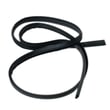
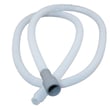
If the hose itself is split, soft, or permanently kinked, replacing it is the most reliable fix; use the exact hose for this model such as the dishwasher drain hose 8269144A when it matches your routing.
When to suspect the drain pump
If the drain path is clear but the dishwasher still hums, drains slowly, or leaves water behind, the drain pump can be jammed or failing. For MDBH979SAW1, a common replacement is the dishwasher drain pump WPW10348269.
Why it matters
A restricted drain can leave dirty water in the tub, cause odors, and repeatedly stop cycles with an E1 F9/F9E1 code. Restoring proper drain flow protects the wash system and helps prevent leaks at hose connections.
Last updated: February 2026
What is the most common problem with Maytag dishwashers?
The most common Maytag dishwasher problems (including model MDBH979SAW1) are poor cleaning and draining issues. In many homes, the root cause is simple: a dirty filter area, blocked spray action, or a drain path restriction; less often, a failed pump or inlet valve is involved.
What we check first (fast, no parts)
- Confirm the door closes tightly and latches.
- Verify the water supply is turned on.
- Start a short cycle and check that water enters the tub within the first couple of minutes.
- Make sure dishes are not blocking the spray arms.
- Clean the filter area and remove debris from the sump.
For model-specific operating checks and cycle guidance, use the MDBH979SAW1 owner's manual.
Most common symptoms and likely causes
| Symptom | Most common cause | Next best step |
|---|---|---|
| Dishes still dirty | Loading blocks spray, clogged filter/sump | Re-load, clean filter area, check spray arms |
| Water left in bottom | Drain path restriction, drain pump issue | Check hose routing and air gap/disposer inlet |
| Won’t fill with water | Water supply off, inlet valve problem | Confirm supply, then test valve |
| Leaks at the door | Door seal wear, tub gasket issues | Inspect seals for tears and gaps |
When a part is the likely fix
If basic cleaning and loading changes do not help, these parts are common culprits on MDBH979SAW1:
- Not draining: dishwasher drain pump WPW10348269 or a restricted drain hose
- Not filling: dishwasher water inlet valve W11175771
- Poor drying or cool water: heater circuit issues (heating element, wiring, control)
Why it matters
Poor cleaning and standing water usually get worse over time. Catching a clogged drain path or weak fill early helps prevent odors, repeat cycle failures, and unnecessary wear on the wash system.
For correct drain hose routing, leak checks, and installation-related causes of drain problems, follow the MDBH979SAW1 installation guide.
Last updated: February 2026
What are the parts of a Maytag dishwasher?
A Maytag dishwasher like model MDBH979SAW1 is built around a water-fill system, a wash (circulation) system, a drain system, and door/tub sealing parts. Together, these components bring water in, spray and heat it for cleaning, then pump it out while keeping the tub watertight.
Main dishwasher systems and what they do
- Fill system: brings water into the tub at the right time and level.
- Wash system: circulates water through spray arms to clean dishes.
- Drain system: removes dirty water at the end of wash and rinse steps.
- Heating and drying: heats wash water and helps drying performance.
- Door and tub sealing: prevents leaks and keeps the door closing properly.
Common parts you will see on MDBH979SAW1
Here are examples of key parts for this model that customers replace most often:
| System | Example part | What it affects |
|---|---|---|
| Fill | Dishwasher water inlet valve W11175771 | No fill, slow fill, or not enough water |
| Wash | Dishwasher sump and motor assembly WPW10780877 | Poor cleaning, weak spray, noisy wash |
| Drain | Dishwasher drain pump WPW10348269 | Won’t drain, standing water, drain noise |
| Heating | Dishwasher heater W10703867 | Poor drying, cool water, long cycles |
| Door sealing | Dishwasher door seal, lower WPW10497235 | Leaks at the bottom of the door |
How to identify which part you need
- If the dishwasher won’t fill or fills slowly, start with the inlet valve and verify the water supply is on.
- If dishes are still dirty, focus on the wash system (sump and motor, circulation pump motor, filters, spray path).
- If there is standing water, check the drain path first (air gap or high loop, hose routing, then drain pump).
- If the unit is leaking at the door, inspect the lower door seal and door alignment.
- If drying is weak, confirm the heater circuit and look for heating-related symptoms during the cycle.
Installation-related parts you may hear about
During installation, the drain hose connection and routing matter because the hose must be secured and positioned correctly to prevent leaks and protect wiring and the motor area. For the exact routing, clearances, and connection steps for this model, use the MDBH979SAW1 installation guide.
Why it matters
Knowing which system is failing helps you avoid replacing the wrong part. A “won’t drain” complaint, for example, can be a hose routing issue, a clog, or a failed drain pump; narrowing it down saves time and restores normal cycle performance faster.
Last updated: February 2026