 Owner’s manual
 Error Codes


Is it worth repairing a Whirlpool washer?
Yes, repairing a Whirlpool washer is worth it when the fix is a common wear item or a single failed part and the total repair cost stays well below the price of a comparable new washer. For the Whirlpool LSB6000PQ0, many frequent problems are repairable with standard parts and straightforward troubleshooting in the LSB6000PQ0 owner's manual.
Quick decision checklist
- Repair when the washer still fills, drains, and spins but performance is poor (noise, weak agitation, slow drain).
- Repair when the issue points to a single part such as a lid switch, drain pump, or motor coupling.
- Repair when the tub and cabinet are in good shape and there is no ongoing leak damage.
- Replace when multiple major systems are failing at once (drive system plus leaks plus electrical issues).
- Replace when the repair requires several high-cost assemblies and labor approaches the cost of a new unit.
Common repairs that are usually worth it on this model
These are typical, high-success repairs on direct-drive top-load Whirlpool washers like the LSB6000PQ0:
| Symptom | Likely cause | Example part for LSB6000PQ0 |
|---|---|---|
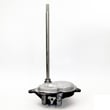
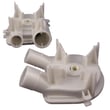
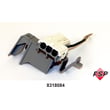
| Won’t spin or won’t drain | Failed lid switch or pump | Washer lid switch assembly WP8318084, washer drain pump WP3363394 |
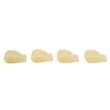
| Agitator doesn’t move properly | Worn agitator dogs | Agitator dog 80040 |
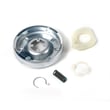
| Loud grinding, won’t agitate/spin | Worn motor coupling | Washer motor coupling 285753A |
Why it matters
A targeted repair can restore wash performance and extend the life of the LSB6000PQ0 for years, especially when the failure is a normal wear component (switches, couplings, pumps). Whirlpool’s warranty language in the manual also highlights that major structural items (like the outer tub and basket) were designed for long service life when the washer is operated and maintained as instructed.
Tips to avoid repeat failures after a repair
- Keep loads balanced; chronic out-of-balance spinning accelerates clutch and suspension wear.
- Avoid overloading; it strains the drive system and motor coupling.
- Use the correct detergent amount; excess suds can contribute to drain and spin complaints.
- Follow bleach and fabric-care guidance to prevent damage and rewash cycles (see the LSB6000PQ0 owner's manual).
Last updated: February 2026
What is the most common problem with Whirlpool washers?
The most common Whirlpool washer problem is a no-drain or no-spin condition. On the Whirlpool LSB6000PQ0 top-load washer, this is usually caused by a failed lid switch, a worn motor coupling, or a drain pump issue, and it often shows up as water left in the tub or a basket that will not spin.
Quick checks we recommend first
- Make sure the load is balanced; redistribute heavy items and try a Drain/Spin cycle.
- Confirm the lid closes firmly; if the washer stops when you lift the lid, the lid switch circuit is involved.
- Check the drain hose for kinks and verify the standpipe is not clogged.
- Listen during drain: a steady hum with no water movement points to a pump blockage or failed pump.
- If the motor runs but the basket does not move, the drive system (coupling, clutch, gearcase) is the likely area.
Most common causes and what they look like
| Symptom | Most likely cause | Common clue |
|---|---|---|
| Won’t spin, may still drain | Lid switch problem | Stops as soon as lid is opened or won’t start spin at all |
| Won’t drain, water stays in tub | Drain pump problem | Hums, drains slowly, or won’t drain |
| Motor runs but no agitation/spin | Motor coupling worn/broken | Burning rubber smell or intermittent movement |
| Spins weakly or slips under load | Clutch wear | Tub starts then slows, especially with heavier loads |
Parts that commonly fix no-spin or no-drain on LSB6000PQ0
- Washer lid switch assembly WP8318084: restores spin/drain operation when the washer “thinks” the lid is open.
- Washer motor coupling 285753A: connects the motor to the drive system; a common wear item on direct-drive designs.
- Washer drain pump WP3363394: moves water out of the tub; failures cause slow or no draining.
- Clutch 285785: helps the basket reach full spin speed; wear causes slipping.
Why it matters
A washer that cannot drain or spin leaves clothes soaking wet and can strain the drive motor and gearcase over time. Catching the root cause early often prevents bigger repairs.
For model-specific operating and care guidance (including loading and usage tips), use the LSB6000PQ0 owner's manual.
Last updated: February 2026
Are Whirlpool washer parts interchangeable?
Whirlpool washer parts are only interchangeable when the replacement part is specified to fit your exact washer model. For Whirlpool LSB6000PQ0, we recommend using factory specified parts so the component fits correctly, works correctly, and does not create new problems during agitation, drain, or spin.
What “interchangeable” really means
Parts can look similar across Whirlpool-built washers, but small differences (mounting points, electrical connectors, shaft sizes, timing cams) can prevent proper operation.
Common examples where “close enough” causes trouble:
- A lid switch that plugs in but does not align with the lid strike
- A drain pump that mounts differently and leaks
- A motor coupling that fits loosely and fails early
- A timer with different internal contacts that changes cycle behavior
For model-specific part identification, use the LSB6000PQ0 owner’s manual.
Best practice for choosing the right part
We match parts to Whirlpool LSB6000PQ0 by fit and function. When you are troubleshooting, start with the symptom and confirm the correct part category.
- Use the model number LSB6000PQ0 when searching parts
- Match by part ID and description, not by appearance
- Replace related wear items together when recommended (for example, coupling components)
- Verify electrical parts by connector style and mounting location
- Follow the installation and testing steps in the manual
Quick examples for LSB6000PQ0
| Symptom | Often involved part | Example from available parts |
|---|---|---|
| Won’t drain | Drain pump | Washer drain pump WP3363394 |
| Won’t spin or stops when lid opens | Lid switch | Washer lid switch assembly WP8318084 |
| Agitator not moving properly | Agitator drive wear items | Agitator dog 80040 |
Why it matters
Using the correct Whirlpool-specified part protects wash performance and helps prevent repeat failures. The manual also recommends using factory specified replacement parts because they are made to the same precision as the original components.
Last updated: February 2026
What is the most important part of a washing machine?
In a Whirlpool washer like model LSB6000PQ0, the most important “part” is the control system (timer or electronic controls) because it coordinates filling, agitation, draining, and spinning. If the control can’t run the sequence safely, the washer can’t complete any cycle.
What counts as the “most important” part?
Different answers are correct depending on what you mean by most important:
- Makes the washer run cycles: the control (often a timer on this style)
- Makes the washer wash: the drive system (motor, coupling, transmission/gear case, clutch)
- Keeps it safe to operate: the lid switch (stops spin/agitation when the lid is open)
- Moves water in and out: inlet valve and drain pump
For model-specific operation and safety guidance, use the LSB6000PQ0 owner's manual.
Quick “importance” comparison
| If this fails | What you’ll usually see | Common related part for LSB6000PQ0 |
|---|---|---|
| Control/timer | Won’t advance, stalls mid-cycle, wrong cycle behavior | Washer timer WP8546685 |
| Lid switch | Won’t spin or drain, acts “dead” with lid open | Washer lid switch assembly WP8318084 |
| Drive coupling | Motor runs but won’t agitate or spin | Washer motor coupling 285753A |
| Drain pump | Won’t drain, water left in tub | Washer drain pump WP3363394 |
Why it matters when troubleshooting
When a washer won’t run, we narrow it down by asking: is it not being told to run (control issue), not allowed to run (safety interlock like the lid switch), or unable to run (drive or pump problem). That approach prevents replacing good parts.
Practical checks before replacing parts
- Confirm the washer is plugged into a grounded outlet and the cord is secure.
- If the hot water hasn’t been used for 2 weeks or more, run hot faucets for several minutes before washing (reduces risk from trapped gas in the plumbing).
- If it won’t spin, check lid closure and listen for a lid switch “click.”
- If it won’t drain, check the drain hose for kinks and the standpipe/sink for clogs.
- If it’s noisy or walking, level the washer and balance the load.
Last updated: February 2026





