Owner’s manual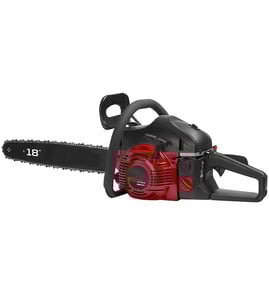





How many cc's is a McCulloch CS380 chainsaw?
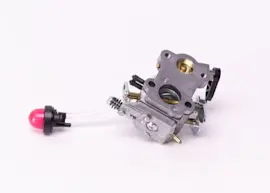
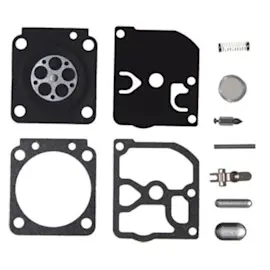
The engine displacement (cc) for the Mcculloch CS380 is listed in the specifications section of the CS380 owner's manual. Use that spec (not bar length or chain type) when matching fuel-system parts like the carburetor, fuel lines, and air filter.
We recommend checking the “Technical data” or “Specifications” table in the manual. Look for “engine displacement” or “cylinder displacement.”
- Open the CS380 owner's manual
- Go to the technical data/specifications pages
- Find “engine displacement” (cc)
- Write it down before ordering parts or tuning
- Match parts by model number CS380 and the displacement spec
Even when you are focused on cc, these specs matter for safe cutting performance and correct replacement cutting equipment.
| Spec (CS380) | What it means | Value shown in manual excerpt |
|---|---|---|
| Standard bar length | Typical bar shipped with the saw | 18 in (45 cm) |
| Recommended bar lengths | Approved bar sizes | 14 in (35 cm), 18 in (40 cm), 18 in (45 cm) |
| Chain pitch | Chain spacing standard | 3/8 in |
| Drive link gauge | Drive link thickness | 0.050 in (1.3 mm) |
| Oil pump type | How the chain is lubricated | Automatic |
Engine displacement helps us choose the right carburetor and fuel-delivery parts, and it also affects how the saw should be tuned and loaded. Using the correct spec prevents hard starting, rough running, and poor cutting performance.
A “won’t start” complaint is often fuel-related (stale mix, clogged filter, cracked fuel line) or ignition-related (fouled spark plug). For step-by-step checks, use tips for a hard to start chainsaw.
- Drain old fuel mix and refill with fresh, properly mixed 2-cycle fuel
- Check the spark plug condition and gap
- Inspect fuel lines for cracks or loose connections
- Clean/replace the air filter
- Verify the choke and primer are working correctly
If you need to look up parts by model number, start with the parts list for CS380, or search by model on Sears PartsDirect.
Last updated: February 2026
What are the main parts of a chainsaw?
On the Mcculloch CS380 gas chainsaw, the main parts include the engine unit, the cutting system (guide bar and saw chain), and the handle and safety controls that let you operate the saw safely and consistently. For the full labeled diagram, use the CS380 owner's manual.
Here are the core assemblies and controls called out in the manual:
- Engine and starting system: cylinder cover, starter handle, starter, muffler
- Fuel and air system: fuel tank, choke control/start throttle lock, air purge, carburetor adjuster screws
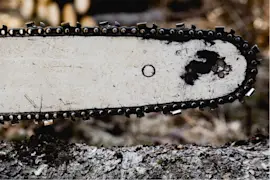
- Cutting system: guide bar, bar tip sprocket, saw chain, clutch cover
- Chain management and protection: chain tensioner wheel, chain catcher, bumper spike (accessory), guide bar cover
- Controls and operator protection: stop switch, throttle trigger, throttle lockout, front hand guard, rear handle with right hand guard
- Lubrication: chain oil tank (automatic oil pump system)
The cutting system is what actually does the work:
| Component | What it does | Common issues when worn or wrong |
|---|---|---|
| Guide bar | Supports and guides the chain around the nose | Crooked cuts, excess heat, chain derailment |
| Saw chain | Cuts wood with sharpened cutters and depth gauges | Slow cutting, fine dust instead of chips, kickback risk |
| Bar tip sprocket | Helps the chain roll smoothly at the bar nose | Binding, overheating, premature chain wear |
Knowing the main parts helps you troubleshoot faster and order the right replacement components. For example, a “won’t start” problem usually points to fuel, air, or ignition controls, while poor cutting performance is usually in the bar, chain, or lubrication system.
For replacement parts by model number, we recommend starting with the CS380 parts diagrams, or searching by model on Sears PartsDirect.
Last updated: February 2026
What is the average lifespan of CS380?
With normal homeowner use and routine maintenance, a Mcculloch CS380 gas chainsaw typically lasts 8 to 10 years. Lifespan depends most on fuel quality, air filtration, bar and chain lubrication, and whether the saw is stored properly between seasons.
- Fuel practices: fresh, properly mixed fuel reduces carburetor and fuel-line problems.
- Air filter care: a clean filter prevents dust from scoring the cylinder and piston.
- Bar and chain oiling: consistent lubrication reduces wear on the bar, chain, and drive sprocket.
- Fastener and safety checks: keeping nuts, screws, cables, and the stop switch in good shape prevents damage and unsafe operation.
- Storage habits: off-season storage that prevents stale fuel extends engine life.
Use the maintenance intervals and procedures in the [CS380 operator’s manual]. As a practical baseline:
- Before each use: check chain tension, chain brake function, and bar oil level
- After each use: clean debris from the clutch cover area and cooling air intake
- Weekly (or every few tanks): inspect the drive sprocket for wear, check for fuel leaks, tighten hardware
- Seasonally: replace the spark plug if starting becomes inconsistent (manual lists Champion RCJ 7Y)
| Symptom | Most common cause | Usually fixable? |
|---|---|---|
| Won’t start after storage | stale fuel, clogged carburetor, cracked fuel lines | Yes |
| Runs rough or surges | dirty carburetor, air leak, plugged filter | Yes |
| Low power, hard starting hot | compression loss from wear | Sometimes |
| Excessive bar/chain wear | poor lubrication, worn sprocket | Yes |
For step-by-step troubleshooting, we use [tips for a hard to start chainsaw] and the manual’s maintenance section.
A CS380 is a high-RPM 38 cc saw (manual lists 9,000 RPM rated power); small maintenance lapses add up quickly. Consistent fuel, filtration, and lubrication are what turn a short-lived saw into a long-lived one.
Last updated: March 2026