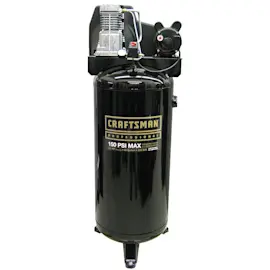
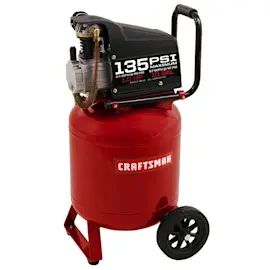
Owner’s manual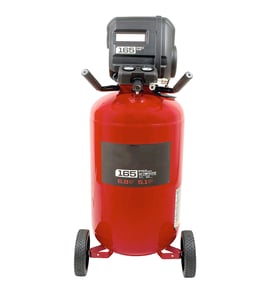

What is the most common cause of air compressor failure?
The most common cause of failure on an air compressor like the Craftsman 919195410 is poor maintenance that leads to overheating and accelerated wear. Restricted ventilation, a dirty intake filter, and running the unit hard without breaks commonly damage the motor, pressure switch, and pump components over time (see the owner's manual).
What “poor maintenance” usually means
These are the failure triggers we see most often on homeowner compressors:
- Blocked ventilation openings or operating in a confined area, which causes overheating
- Dirty or restricted air intake filter, which reduces airflow and stresses the pump
- Not draining the tank daily, which allows water to rust and weaken the tank
- Air leaks at fittings, the check valve, or the regulator, which makes the compressor run longer than it should
- Excessive vibration or loose mounting, which can loosen fittings and damage components
Quick prevention checklist for the 919195410
Use this routine to reduce breakdowns and nuisance problems like safety valve popping:
- Operate in a clean, dry, well-ventilated area; keep at least 12 inches of clearance around the unit
- Never place objects on or against the compressor that could block airflow
- Drain the tank daily or after each use to remove condensed water
- Keep the cord and air hose protected from being stepped on or run over
- Unplug power, bleed tank pressure, and let the unit cool before servicing
Common failure symptoms and what they point to
| Symptom | Most likely cause | What to check first |
|---|---|---|
| Won’t start | Electrical issue, pressure switch problem, or hard restart against tank pressure | Power supply, pressure switch operation, tank pressure level |
| Won’t build tank pressure | Air leak, restricted intake, check valve issue | Intake filter, fittings, check valve |
| Safety valve pops | Pressure switch not shutting off at cut-out | Stop use and inspect pressure switch function |
| Can’t adjust output pressure | Regulator problem or leak | Regulator knob, outlet fittings, hose |
Why it matters
Overheating and long run times are the fastest way to shorten compressor life. Keeping airflow open, fixing leaks, and draining the tank prevents rust damage and reduces stress on the motor, pressure switch, and pump.
For step-by-step troubleshooting, use air compressor won't start or air compressor won't build tank pressure.
Last updated: February 2026
What does 4.0 scfm at 90 PSI mean?
It means the compressor can deliver 4.0 standard cubic feet per minute (SCFM) of airflow while maintaining 90 PSI at the outlet. For the Craftsman 919195410, the rating in the owner's manual is 6.8 SCFM @ 90 PSIG, which helps you match the compressor to your air tool’s airflow demand.
How to use SCFM @ 90 PSI when choosing tools
Use the tool’s required CFM/SCFM at a stated PSI and compare it to your compressor’s SCFM @ 90 rating.
- Find your tool’s airflow requirement (often listed as CFM @ 90 PSI)
- Compare it to the compressor’s SCFM @ 90 PSIG rating
- If the tool requires more SCFM than the compressor can supply, pressure will drop during use
- If the compressor rating is higher, the tool runs more consistently
- Remember: long hoses, small fittings, and leaks reduce real airflow at the tool
What “SCFM” and “PSI/PSIG” mean
SCFM is airflow measured under standard conditions so different compressors can be compared fairly. PSI is pressure; PSIG is pressure measured relative to atmospheric pressure (the gauge reading).
| Term | What it tells you | Why you care |
|---|---|---|
| SCFM | Airflow volume per minute | Determines whether a tool can be supplied continuously |
| 90 PSI (or 90 PSIG) | Operating pressure point | Common rating point for many pneumatic tools |
| Cut-in / cut-out pressure | When the motor starts/stops | Affects how often the compressor cycles |
Model-specific numbers for Craftsman 919195410
From the manual specs for model 919195410:
- 6.8 SCFM @ 90 PSIG
- 8.6 SCFM @ 40 PSIG
- Approximate cut-in 120 PSI, cut-out 150 PSI
Why it matters
If your tool needs more airflow than the compressor can deliver at 90 PSI, you will see weak performance (slow impact wrench, poor spray pattern, nailer misfires) even if the tank is full.
Last updated: February 2026
How to tell if an air compressor regulator is bad?
On the Craftsman 919195410 air compressor, a bad regulator shows up as outlet pressure that will not hold steady, a continuous air leak at the regulator knob, or a regulator that will not shut off airflow. You may also notice excessive pressure drop at the outlet gauge when a tool is running.
Quick checks we use to confirm a regulator problem
- Set the compressor to AUTO and let the tank build to cut-out.
- With the tool connected and running, adjust the regulator under flow (this is the correct way to set regulated pressure).
- Listen and feel around the regulator knob and outlet for constant hissing.
- Turn the regulator down to 0 PSI; the outlet should stop supplying air.
- Compare tank pressure behavior vs regulated (outlet) pressure behavior.
Symptoms: regulator issue vs normal operation
Some pressure change is normal, but these signs point to a failing regulator.
| What you notice | Most likely cause | What to do next |
|---|---|---|
| Outlet pressure drops a little when a tool runs | Normal pressure drop under flow | Adjust regulator while the tool is running (under flow) |
| Outlet pressure drops a lot and tools starve | Regulator not controlling well, or compressor cannot supply enough air | Verify tool SCFM needs; then re-check regulator setting |
| Constant air leak at regulator knob | Worn internal seals/diaphragm in regulator | Replace the regulator assembly |
| Regulator will not shut off outlet air | Internal regulator failure | Replace the regulator assembly |
Why it matters
The regulator controls downstream pressure to your hose and tools. Our goal is steady, safe outlet pressure because the manual warns that the regulator outlet pressure must never exceed the maximum pressure rating of your air tools and accessories. See the owner's manual for the correct control locations and operating steps.
Related troubleshooting if pressure still is not right
If the regulator seems OK but performance is still poor, these common issues can mimic a bad regulator:
- Restricted air intake or dirty air filter
- Air leaks at fittings, hose, or quick-connect
- Check valve restriction
- Compressor too small for the tool’s air (SCFM) requirement
For step-by-step symptom troubleshooting, use air compressor can't adjust the output air pressure.
Last updated: February 2026