
How to tell if an air compressor regulator is bad?
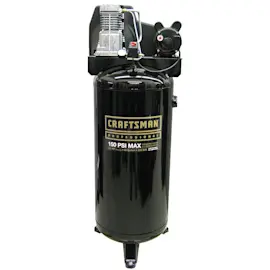
A bad regulator on your Craftsman 919175251 2-stage air compressor shows up as unstable outlet pressure: it will not hold the PSI you set, it creeps higher with no trigger pulled, or it drops hard when you use an air tool. These symptoms point to internal wear, contamination, or a leaking seat/diaphragm.
Quick symptoms checklist
- Pressure creep: outlet PSI slowly rises after you stop airflow
- Pressure droop: outlet PSI falls sharply when a tool is running
- Won’t adjust: knob turns but outlet PSI barely changes
- Fluctuations: gauge needle hunts up and down during steady use
- Constant hissing: air leaks from the regulator body/vent area
- Tool issues: nailer, impact, or spray gun performance is inconsistent
Simple tests we use (no special tools)
- Set tank pressure first: let the compressor fill and stop normally.
- Set regulator to a known value: for many air tools, 90 PSI is a common target.
- No-flow creep test: with the hose connected but no trigger pulled, watch the outlet gauge for 2 to 5 minutes.
- Flow droop test: run a blow gun or tool continuously and watch whether outlet PSI holds steady.
What the results usually mean
| What you see | Most likely cause | What to do next |
|---|---|---|
| Outlet PSI rises on its own | Regulator seat not sealing, debris inside | Try cleaning; replace regulator if creep continues |
| Outlet PSI drops a lot under use | Regulator can’t flow, diaphragm/valve issue | Confirm hose/fittings first; replace regulator if confirmed |
| Hissing at regulator | Damaged seal, cracked body, loose fitting | Tighten fittings; replace if leak is from the body |
Before you blame the regulator
- Check for leaks at quick-connects, hose ends, and the tool inlet.
- Drain the tank; water in the air system can cause sticking and erratic regulation.
- Confirm the tank gauge is normal; a weak pump or check valve problem can mimic “droop.”
Why it matters
A regulator that cannot control downstream PSI can cause poor tool performance and can also make you chase the wrong problem (pump, pressure switch, or leaks) when the real issue is pressure control at the outlet.
For safe electrical checks during troubleshooting, we recommend our how to use a multimeter to test electrical parts video.
Last updated: February 2026
Is a 150 PSI air compressor good for car detailing?
Yes. A 150 PSI air compressor is a solid choice for car detailing because it gives you plenty of maximum pressure headroom; what matters most day to day is whether your Craftsman 919175251 can deliver enough airflow (CFM) at your working pressure (often 60 to 90 PSI) for the tools you use.
What to look at besides PSI
For detailing tools, PSI is usually regulated down; airflow and storage determine how long you can work before the compressor has to catch up.
- CFM at 90 PSI (or 40 PSI): higher CFM keeps Tornador-style tools, blow guns, and air nozzles consistent
- Tank size: larger tanks reduce rapid cycling and pressure drop during long blow-outs
- Duty cycle: higher duty cycle helps for continuous interior cleaning sessions
- Moisture control: add a water separator or filter to reduce water spit on paint and interiors
- Noise and portability: important for mobile detailing setups
Practical sizing guidance for common detailing tasks
Use this as a quick planning guide; then match it to the CFM rating on your compressor’s data plate.
| Detailing task | Typical working pressure | What matters most | Practical target |
|---|---|---|---|
| Blow gun, dusting, drying cracks | 60 to 90 PSI | steady airflow | moderate CFM, any tank helps |
| Tornador-style cleaning gun | ~90 PSI | high sustained CFM | higher CFM at 90 PSI |
| Inflating tires | 30 to 40 PSI | pressure, not airflow | almost any compressor works |
| Light air tools (small ratchet) | 90 PSI | CFM and recovery | higher CFM, larger tank |
Setup tips that make a 150 PSI compressor work better for detailing
- Set a regulator at the hose so the tool sees stable pressure
- Use a 3/8-inch hose for better flow (especially with high-demand tools)
- Keep fittings high-flow and minimize quick-connect restrictions
- Drain the tank after use to reduce moisture carryover
- If you see water at the nozzle, add filtration and shorten hose runs
Why it matters
Detailing tools are sensitive to airflow. A compressor can be rated at 150 PSI and still feel weak if its CFM is low; matching CFM and tank size to your tools prevents pulsing, weak blow-out performance, and frequent cycling.
For more DIY help with electrical checks on compressor switches, cords, or motors, use our guide: how to use a multimeter to test electrical parts video.
Last updated: February 2026
What are the 4 types of compressors?
The four common compressor types are reciprocating (piston), rotary screw, centrifugal, and axial. Your Craftsman 919175251 is a 2-stage air compressor, which is typically a reciprocating (piston) design used for higher pressure shop and tool applications.
The 4 compressor types (and what they’re best for)
- Reciprocating (piston): Uses pistons and valves; great for intermittent use, higher pressures, and smaller to mid-size tanks.
- Rotary screw: Uses two meshing rotors; best for continuous duty and steady airflow in commercial/industrial settings.
- Centrifugal: Uses a high-speed impeller; best for very high airflow in large facilities.
- Axial: Uses multiple rotor/stator stages; mainly used in specialized high-flow applications (often aerospace and large turbines).
Quick comparison
| Type | Compressor class | Typical strength | Typical tradeoff |
|---|---|---|---|
| Reciprocating (piston) | Positive displacement | Higher pressure capability; common for garages | Louder; more vibration; more wear parts |
| Rotary screw | Positive displacement | Smooth, continuous air delivery | Higher upfront cost; more complex service |
| Centrifugal | Dynamic | Very high airflow efficiency at scale | Not ideal for small shops; needs stable operating range |
| Axial | Dynamic | Extremely high flow in compact stages | Specialized; uncommon for general compressed air tools |
Why “2-stage” matters for your Craftsman 919175251
A 2-stage reciprocating compressor compresses air in two steps (low-pressure cylinder, then high-pressure cylinder). That design is used when you need higher PSI and better efficiency than a single-stage piston compressor.
Related DIY help we recommend
If you’re troubleshooting power, wiring, or motor issues on an air compressor, our electrical test basics apply directly:
Last updated: February 2026
What is the most common cause of air compressor failure?
For a Craftsman 919175251 2-stage air compressor, the most common cause of failure is poor maintenance that leads to overheating and accelerated wear. Dirty intake filtration, incorrect or low oil (on oil-lubricated pumps), and ignored air leaks make the pump and motor work harder until components fail.
What usually fails first (and why)
When maintenance is skipped, these problems show up most often:
- Restricted airflow (dirty intake filter or blocked cooling fins) causing overheating
- Low, wrong, or contaminated oil (if your pump is oil-lubricated) causing rapid wear to bearings and cylinder walls
- Air leaks at fittings, hose, tank drain, or check valve causing excessive run time
- Moisture left in the tank causing internal corrosion and debris in valves/regulator
- Electrical stress (loose wiring, weak capacitor, undersized extension cord) causing hard starts and motor damage
Quick prevention checklist for the 919175251
These habits prevent most “won’t build pressure” and “won’t start” complaints:
- Keep the pump and motor area clear; maintain good ventilation around the compressor
- Check oil level and condition regularly (if equipped); change oil on schedule
- Drain the tank after use to remove water and reduce rust
- Listen for hissing; fix leaks promptly so the unit does not run constantly
- Clean dust from cooling fins and shrouds; keep the intake area clean
- Use a properly sized power circuit; avoid long, light-gauge extension cords
Symptoms and the most likely cause
| Symptom | Most likely cause | What to check first |
|---|---|---|
| Runs hot, shuts off, or trips breaker | Overheating or electrical overload | Airflow, cooling fins, cord/circuit size |
| Runs constantly, slow to build pressure | Air leak or worn valves/rings | Leak check at fittings, drain valve, check valve |
| Won’t start, hums, or struggles | Electrical issue or pressure not unloading | Power supply, wiring, unloader function |
| Water spits from tools/lines | Excess moisture in tank | Drain routine, add filtration if needed |
Why it matters
A 2-stage compressor like the Craftsman 919175251 is designed to cycle on and off. When leaks, heat, or lubrication issues force long run times, the pump and motor operate outside normal conditions, which shortens life and increases the chance of sudden failure.
For safe DIY electrical checks (like verifying power and connections), we recommend using a meter and following a proven process such as how to use a multimeter to test electrical parts video.
Last updated: February 2026