Owner’s manual
 View engine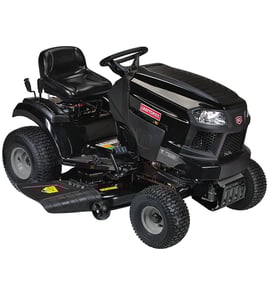


Do Craftsman mowers use Briggs and Stratton engines?
Yes. Craftsman mowers and lawn tractors commonly use Briggs and Stratton engines, and Craftsman has also used other engine makers on different series and years. For your Craftsman lawn tractor model 917271832, the correct way to identify the exact engine is to match the engine model code on the engine label to the engine information in the 917271832 owner's manual.
What this means for model 917271832
We treat the tractor model and the engine model as two separate identifiers. The tractor model (917271832) tells us the chassis and deck family; the engine label tells us the exact engine you need tune-up parts for.
- Find the engine ID label (often on the blower housing, valve cover, or near the starter)
- Write down the engine model, type, and code (Briggs and Stratton commonly uses this format)
- Use the engine section in the 917271832 owner's manual to confirm the engine and specs
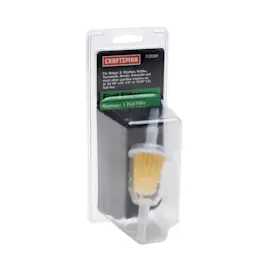
- Buy maintenance parts by engine model (spark plug, air filter, fuel filter), not only by tractor model
- If the engine was replaced, follow the replacement engine’s label and specs
Common engine brands used on Craftsman mowers
Craftsman sourcing varies by mower type and production run.
| Craftsman equipment type | Engine brands you commonly see | What varies most |
|---|---|---|
| Walk-behind mower | Briggs and Stratton, Honda, others | Retailer and series |
| Front-engine lawn tractor | Briggs and Stratton, Kohler, others | Year and trim level |
| Zero-turn mower | Briggs and Stratton, Kawasaki, others | Horsepower class |
Why it matters
Engine identification controls the correct oil type and capacity, spark plug specification, air filter style, and carburetor or ignition parts. Using only the tractor model can lead to mismatched tune-up parts.
Related deck note
If you are also servicing the cutting deck, match blade style to your deck configuration; a common deck part is the husqvarna lawn tractor mulching blade, 21-in 532134149.
Last updated: January 2026
How much does it cost to replace a riding lawn mower engine?
For the Craftsman lawn tractor model 917271832, a full engine replacement (parts plus labor) typically runs $260 to $1,800, with labor time commonly around 6 hours for a riding mower engine swap. Exact cost depends on the engine type, shop rate, and any extra repairs found during removal.
What drives the total price
- Engine cost: New or remanufactured engines vary widely by horsepower, shaft size, and mounting pattern.
- Labor rate: Shops often charge by the hour; riding mower engine swaps take longer than walk-behind mowers.
- Extra parts: Belts, pulleys, wiring, fuel lines, and hardware sometimes need replacement during the job.
- Root cause: If the old engine failed due to overheating, low oil, or debris, related issues may need correction.
- Availability: Older models can have higher costs if compatible engines are harder to source.
Quick cost breakdown (typical ranges)
| Cost item | Typical range | Notes |
|---|---|---|
| Engine (part) | $200 to $1,400 | Biggest variable; depends on specs and brand |
| Labor | $200 to $600 | Often based on ~6 hours at shop rate |
| Misc. parts and supplies | $20 to $200 | Belts, clamps, fuel filter, oil, hardware |
Before you replace the engine
We recommend confirming the engine is truly the problem before spending on a swap.
- Check battery condition and cable connections
- Verify the PTO is disengaged and safety switches are working
- Inspect for a seized blade spindle or deck issue that loads the engine
- Look for obvious fuel problems (stale gas, clogged filter)
- Review engine removal and wiring routing in the 917271832 owner's manual
Why it matters
An engine replacement can cost close to the value of an older riding mower. A quick diagnosis first helps you decide whether a repair (starter, carburetor, battery, deck components) is the better investment.
Last updated: January 2026
What are the most common issues with 917271832?
The most common issues we see on the Craftsman 917271832 lawn tractor involve the cutting deck (belt and blade drive), starting and key problems, steering wear, and drive/transaxle performance. These problems usually show up as poor cut quality, blades not engaging, no-crank, loose steering, or loss of motion.
Common symptoms and what they usually point to
- Blades will not engage or deck stops under load: worn or stretched deck belt, weak idler spring, or a sticking idler arm.
- Uneven cut, vibration, or loud deck noise: damaged blade, worn mandrel bearings, or a failing mandrel assembly.
- No-crank or intermittent start: worn key, loose battery cables, or safety switch/ignition circuit issues.
- Loose steering or wandering: worn drag link or steering sector gear wear.
- Loss of drive or weak pulling power: drive belt issues, linkage problems, or transaxle wear.
Parts that commonly fix these issues (when worn)
If your symptoms match, these are frequently replaced wear items for model 917271832:
- V-belt 532138255 (deck or drive belt wear can cause slipping)
- Molded ignition key 532140403 (common for no-start when the key is worn or damaged)
- Lawn tractor blade idler pulley 532139245 (noisy pulley or belt tracking problems)
- Lawn tractor blade idler spring 532169022 (weak tension causes belt slip)
- Husqvarna lawn tractor mandrel assembly 532130794 (bearing noise, wobble, poor cut)
Quick checks we recommend before buying parts
- Park on level ground, set the parking brake, remove the key, and disconnect the spark plug wire.
- Inspect belts for glazing, cracks, fraying, or a “rolled” edge.
- Spin deck pulleys by hand; roughness or wobble indicates bearing or mandrel wear.
- Confirm the blade engagement cable moves the idler arm smoothly.
- Check battery terminals for tight, clean connections and verify safety interlocks are being pressed.
Symptom-to-part cheat sheet
| Symptom | Most likely area | Example part from this model |
|---|---|---|
| Blades do not stay spinning | Belt tension/drive | V-belt, idler spring, idler pulley |
| Deck squeals or rattles | Mandrel/pulleys | Mandrel assembly |
| Key turns but nothing happens | Start circuit | Molded ignition key |
Why it matters
Catching belt, pulley, and mandrel wear early prevents thrown belts, damaged spindles, and poor cut quality. It also reduces strain on the engine pulley and deck lift components.
For model-specific diagrams, adjustment points, and maintenance intervals, use the owner's manual.
Last updated: March 2026