Owner’s manual
 Error Codes


What is the lifespan of a Samsung front load washer?
A Samsung front load washer typically lasts 10 to 15 years in normal home use. For your Samsung WF448AAE, lifespan depends most on load size, how often you run high-speed spin cycles, and routine care steps listed in the owner's manual.
- Overloading (stresses the spin basket, bearings, and suspension)
- Frequent unbalanced loads (increases vibration and wear)
- Detergent misuse (too much or non-HE detergent can cause residue and odors)
- Water quality and pressure (this model’s spec range is 20 to 116 psi)
- Maintenance habits (door boot care, drain pump filter cleaning)
- Leave the door slightly open between loads to help the door boot dry.
- Wipe the door boot and glass after washing bulky or linty loads.
- Clean the drain pump filter regularly; a clogged filter can strain draining and extend cycle times.
- Use the correct amount of HE detergent; reduce for soft water.
- Level the washer and keep it stable to reduce vibration at high spin speeds.
| Symptom | Often indicates | Common next step |
|---|---|---|
| Loud banging or walking | Unbalanced load or worn suspension | Rebalance load; inspect shocks |
| Water leaking at door | Door boot wear or clamp issue | Inspect boot and clamps |
| Won’t drain or drains slowly | Clogged filter or drain path restriction | Clean filter; check hoses |
| Excess vibration at spin | Leveling, load size, suspension wear | Re-level; reduce load; inspect shocks |
If vibration and banging are getting worse over time, replacing suspension parts can extend usable life; the Samsung washer shock absorber DC66-00470A is one example of a wear item that can contribute to stability.
A front load washer like the WF448AAE spins at high speed (up to 1300 rpm), so controlling vibration, keeping the drain system clear, and preventing door boot moisture buildup are the biggest factors in getting a full service life.
Last updated: February 2026
What is the most common problem with Samsung washing machines?
For the Samsung WF448AAE washer, the most common customer-reported problems center on spin and drain performance: the washer will not spin out water (wet clothes) because the load is unbalanced, or it will not drain because of a partial clog in the drain system. The owner's manual also calls out unbalanced loads and drain clogs as frequent causes behind information codes.
- Won’t spin or stops before high-speed spin: unbalanced load, leveling issues, worn suspension.
- Won’t drain or drains slowly: debris in the drain pump filter, a restriction in the drain hose.
- Excessive vibration or banging: load size mix, washer not level, weak shock absorbers.
- Fills slowly or shows fill-related codes: kinked hoses, closed faucets, clogged inlet screens.
- Too many suds: wrong detergent type or too much detergent (the washer may pause until suds reduce).
- Redistribute the load and restart; the manual notes an unbalanced load can prevent spinning.
- Run a Spin-only cycle to confirm the washer can drain and ramp up.
- Clean the drain pump filter; the manual specifically recommends cleaning the drain filter when the washer is not draining.
- Verify water supply: open both faucets fully, straighten kinked hoses, and check inlet screens.
- Confirm the washer is level on the floor; re-level if it rocks.
| Symptom | Common area | Example part for WF448AAE |
|---|---|---|
| Banging, shaking, DC-type unbalance behavior | Suspension | Samsung washer shock absorber DC66-00470A |
| Slow drain, “not draining” behavior | Drain filter | Washer drain pump filter DC97-16991A |
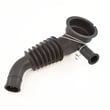
| Leaks at the door, odors, water at front | Door boot and clamps | Washer door boot DC64-01570A |
Spin and drain problems are the issues that most directly leave you with wet clothes and incomplete cycles. Catching a simple cause early (load balance, a clogged filter, kinked hoses) can prevent repeat errors and reduce wear on the tub, pump, and suspension.
Last updated: February 2026
How much does it cost to repair a Samsung washing machine?
For a Samsung WF448AAE washer, most repairs typically land in the $200 to $500 range depending on the failed part and labor time. Simple fixes (like a fill problem) often cost less than major electronic or drive-related repairs; our owner's manual helps you narrow the symptom before you price parts.
These are common real-world ranges for front-load washers like the WF448AAE:
- Minor service visit and adjustment: $100 to $200
- Water fill issues (valve, screens, hoses): $150 to $300
- Drain problems (pump, filter, hose): $150 to $350
- Vibration or banging (suspension): $200 to $400
- Electronic control problems: $300 to $500
| Repair type | Common symptoms | Often involved parts |
|---|---|---|
| Fill system | Won’t fill, fills slowly, NF-type issues | Washer water inlet valve DC62-30314K |
| Drain system | Won’t drain, long drain, ND-type issues | Washer drain pump filter DC97-16991A, drain hose |
| Vibration control | Shaking, walking, loud spin | Samsung washer shock absorber DC66-00470A |
- Diagnosis time: Intermittent problems and multiple error codes take longer.
- Access and teardown: Tub, basket, and rear-tub work is labor-heavy.
- Multiple worn items: For example, a leaking door boot can also damage clamps or cause odor.
- Whether it’s a repeat failure: A clogged filter or kinked drain hose can mimic a bad pump.
We recommend these steps before replacing parts:
- Confirm hot and cold faucets are fully open.
- Check for kinked fill hoses and clean the inlet screens.
- If you see a “too many suds” condition, reduce detergent and rerun the cycle.
- Clean the drain pump filter area and verify the drain hose is not pinched.
- If the washer is shaking, verify it is level on all adjustable legs and the load is balanced.
A correct symptom check can turn a $300 to $500 “control board guess” into a targeted fix like a valve, hose, or suspension part. It also helps prevent repeat failures caused by clogs, oversudsing, or installation issues.
Last updated: February 2026