Owner’s manual
 Error Codes


How to identify a Kenmore washer model?
Your Kenmore washer model number is printed on the model and serial number plate on the machine. For Kenmore model 11028922791, use that full number (and the serial number) when ordering washer parts or looking up operating and installation details in the 11028922791 owner's manual.
Where to look on the washer
On Kenmore washers like model 11028922791, the model and serial number plate is on the cabinet. Common places to check include:
- Under the lid near the tub opening (top-load washers)
- Along the rim of the lid opening on the cabinet
- On the back panel near the power cord entry
- Behind the control console area (visible from the rear on some versions)
What the model number looks like (and why it matters)
Kenmore model numbers often start with 110 (a common Kenmore prefix). Using the exact model number helps us match the correct fit for items like a lid switch, drain pump, or inlet valve.
Quick ID checklist
- Write down the model number and serial number exactly as shown
- Use the full model number (for example: 11028922791, not just “110”)
- If the plate is hard to read, take a clear photo before cleaning it
- Keep the information with your purchase records for future repairs
Common parts you may match by model
Once you have the model number, you can confidently choose model-correct replacement parts. Examples for this washer include:
| Symptom | Common part to check | Example part for this model |
|---|---|---|
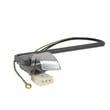
| Won’t spin or stops when lid opens | Lid switch | Washer lid switch WP3949238 |
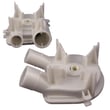
| Won’t drain or drains slowly | Drain pump | Washer drain pump WP3363394 |
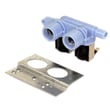
| Won’t fill or fills slowly | Inlet valve | Washer inlet valve 285805 |
Why it matters
Kenmore washers can look similar across many series, but internal components (like the timer, gear case, or drive system) can vary by model. Using the exact model number prevents ordering the wrong part and speeds up troubleshooting.
Last updated: February 2026
Is it worth repairing a Kenmore washing machine?
Yes, repairing a Kenmore washer is usually worth it when the fix restores reliable washing and spinning for far less than replacing the machine. For Kenmore model 11028922791, many common failures involve serviceable parts (lid switch, drain pump, drive coupling) that can extend the washer’s usable life.
A simple way to decide (repair vs. replace)
Use these practical checkpoints before spending money:
- Start with the symptom: no spin, no drain, won’t agitate, leaks, or excessive vibration.
- Compare total repair cost (parts plus labor) to a replacement washer.
- Prioritize safety and basics: proper grounding, stable power, and correct installation setup.
- Check installation items first: an unlevel washer or loose front-leg nuts can cause vibration and “bad washer” symptoms.
- Choose repairs that are “long-lasting”: mechanical wear parts often give a strong return when replaced correctly.
Repairs that are commonly worth it on this style of Kenmore top-load washer
These are frequent, high-impact fixes for a direct-drive Kenmore/Whirlpool-built top-load design:
| Symptom | Common cause | Example part for 11028922791 |
|---|---|---|
| Won’t spin or acts “dead” when lid closes | Lid switch not closing circuit | Washer lid switch WP3949238 |
| Won’t drain or drains slowly | Drain pump jammed or worn | Washer drain pump WP3363394 |
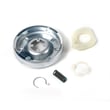
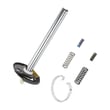
| Agitates/spins poorly, grinding, intermittent drive | Motor coupling worn/broken | Coupling 285753A |
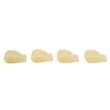
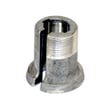
| Agitator “ratchets” or won’t move clothes well | Worn agitator dogs | Agitator dog 80040 |
Why it matters
A washer that is installed correctly and repaired with the right parts can deliver years of dependable operation. Your manual also highlights setup checks (leveling, tight front-leg nuts, electrical requirements) that directly affect performance and vibration, so correcting those can prevent repeat failures.
What we recommend before ordering parts
- Confirm the washer is level and the front-leg nuts are tight.
- Verify the water faucets are on and hoses are not kinked.
- Match the failure to the most likely part (table above), then follow the troubleshooting and operating guidance in the 11028922791 owner’s manual.
Last updated: February 2026
What is the average lifespan of a Kenmore washer?
A Kenmore washer typically lasts 10 to 15 years with normal household use. For Kenmore model 11028922791, steady care (correct loading, proper detergent use, and addressing small leaks or noises early) helps you reach the longer end of that range; heavy use and repeated overloading shorten it.
What affects washer lifespan the most
- Load size and balance: frequent overloading strains the drive system and suspension.
- Water quality: hard water can accelerate valve and internal buildup issues.
- Drain performance: slow draining makes the pump work harder and can lead to repeated cycle problems.
- Lid switch and safety interlocks: a failing switch can stop spin and cause repeated restarts.
- Agitation and drive wear: worn agitator components reduce cleaning and increase mechanical stress.
Common wear items to watch on this model
If performance changes, these parts are frequent suspects on top-load Kenmore washers like 11028922791:
| Symptom | Often related part | What you notice first |
|---|---|---|
| Won’t spin or stops mid-cycle | Washer lid switch WP3949238 | No spin with lid closed, intermittent operation |
| Won’t drain or drains slowly | Washer drain pump WP3363394 | Water left in tub, humming during drain |
| Agitator slips or doesn’t “grab” clothes | Agitator dog 80040 | Upper agitator movement is weak or one-directional |
| No fill or slow fill | Washer inlet valve 285805 | Long fill times, wrong temperature mix |
Maintenance habits that extend life
We recommend these practical steps (they matter more than “deep cleaning” routines):
- Keep loads below the top of the basket and distribute items evenly.
- Use the right amount of detergent; excess suds can cause poor rinsing and extra wear.
- Check fill hoses and the drain hose for kinks, cracking, or seepage.
- If you hear new grinding, squealing, or banging, stop using the washer and inspect before it worsens.
- Follow the operating and care guidance in the 11028922791 owner's manual.
Why it matters
A washer usually fails gradually, not suddenly. Catching early symptoms (slow drain, weak agitation, intermittent spin) helps you replace a lower-cost part like a lid switch, pump, or agitator component before bigger assemblies take damage.
Last updated: February 2026