Installation guide
 Owner’s manual


What is the life expectancy of a Whirlpool washing machine?
A Whirlpool washing machine like model WTW4616FW2 typically lasts 14 to 18 years with normal household use and basic maintenance. Real-world lifespan depends most on load size, how often you run cycles, installation/leveling, and water quality. For care guidance, see the WTW4616FW2 user manual.
What affects lifespan the most
We see these factors make the biggest difference in how long a top-load washer runs reliably:
- Overloading (stresses the drive system, suspension, and tub components)
- Unbalanced loads (increases vibration and wear)
- Hard water and detergent buildup (can affect valves, hoses, and wash performance)
- Poor leveling or weak flooring (causes “washer walk” and extra strain)
- Inlet hose age (old hoses are more likely to leak or restrict flow)
Maintenance that helps you reach the high end of the range
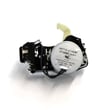
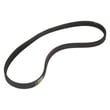
Use these habits to reduce wear on key parts like the drive belt, actuator, and drain pump:
- Keep loads medium-sized and distribute items evenly
- Use the right amount of HE detergent; too much can cause residue and odors
- Leave the lid open between loads to help the tub dry
- Periodically run a cleaning cycle (or an empty hot cycle if your model does not have one)
- Inspect fill hoses for bulges/cracks; replace on schedule (installation guidance is in the WTW4616FW2 installation instructions)
Quick “repair vs replace” guide
If your WTW4616FW2 is aging, this simple comparison helps:
| If the washer is… | Usually makes sense to… |
|---|---|
| Under ~10 years old | Repair common wear items (belt, lid lock, pump) |
| 10 to 14 years old | Compare repair cost vs. condition and usage |
| 14+ years old | Replace if repairs are frequent or major |
Why it matters
Knowing the typical 14 to 18 year lifespan helps you plan maintenance and decide when a symptom is normal wear versus a sign that a component is failing.
Last updated: January 2026
What is the most common problem with Whirlpool washers?
The most common issue we see on Whirlpool washers like model WTW4616FW2 is a “won’t start” complaint where the control panel lights come on but the Start button does not respond. This is often tied to the lid lock system, user interface, or main control not seeing a safe-to-run condition.
Quick checks before assuming a failed part
- Confirm the washer is plugged into a grounded outlet and the breaker is not tripped.
- Make sure the lid is fully closed; press down on the lid near the lock area and try Start again.
- Cancel the cycle and reselect a normal cycle; then press Start.
- Unplug the washer for 2 minutes to reset the control; then retry.
- If the washer beeps but will not run, watch for any flashing status lights that indicate a fault.
For model-specific operating steps and indicator-light behavior, follow the WTW4616FW2 user manual.
Parts that commonly cause a “lights on but won’t start” symptom
On WTW4616FW2, these are frequent suspects when basic power and lid closure are good:
- Washer lid lock W11307244: If the lock does not engage or the switch does not prove “lid locked,” the washer will not start.
- Cycle selection components: A failed selector can prevent the control from accepting a start command.
- Main control: If the control is not processing inputs correctly, the Start function can appear dead.
Symptom-to-part guide (fast triage)
| What you notice | Most likely area to check | What it affects |
|---|---|---|
| Lid won’t lock, clicking, or lock light acts odd | Lid lock and strike alignment | Safety interlock prevents starting |
| Starts sometimes, then stops or won’t restart | Control input or control logic | Cycle command not accepted |
| No response at all (no lights) | Power supply, cord, outlet | Washer never powers up |
Why it matters
A washer that powers up but will not start is usually protecting you from running with an unsafe lid condition or from running a cycle the control cannot verify. Fixing the root cause prevents mid-cycle stops, no-spin complaints, and repeat lock errors.
If you’re seeing a fault pattern, we recommend checking a Whirlpool top-load code list such as Whirlpool belt drive top load washer error codes to match the lights or code behavior to the most likely repair path.
Last updated: January 2026
What does F mean on a Whirlpool washer?
On Whirlpool washer model WTW4616FW2, an error code that starts with F means the control detected a fault. The letter F is normally followed by numbers (and sometimes an E code) that identify the specific problem; use the full code to troubleshoot accurately.
How to respond when you see an “F” code
Start with these quick steps before assuming you need parts:
- Cancel the cycle, then restart it.
- Unplug the washer for 1 minute, then plug it back in to reset the control.
- Watch the display carefully and write down the entire code (example: F7 E1).
- Confirm the lid is fully closed and nothing is caught in the lid area.
- Make sure hot and cold faucets are fully open and inlet hoses are not kinked.
- Reduce the load if the basket is tightly packed or off-balance.
For model-specific operating and display details, check the WTW4616FW2 installation instructions.
If the code points to a lid lock issue
Many Whirlpool top-load washers will stop, drain, or refuse to start if the lid lock system can’t lock or verify the lid.
Common signs:
- Lid won’t lock or unlock
- Clicking near the lid
- Washer stops mid-cycle
If diagnosis confirms a failed lock, the compatible replacement for this model is the washer lid lock W11307244.
If the code suggests a control fault
Some “F” codes can indicate an internal control problem or a wiring/communication issue. We can’t identify the exact control-board failure for WTW4616FW2 from the letter “F” alone; the full code is required.
Try these checks first:
- Verify the outlet is properly grounded; avoid extension cords
- Inspect visible wiring for pinched or damaged sections
- Reseat connectors if you’re comfortable doing so (power unplugged)
Quick guide: what “F” usually means
| What you see on the display | What it usually indicates | Best next step |
|---|---|---|
| F + numbers (and possibly E + numbers) | A specific detected fault | Look up the exact code and follow the checks |
| Just “F” (no numbers) | The full code didn’t display or cleared | Restart and watch for the complete code |
Why it matters
The washer uses “F” faults to pause operation and help prevent damage (overfilling, draining problems, drive issues, or lid safety problems). Capturing the full code helps us target the right system and avoid unnecessary part replacement.
Last updated: January 2026