Owner’s manual
 View engine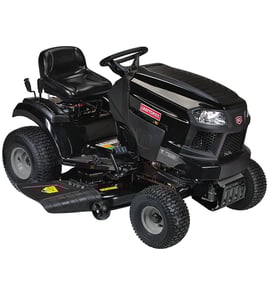


What is the life expectancy of a Husqvarna riding mower?
A Husqvarna riding mower like the GTH2448T typically lasts 10 to 15 years with normal residential use and consistent maintenance. In engine hours, most riders land around 400 to 1,000+ hours before major wear items (deck, steering, electrical, drivetrain) start needing more frequent repairs; follow the GTH2448T owner’s manual maintenance schedule.
What most affects lifespan
- Maintenance frequency: oil changes, air filter service, spark plug checks
- Mowing conditions: steep slopes, dust, sand, wet grass, heavy leaf buildup
- Operating habits: avoiding impacts, not overloading the deck, proper warm-up
- Storage: dry storage, winterizing fuel system, battery care
- Deck care: keeping the underside clean to prevent corrosion and belt strain
Typical lifespan ranges (what we see most often)
| Use type | Typical years | Typical hours |
|---|---|---|
| Light residential (flat yard, seasonal) | 12 to 15 | 400 to 800 |
| Average residential (mixed terrain) | 10 to 12 | 500 to 900 |
| Heavy residential (large acreage, long seasons) | 8 to 10 | 700 to 1,000+ |
Maintenance that extends life the most
- Change engine oil and filter on schedule
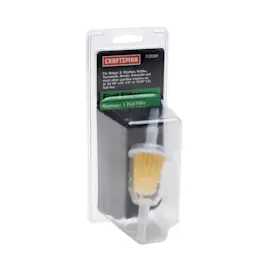
- Clean or replace the air filter regularly (dusty mowing shortens engine life fast)
- Keep cooling fins and intake screens clear
- Keep the mower deck clean; remove packed grass after mowing
- Maintain tire pressure and check fasteners for looseness
Why it matters
Most “end of life” problems on riding mowers are not a single failure; they are a buildup of wear across the deck drive, steering, electrical starting system, and engine performance. Staying ahead of routine service keeps repairs smaller and helps the mower cut evenly and start reliably.
Last updated: January 2026
What engine is in Husqvarna GTH2448T?
The Husqvarna GTH2448T lawn tractor uses a Briggs engine listed in the owner’s manual as Briggs Model No. 445677. This is the engine model identifier used for parts lookup and service, and it is the most reliable way to match tune-up and engine-mounted components.
Where to confirm the exact engine ID on your tractor
Even with the correct engine model family, we recommend matching the full engine ID from the engine shroud tag (model, type, and code) before ordering parts.
- Look for the Briggs ID label on the blower housing (top of the engine) or valve cover area
- Record Model, Type, and Code exactly as printed
- Compare that label to the engine listing in the GTH2448T owner’s manual
- Use the full ID when selecting ignition, fuel, and charging parts
- If the label is missing or unreadable, use the tractor product label and parts diagrams to narrow matches
Common engine-related parts you may replace on GTH2448T
These are frequent service items tied to starting and PTO operation on riding mowers and tractors.
| Symptom | Common area to check | Example part on this model page |
|---|---|---|
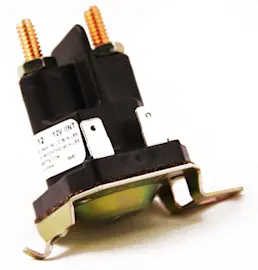
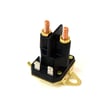
| Clicks but won’t crank | Starting circuit | Lawn tractor starter solenoid 582042802 |
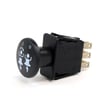
| Cranks but blades won’t engage | PTO circuit | Pto switch 582107601 |
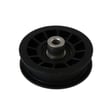
| Blades engage but belt squeals/slips | Deck drive tension | Husqvarna lawn tractor idler pulley 532194327 |
Why it matters
Briggs model numbers (like 445677) help you match the correct engine breakdown and avoid ordering the wrong carburetor, starter, or ignition parts. The full Briggs Model-Type-Code from the engine label is the final check that prevents fit issues.
Last updated: January 2026
Is it worth replacing a lawn mower engine?
Yes, it’s worth replacing the engine on a Husqvarna GTH2448T when the tractor’s deck, steering, and transmission are still solid and the total engine swap cost stays well below the cost of replacing the whole tractor. If the engine replacement approaches about half the price of a comparable new rider, replacement is usually the better value. See the GTH2448T owner’s manual for safety and service guidance before any repair.
Quick decision checklist
- The mower deck is not rusted through and the spindles/mandrels are serviceable
- The frame and steering are tight (no excessive play, no bent components)
- The transmission drives smoothly (no slipping, grinding, or loss of power)
- You can do basic mechanical work (fuel line, wiring, throttle/choke linkage)
- You want to keep your current attachments and setup
- The engine failure is confirmed (not just a no-start caused by battery, wiring, or safety switches)
Rule-of-thumb cost comparison
| Option | Best when | Typical outcome |
|---|---|---|
| Replace engine | Tractor is in good overall condition | Restores reliability; often best long-term fix |
| Repair starting/fuel issue | Engine is healthy but won’t crank/start | Lowest cost; fastest return to service |
| Replace tractor | Multiple major systems are worn | Best value when repair costs stack up |
Before you buy an engine, confirm it’s truly the engine
Many “bad engine” symptoms are actually electrical or fuel related. The GTH2448T troubleshooting guidance commonly points to battery, wiring, ignition switch, and solenoid/starter checks.
- If you hear clicking but no crank, test the battery and connections first
- Inspect wiring and safety interlock switches
- Check the starter solenoid and starter circuit
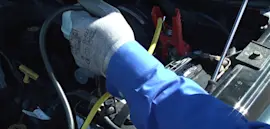
Helpful DIY guidance: riding lawn mower engine clicks but doesnt turn over video
Parts that often solve a “won’t crank” complaint
If testing points to the starting circuit, a common replacement is the lawn tractor starter solenoid 582042802.
Why it matters
An engine swap is a big investment; confirming the real failure prevents spending engine money on a problem caused by a weak battery, corroded terminals, or a failed solenoid.
Last updated: January 2026