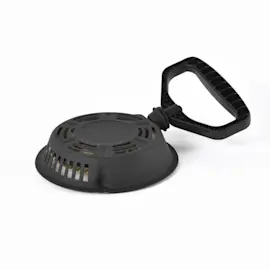
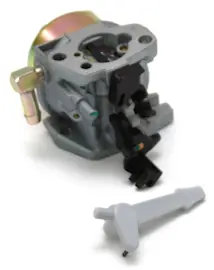
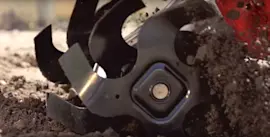
Owner’s manual
 View engine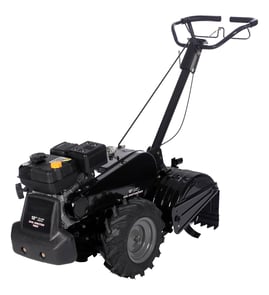



What tiller is made in the USA?
Some tillers are made in the USA; Mantis Tillers are designed, engineered, and manufactured in the U.S.A. If you are shopping for a U.S.-made unit, confirm the country of origin on the product label and in the 917294480 owner's manual for your Craftsman 917294480 so you match parts, specs, and service information correctly.
How to confirm a tiller is made in the USA
Check these items before you buy or before ordering parts:
- Look for a “Made in USA” statement on the engine or frame data plate
- Verify the model number and serial number on the ID tag
- Review the manufacturer’s product listing and specifications
- Confirm where major assemblies are built (engine, transmission, tine drive)
- Keep documentation for warranty and future parts lookups
What “made in the USA” means for parts and repairs
Country of origin does not guarantee parts interchangeability. The most important factor is the exact model number (for example, Craftsman 917294480) because belts, cables, chains, and tine hardware vary by design.
| What you’re checking | Where to find it | Why it matters |
|---|---|---|
| Model number | Frame ID tag | Ensures correct parts diagrams and fit |
| Serial number | Frame ID tag | Helps match production variations |
| Engine model | Engine shroud/tag | Determines tune-up parts and specs |
| Country of origin | Data plate or carton | Confirms manufacturing claim |
Model-specific note for Craftsman 917294480
Your Craftsman 917294480 is a rear-tine tiller with counter rotating tines, 6.5 HP, and a 17-inch tine width. For maintenance specs like fuel capacity, oil type, and spark plug gap, use the 917294480 owner's manual.
Why it matters
Using the correct model information prevents ordering the wrong drive belt, clutch cable, or tine hardware, and it keeps your tiller operating safely and at full performance.
Last updated: February 2026
Where is the model number on a Craftsman rear tine tiller?
On the Craftsman rear-tine tiller model 917294480, the model number is printed on the tiller’s model/serial label. On most units, you’ll find that label on the tine shield (tine guard) area or on the frame near the engine and fuel tank; check your 917294480 owner's manual for the exact label location and identification details.
Quick places to check first
- Tine shield or tine guard (above or behind the tines)
- Main frame rail near the engine mounting area
- Near the fuel tank (on the tank support or nearby frame)
- Handle support area (uprights near the control panel)
- Front of the tiller frame (especially on larger rear-tine designs)
How to read the label correctly
The label typically lists a model number and may also include a serial number. For this tiller, the model is commonly shown in the manual format as 917.294480 (same model as 917294480).
| What you see on the label | What it means | Use it for |
|---|---|---|
| 917.294480 | Model number (with a dot) | Parts lookup, diagrams, manual match |
| 917294480 | Model number (no dot) | Parts lookup, ordering |
| Serial number | Unique unit identifier | Service history, warranty reference |
Why it matters
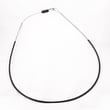
Using the exact model number ensures we match the correct Craftsman parts and diagrams for your rear-tine tiller, especially for fit-critical items like the tiller clutch cable 532110675 or husqvarna rear-tine tiller drive belt 591372401.
Last updated: February 2026
Why won't the tines on my rototiller turn?
On the Craftsman 917294480 rear-tine tiller, the tines usually will not turn because the tine/drive control is not engaged, the shift lever is in the forward (transport) position, or the drive belt is loose, off the pulleys, or worn. Use the steps in the 917294480 owner's manual to confirm the correct control positions before replacing parts.
Quick checks (most common)
- Make sure the drive control bar (tine/drive control) is fully held against the handle.
- Verify the shift lever is in the till position (not in “F” forward transport).
- Lift the handle slightly to raise the tines out of the ground; jammed tines can feel like “no drive.”
- Inspect for a broken shear pin at the tine hub (tines can skip or stop under load).
- Check the belt path: belt seated in pulley grooves, not twisted, not oily.
Belt and cable issues to look for
A loose drive control cable or a worn belt can prevent the transmission pulley from driving the tine shaft.
- If the drive control bar feels slack, adjust cable tension per the manual (you typically set tension so the cable stretches about 5/8 inch with the bar engaged).
- If the belt is glazed, cracked, stretched, or keeps jumping off, replace it.
Helpful part for this symptom:
What you should see (symptom to cause)
| What you notice | Likely cause | What to do |
|---|---|---|
| Wheels move but tines do not | Shift lever in “F” transport | Shift to till position |
| Engine runs, nothing drives | Belt off pulleys | Re-seat belt, inspect pulleys |
| Drives sometimes, slips under load | Belt worn or cable out of adjustment | Adjust cable; replace belt if worn |
| Tines stop suddenly after hitting object | Shear pin broken | Replace shear pin(s) |
Why it matters
When the belt or cable is out of adjustment, the belt slips and overheats, which accelerates wear on pulleys and can leave you without tine power when you need it most.
Last updated: February 2026
How to lubricate a tiller?
For the Craftsman 917294480 rear-tine tiller, we lubricate the key pivot points with engine oil and grease, and we service the transmission gear case once per season. Follow the lubrication chart in the 917294480 owner's manual so you hit every fitting and hinge.
What to lubricate (and what to use)
Use the same lubricant types the manual calls out:
- Engine oil (SAE 30 or 10W-30): throttle control linkage and other light pivot points
- EP #1 grease: right-hand gear case grease fitting (seasonal service)
- Light oil: wheel hubs, stake pin, and shield hinges (as shown in the lubrication chart)
Quick lubrication steps
- Shut the tiller off and let the engine and muffler cool.
- Clean dirt off grease fittings and pivot points first (grease over grit accelerates wear).
- Oil the pivots and linkages lightly; wipe off excess so it does not attract dust.
- Grease the right-hand gear case fitting once per season with about 1 oz. of EP #1 grease.
- After lubricating, operate the controls briefly to spread lubricant, then recheck for drips.
Lubrication schedule (simple guide)
| Interval | What we do | Why |
|---|---|---|
| Before each use | Check engine oil level; quick look at moving points | Prevents dry running and premature wear |
| Once per season | Grease RH gear case fitting (EP #1 grease, ~1 oz.) | Protects transmission gears and bearings |
| Once per year | Inspect belts, tines, and fasteners while servicing | Catches wear before it causes slipping or poor tilling |
Why it matters
A rear-tine tiller puts heavy load on the transmission, wheel hubs, and control pivots. Keeping the gear case greased and the pivots oiled helps prevent stiff controls, noisy operation, and accelerated chain or gear wear.
Related maintenance tip
If you notice slipping under load after lubrication and adjustment checks, inspect the drive belt for wear; the husqvarna rear-tine tiller drive belt 591372401 is a common wear item on this model.
Last updated: February 2026
Are Craftsman rear tine tillers any good?
Yes. Craftsman rear-tine tillers like model 917294480 are a strong choice for breaking new ground and working tough soil because counter-rotating tines bite in and pull the machine forward. Long-term satisfaction depends on routine maintenance and replacing normal-wear items on schedule (tines, belts, cables). See the 917294480 owner's manual for operating and maintenance details.
What you can expect from the 917294480
Rear-tine, counter-rotating tillers are built for control and traction. When they are set up correctly and not pushed too deep too fast, they perform very well.
Common strengths:
- Good digging power in compacted or rocky soil
- Better control than many front-tine tillers
- Consistent tilling depth when tines are sharp and straight
- Serviceable design with replaceable wear parts
What usually causes “not so good” experiences
Most complaints we see on rear-tine tillers trace back to wear parts, adjustment, or operating technique.
Check these first:
- Worn or bent tines: the manual notes worn tines reduce depth and shredding; replace if the tine gap exceeds about 3-1/2 inches
- Drive belt wear or glazing: slipping reduces tine and wheel drive; consider the husqvarna rear-tine tiller drive belt 591372401
- Cable stretch or misadjustment: poor engagement can feel like weak drive; inspect the tiller clutch cable 532110675
- Overloading: tilling too deep at too fast a rate increases breakage and poor performance
- Loose hardware: the manual calls out frequent checks of shear pins and mounting bolts
Quick comparison: rear-tine vs front-tine (typical)
| Feature | Rear-tine tiller (like 917294480) | Front-tine tiller |
|---|---|---|
| Best for | New ground, heavy soil | Light garden prep |
| Control | Higher | Moderate |
| Effort required | Lower once engaged | Higher in hard soil |
| Wear focus | Tines, belts, cables | Tines, belts |
Why it matters
A rear-tine tiller can be “very good” or “frustrating” based on upkeep. Keeping tines sharp/straight, maintaining proper belt and cable engagement, and avoiding overload protects the drivetrain and keeps tilling depth consistent.
Last updated: February 2026
How much does a Craftsman rear tine tiller weigh?
The Craftsman rear-tine tiller model 917294480 weighs 208 lb. Use this weight for loading ramps, tie-downs, and storage planning; you can also confirm the specification in the 917294480 owner's manual.
Quick specs snapshot
| Spec | Value |
|---|---|
| Brand | Craftsman |
| Model | 917294480 |
| Tiller type | Rear-tine, counter rotating tines |
| Weight | 208 lb |
Handling and transport tips
- Use a ramp and tie-downs rated above the tiller weight plus any accessories.
- Load and unload with the engine off; keep the tiller upright to prevent fuel and oil spills.
- Secure the frame and handlebar with two straps so the unit cannot roll or tip.
- For lifting, use two people and lift from the frame, not the tines, cables, or shields.
- Clean packed soil from the tine area before transport so the machine sits stable.
If it feels unusually hard to move
A rear-tine tiller can feel heavier when the drive system is partially engaged or binding. Check these common causes:
- Make sure the drive control is fully released and the clutch cable has proper slack.
- Inspect the drive belt for dragging, glazing, or cracking; replace if worn.
- Check wheels and tine hubs for debris wrapped around shafts.
Why it matters
Knowing the correct weight helps us choose safe loading equipment, prevents trailer or truck bed damage, and reduces the chance of the tiller tipping during transport.
Last updated: February 2026