 Installation guide
 Owner’s manual
 Error Codes


Is there a way to reset a Kenmore dryer?
Yes. For Kenmore dryer model 11069822801, the most reliable “reset” is a simple power reset: turn the dryer off, disconnect power for a few minutes, then restore power and restart the cycle. This clears many temporary control glitches without changing any settings.
Quick reset steps (works for most issues)
- Turn the cycle selector to OFF.
- Unplug the dryer (or switch both dryer breakers off if it’s hardwired).
- Wait 2 to 5 minutes.
- Restore power.
- Select a cycle and press PUSH TO START.
If you need the exact start/stop and restart procedure for this model, follow the steps in the 11069822801 owner’s manual.
If the dryer still won’t start after a reset
A reset will not fix a hard failure such as a blown fuse, open door switch, or failed start switch. Check these common causes first:
- Power supply issue: many electric dryers use two household fuses/breakers; the drum may turn but heat or starting can fail if one trips.
- Door not registering closed: a failed door switch can prevent starting.
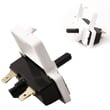
- Start switch problem: the push-to-start switch can fail mechanically or electrically.
- Timer/cycle selector issue: if the timer contacts are worn, the motor circuit may not energize.
Parts that commonly relate to “won’t start” symptoms
| Symptom | What to check | Example compatible part |
|---|---|---|
| Won’t start at all | Door switch | Dryer door switch WP3406107 |
| Button does nothing | Push-to-start switch | Dryer push-to-start switch WP3977456 |
| Intermittent starting | Timer contacts | Dryer timer WPW10185997 |
Why it matters
A proper reset can save time when the control is simply “stuck,” but repeated no-start problems usually point to a power supply issue or a failed switch. Identifying the cause helps prevent unnecessary part replacement and downtime.
Last updated: January 2026
Is it worth repairing an old Kenmore dryer?
For a Kenmore dryer model 11069822801, repair is usually worth it when the fix is a common wear item (belt, rollers, idler pulley, thermal fuse) and the total repair cost stays well below the cost of replacing the dryer. If multiple major issues stack up, replacement often makes more sense.
Quick way to decide (practical checklist)
- Start with the symptom: no heat, won’t start, loud squeal, thumping, long dry times.
- Check for simple maintenance wins first (lint screen, venting, load size).
- Price the likely parts and compare to a new dryer budget.
- Consider downtime: if you need same-day reliability, repeated repairs can be frustrating.
- Factor in safety and efficiency: poor venting and overheating issues should be corrected right away.
Common “worth it” repairs on this model
These are typical, lower-cost fixes that often restore performance:
| Symptom | Often involved part(s) | Example compatible part for this model |
|---|---|---|
| Squealing or rumbling | Drum support rollers, idler pulley | Dryer repair kit 4392067 |
| Won’t start (door issue) | Door switch | Dryer door switch WP3406107 |
| Runs but no heat | Thermal fuse, heating circuit components | Dryer thermal fuse WP3392519 |
Why it matters
A dryer like the Kenmore 11069822801 can often run for many years when airflow is correct and wear parts are replaced before they damage the drum, motor, or blower system. Spending a little on the right repair can prevent a much bigger failure later.
Model-specific tips before you spend money
Use the troubleshooting and care sections in the 11069822801 user manual to confirm basics first:
- Clean the lint screen every load.
- Verify strong airflow at the outside vent hood.
- If drying times are long, address vent restrictions before replacing heating parts.
Last updated: January 2026
What does sru cll mean on a dryer?
On the Kenmore 11069822801 dryer, “SRU CLL” is not a message we can verify from the model’s use and care information or installation instructions; it may be a display abbreviation used on a different Kenmore platform or a control-panel state (such as a lock or service alert). For this model, we recommend troubleshooting by symptom (won’t start, no heat, long dry times, overheating).
What to do first on model 11069822801
- Unplug the dryer for 2 minutes, then restore power (a basic control reset).
- Confirm the cycle selector is set to a running cycle, not Off.
- Clean the lint screen before the next load.
- Check airflow at the outside exhaust hood; it should be strong.
- If the dryer seems unusually hot or shuts down, stop using it until venting is checked.
Why venting is the first check
This model’s installation instructions stress using 4-inch heavy metal venting, avoiding crushed or kinked ducting, and keeping the vent system clean. Poor airflow can cause long dry times and overheating symptoms that can trigger safety shutdown behavior.
Reference: 11069822801 installation guide
If the issue matches a specific symptom
| Symptom you see | Most likely area | What we check next |
|---|---|---|
| Dryer runs but takes too long | Venting and lint buildup | Clean vent run and hood, verify proper ducting |
| Dryer runs but no heat | Heating circuit or power supply | Verify 240V supply, then test heat components |
| Auto cycles end too soon or act erratic | Moisture sensing | Clean sensor bars, inspect sensor wiring |
Parts to consider only when symptoms point there
If you’re also seeing auto-dry problems or overheating-related shutdowns, these model-compatible parts may be involved:
- Dryer moisture sensor WP3387223 (helps detect dryness on automatic cycles)
- Dryer thermistor WP8577274 (monitors temperature for cycle control)
- Dryer thermal fuse WP3392519 (opens if overheating occurs; vent restriction is a common root cause)
Why it matters
Because “SRU CLL” is not defined for the Kenmore 11069822801 in the model-specific documents, focusing on airflow, heat, and sensing symptoms is the most reliable way to prevent repeat overheating and unnecessary part replacement.
Last updated: January 2026









