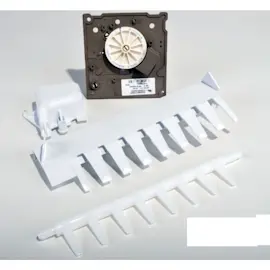
Owner’s manual
 Error Codes


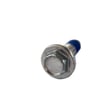
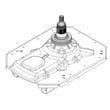
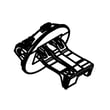
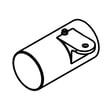
What are the common problems with top load washers?
Top-load washers like the Whirlpool WTW5100HC0 most often have problems with shaking from unbalanced loads, fill or drain failures, lid lock issues that stop the cycle, leaks, drive-system noise, and odor from detergent residue. Many problems start with leveling, hose setup, or a few high-wear parts.
Most common symptoms and likely causes
- Shaking or “walking”: washer not level, weak floor, or repeated unbalanced loads (leveling and location requirements are in the WTW5100HC0 owner's manual).
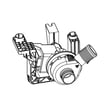
- Won’t fill or fills slowly: closed faucets, kinked hoses, clogged inlet screens, or a failing washer water inlet valve W11165546.
- Won’t drain or won’t spin: drain hose pushed too far into the standpipe, a clog, or a failing drain pump.
- Won’t start or lid error: lid lock or strike problems, often lid lock-sol W11700916 or washer lid strike W11457841.
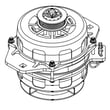
- Grinding/squealing/burning smell: drive components wearing, such as Whirlpool washer drive pulley W10721967, washer actuator W10913953, or drive motor W11026785.
Quick checks we recommend first (no parts)
- Confirm hot and cold faucets are fully open; straighten any kinked inlet hoses.
- Level the washer on a solid floor; the manual calls for a maximum 1 inch slope under the washer.
- Prevent siphoning: keep no more than 4.5 inches of drain hose inside the standpipe or laundry tub.
- Use HE detergent and avoid over-dosing.
- Reduce odor: leave the lid open between loads and run the Clean Washer cycle monthly (or every 30 cycles).
Symptom-to-part cheat sheet
| Symptom | What to inspect | Example part on this model page |
|---|---|---|
| No/slow fill | Inlet valve | W11165546 |
| Won’t start, lid error | Lid lock or strike | W11700916, W11457841 |
| No agitation/spin shifting | Actuator | W10913953 |
| Drive noise/poor movement | Pulley or motor | W10721967, W11026785 |
Why it matters
Fixing setup issues early prevents repeat out-of-balance events, reduces noise, and helps avoid leaks and odor buildup that can shorten the washer’s service life.
You can order replacement parts for your Whirlpool WTW5100HC0 from the parts list for this model, or search by model number on Sears PartsDirect.
Last updated: February 2026
What is the average lifespan of a Whirlpool washer?
Whirlpool washers typically last 10 to 14 years with normal household use. For your Whirlpool WTW5100HC0 washer, consistent care (proper HE detergent use, avoiding overloads, and keeping the machine clean) is what most directly determines whether you land closer to 10 years or closer to 14.
Typical lifespan ranges (what to expect)
Most Whirlpool washers fall into these real-world ranges:
- 10 to 14 years for the washer overall
- Shorter life when the washer is frequently overloaded or installed unlevel (more vibration and wear)
- Longer life when the washer is leveled correctly and maintained (less stress on the drive system)
| Usage pattern | Typical outcome | What usually wears first |
|---|---|---|
| Light to moderate loads, good maintenance | Closer to 12 to 14 years | Hoses, lid lock, inlet valve |
| Heavy use, frequent large loads | Closer to 10 to 12 years | Drive components, actuator, motor |
| Unlevel install, frequent “walking” | Shortened lifespan | Suspension and drive parts |
Maintenance that most affects lifespan
We recommend focusing on these items because they prevent the most common wear and leak issues:
- Replace inlet hoses every 5 years and inspect them periodically for bulges, cracks, kinks, or leaks (this is specifically called out in the care instructions).
- Keep the washer level to reduce noise and “washer walk” (vibration accelerates wear).
- Use High Efficiency (HE) detergent and avoid using more than recommended.
- Leave the lid open between loads when possible to help reduce odor and moisture buildup.
- Address small issues early (slow fill, not draining fully, lid not locking) before they strain other components.
For the model-specific care and installation requirements, follow the WTW5100HC0 washer installation & care manual.
Why it matters
A washer’s “lifespan” is usually limited by cumulative stress on the drive and water systems. Good leveling, correct detergent, and timely hose replacement reduce vibration, overheating, and leak damage, which are the biggest life-shorteners.
When parts replacement makes sense
If performance problems show up but the tub and cabinet are in good shape, replacing a common wear part can extend service life. Examples for this model include the washer water inlet valve W11165546 (fill issues) and the lid lock-sol W11700916 (lid lock problems). You can order replacement parts from the parts list for your WTW5100HC0, or search by model on Sears PartsDirect.
Last updated: February 2026
How do I find the model number on my WTW5100HC0?
Your Whirlpool washer’s model number is printed on the appliance’s identification label; once you find it, match it exactly (letters and numbers) when ordering parts for model WTW5100HC0. The label is typically on the washer cabinet near the lid opening or on the rear panel.
Where to look on a top-load Whirlpool washer
Check these common label locations first:
- Under the lid, around the rim of the tub opening (top edge of the cabinet)
- On the underside of the lid
- Along the lid hinge area
- On the back of the washer cabinet near the power cord
- Inside the cabinet on a side wall (visible with the lid open)
For diagrams and model identification details, use the WTW5100HC0 owner's manual.
What to write down (so parts match the first time)
Record the information exactly as shown on the label.
| Label item | What it’s used for | Example format |
|---|---|---|
| Model number | Ensures correct fit across revisions | WTW5100HC0 |
| Serial number | Helps date and version identification | Letters and numbers |
| Type/engineering code (if shown) | Can affect part variations | Short code |
Why it matters
Whirlpool washers often have multiple production revisions that look identical. Using the exact model number from the label prevents ordering the wrong lid lock, actuator, drive motor, or water inlet valve.
Quick tips if the label is hard to read
- Wipe the label gently with a damp cloth and mild soap; dry it and recheck
- Use your phone camera and zoom in for clearer characters
- Copy characters carefully; common mix-ups are O vs 0 and I vs 1
Last updated: March 2026