Owner’s manual
 Error Codes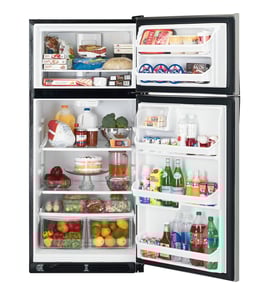



How to tell cubic feet of Kenmore refrigerator by model number?
For Kenmore model 25371822100, the most reliable way to get cubic feet is to look up the capacity in the owner's manual. If you cannot find a listed capacity there, you can estimate it by measuring the usable interior space and converting cubic inches to cubic feet.
Fast ways to find capacity (best to least precise)
- Check the manual first: Look for “capacity”, “specifications”, or “product dimensions”. The manual also confirms where the serial plate is located inside the fresh food compartment.
- Use the model tag for the exact model number: Confirm the full model number from the serial plate inside the refrigerator compartment so you are searching the correct unit.
- Measure and calculate (good estimate): Measure the usable interior (not the outside cabinet).
How to calculate cubic feet from measurements
- Empty shelves and drawers enough to measure accurately.
- Measure the fresh food compartment usable:
- Width (inches)
- Depth (inches)
- Height (inches)
- Measure the freezer compartment usable the same way.
- Convert each compartment:
- Cubic feet = (W × D × H) ÷ 1728
- Add fresh food + freezer results.
Quick conversion table
| What you have | What to do | Result |
|---|---|---|
| Interior inches (W×D×H) | Multiply to get cubic inches | Total in³ |
| Cubic inches | Divide by 1728 | Cubic feet (ft³) |
What the model number can and cannot tell you
Kenmore model numbers (including the 253 prefix on 25371822100) help identify the product family and parts system, but they do not consistently encode the exact cubic-foot capacity across all versions. Measuring or checking the manual gives the correct answer for your specific configuration.
Why it matters
Knowing cubic feet helps us match the right shelves, bins, door gaskets, and airflow-related parts, and it also helps you compare storage space accurately when replacing a refrigerator.
Last updated: January 2026
What are the common problems with Kenmore Elite refrigerators?
Common problems we see on Kenmore refrigerators like model 25371822100 include weak or no cooling, frost buildup, water leaks, and unusual noises. Most issues trace back to airflow restrictions (dirty coils or a failed evaporator fan), defrost problems, or ice maker and water supply faults; the owner's manual helps confirm normal sounds, control settings, and basic checks.
Most common symptoms and what usually causes them
- Not cooling or warm temperatures: dirty condenser coils, blocked vents, or a failed evaporator fan motor
- Excessive frost or ice buildup: defrost system trouble (timer, heater, thermostat) or a leaking door gasket
- Buzzing, clicking, or humming: compressor start components, fan blade hitting ice, or normal operating sounds
- Water under the refrigerator: clogged defrost drain, cracked drain tube, or water line connection leak
- Ice maker not making ice: water supply shut off, frozen fill tube, or a failing inlet valve
Quick checks we recommend first (no parts swapping)
- Verify the refrigerator is plugged into a grounded 3-prong outlet and the temperature control is not set to OFF.
- Allow 24 hours after any control change for temperatures to stabilize.
- Listen for airflow in the freezer; no airflow often points to an evaporator fan issue.
- Inspect door sealing and closing; warm, moist air causes frost and poor cooling.
- If the unit is in a defrost cycle, waiting about 20 minutes can confirm normal operation.
Parts that commonly fix these problems on 25371822100
| Symptom | Common fix area | Example part for this model |
|---|---|---|
| Warm fridge, freezer OK or noisy fan | Evaporator fan system | Evaporator motor 5303918549 |
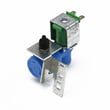
| Ice maker not filling | Water inlet system | Refrigerator water valve 242252603 |
| Frost and warm temps | Defrost control | Refrigerator timer 215846602 |
| Frost around door, sweating | Door seal | Refrigerator freezer door gasket 241872503 |
Why it matters
Cooling, frost, and leak complaints usually get worse over time. Catching airflow, defrost, or door-seal problems early helps protect food temperatures and reduces strain on the compressor.
Last updated: January 2026
What is a top mount refrigerator?
A top-mount refrigerator is a classic refrigerator layout where the freezer compartment is on top and the fresh-food (refrigerator) compartment is below. Your Kenmore 25371822100 uses this configuration, which is designed for straightforward storage and easy access to everyday refrigerated items.
How a top-mount layout is set up
In a top-mount refrigerator like the Kenmore 25371822100:
- The freezer is the upper compartment (for frozen food and, on some models, the ice maker)
- The refrigerator section is the lower compartment (for fresh food)
- Cold air is produced at the evaporator and circulated through the cabinet by an evaporator fan
- Door bins and racks provide quick-access storage for jars, bottles, and cans
For a model-specific overview of features and storage options, use the owner's manual.
What this design is best for
Top-mount refrigerators are popular because they balance capacity, simplicity, and cost.
- Typically lower purchase and repair cost than many specialty configurations
- Wide shelves and door storage for everyday groceries
- Freezer space that works well for bulk frozen items
- Straightforward door reversal on many models (helpful for tight kitchens)
Quick comparison: top-mount vs. bottom-freezer
| Feature | Top-mount refrigerator | Bottom-freezer refrigerator |
|---|---|---|
| Freezer location | Top | Bottom |
| Most-used section height | Refrigerator is lower | Refrigerator is higher |
| Common strengths | Simple design, good value | Easier access to fresh food |
Why it matters
Knowing you have a top-mount refrigerator helps when you are troubleshooting cooling, airflow, door sealing, or ice maker issues because many parts and symptoms are tied to the freezer-on-top airflow path and door layout.
Last updated: January 2026