Owner’s manual
 Error Codes


What's the average lifespan of a KitchenAid dishwasher?
Most KitchenAid dishwashers last 10 to 14 years with normal household use and basic maintenance. For your KitchenAid KUDS01DJSS0, keeping the wash system clean, fixing leaks early, and avoiding chronic clogs helps you reach the high end of that range.
What affects lifespan the most
- Water quality: hard water speeds up mineral buildup on the heating element and in the wash system
- Cleaning routine: periodic cleaning reduces odors, buildup, and pump strain
- Loading habits: overloading blocks spray arms and increases wear
- Leak prevention: door and tub leaks can shorten life quickly
- Drain health: slow draining makes the pump work harder and can lead to failures
Quick maintenance checklist (best return for the effort)
- Run hot water at the sink before starting a cycle so the dishwasher fills with hotter water
- Clean the interior and remove debris from the bottom of the tub regularly
- Use the right detergent amount for your water hardness
- Inspect the door sealing surfaces and wipe them clean
- Address draining issues promptly (kinks, clogs, or a restricted hose)
Common “wear-out” items vs. long-life components
The KUDS01DJSS0 warranty information in the KUDS01DJSS0 owner’s manual shows some components are expected to last longer than typical wear items.
| Category | Examples | What you’ll notice first |
|---|---|---|
| Wear items | door seals, hoses, gaskets | leaks, odors, poor drying |
| Mechanical/electrical | wash motor, drain motor, controls | not cleaning, not draining, won’t run |
| Long-life structure | stainless steel tub/inner door | rust-through leak is uncommon |
Why it matters
A dishwasher that is still running but struggling to clean or drain often needs maintenance or a targeted part replacement, not a full replacement. Catching leaks and clogs early protects the pump, motor, and electronic controls.
Last updated: February 2026
What is the most common problem with KitchenAid dishwashers?
The most common issues we see with KitchenAid dishwashers like model KUDS01DJSS0 are poor cleaning (food left on dishes), draining problems (water left in the tub), and leaks around the door. These problems usually trace back to clogged wash components, restricted drain paths, or worn seals; use the KUDS01DJSS0 owner's manual to match symptoms to checks.
Most common problems and what typically causes them
- Not cleaning well: clogged spray arm holes, chopper/filter area packed with debris, weak wash circulation
- Not draining: kinked or blocked drain hose, drain path obstruction, pump issue
- Leaking at the door: flattened or torn door seal, door not closing squarely
- No start or stops mid-cycle: door latch not engaging, blown fuse, control-related fault
- Poor drying: venting issue, cycle selection, rinse aid use
Quick checks you can do first (no special tools)
- Confirm the spray arms spin freely and the holes are clear.
- Clean out visible debris in the bottom of the tub and around the intake area.
- Inspect the door perimeter for cracks, gaps, or hardened rubber.
- Check the drain hose routing for kinks and make sure the sink drain connection is not blocked.
- If the unit is dead, check the house breaker, then inspect the dishwasher’s internal protection.
Parts that commonly solve these symptoms on KUDS01DJSS0
| Symptom | Common part to inspect/replace | Example part for this model |
|---|---|---|
| Water leaking at door | Door seal | Dishwasher door seal W10542314 |
| Standing water after cycle | Drain hose | Dishwasher drain hose 8269144A |
| Loud grinding or poor wash | Chopper area | Dishwasher chopper assembly W10083957V |
| No power | Internal fuse | Fuse 8193762 |
Error codes can speed up the diagnosis
If your KitchenAid displays a fault code, use the KitchenAid he dishwasher error codes guide to narrow the problem to a specific system (wash, drain, heating, or controls) before ordering parts.
Why it matters
Cleaning, draining, and sealing problems tend to get worse over time; a small restriction or a slightly worn gasket can turn into repeat wash failures, odors, or water damage. Catching the root cause early usually reduces repair cost and downtime.
Last updated: February 2026
What are the commonly replaced parts in a dishwasher?
On the KitchenAid KUDS01DJSS0 dishwasher, the most commonly replaced parts are the ones that seal water in, move water through the wash system, and handle draining. We also see frequent replacement of racks and baskets due to wear, rust, or broken plastic. Use the KUDS01DJSS0 owner's manual for part locations and troubleshooting steps.
Commonly replaced dishwasher parts (what they fix)
- Door sealing parts (door seal, vent gasket) for leaks or moisture at the door
- Drain path parts (drain hose, clamps) when water remains in the tub
- Wash system parts (spray arm, pump and motor) for poor cleaning or weak spray
- Electrical protection parts (fuse) for no power or intermittent operation
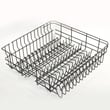
- Rack and basket parts (racks, tine rows, silverware basket) for broken wheels, rusted tines, or cracks
Model-matched examples for KUDS01DJSS0
| Symptom | Part type | Example part for this model |
|---|---|---|
| Water leaking at the door | Door seal | Dishwasher door seal W10542314 |
| Dishwasher not draining | Drain hose | Dishwasher drain hose 8269144A |
| Poor cleaning, weak spray | Spray arm | Dishwasher spray arm WPW10320510 |
| No power or stops mid-cycle | Fuse | Fuse 8193762 |
Quick checks before you order parts
- Confirm the cycle finished; then check for standing water (drain issue)
- Inspect the spray arm holes for clogs and verify the arm spins freely
- Look for mineral tracks or drips along the door perimeter (seal issue)
- Make sure the overfill protection float moves up and down freely
Why it matters
Replacing the correct wear part restores cleaning and draining performance, prevents leaks that can damage cabinets and flooring, and reduces repeat clogs caused by food debris and buildup.
Last updated: February 2026