 Installation guide
 Owner’s manual


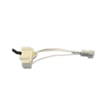
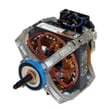
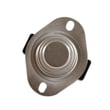
How to tell if a dryer gas valve is bad?
On Kenmore dryer model 11078622700, a bad gas valve usually shows up as no heat even though the dryer runs, or heat that starts and then stops. Before replacing the valve, we check the shutoff valve position, airflow, and the burner ignition sequence because weak gas valve coils are a more common failure than the valve body.
Quick symptoms to watch for
- Dryer tumbles normally but clothes stay cold and damp.
- Igniter glows but no flame appears.
- Flame lights briefly, then goes out and the dryer repeats the ignition attempt.
- You hear clicking during operation (some clicking can be normal on gas dryers).
- Drying times get longer even with a clean lint screen and vent.
What to check first (fast, high-value checks)
- Confirm the gas supply shutoff valve is open; the handle should be parallel to the gas pipe. The installation instructions also call out repeating a short heat test after opening the shutoff valve. See the installation guide.
- Run a 5-minute heat check: start a heated cycle, let it run about 5 minutes, then open the door and feel for heat.
- Verify airflow: a restricted vent can cause poor heating and cycling issues. Clean the lint screen and make sure the vent is not crushed or kinked.
Gas valve vs. coils vs. sensor: what the symptoms usually mean
| What you observe | Most common cause | Parts that often fix it |
|---|---|---|
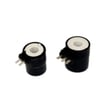
| Igniter glows, no flame | Weak/open gas valve coils | Dryer valve coil kit 279834 |
| Flame starts then shuts off | Coils failing when hot, or flame sensing issue | Dryer radiant sensor WP338906 and/or dryer valve coil kit 279834 |
| No ignition attempt at all | Power, timer/control, door switch, thermal issue | Dryer door switch WP3406107 or dryer timer WP3976576 |
| Repeated attempts, long dry times | Vent restriction or burner components | Vent cleaning plus burner checks |
When the gas valve itself is the likely problem
We treat the gas valve assembly as suspect after the basics are confirmed and the burner system still will not maintain flame, especially if new coils and a good radiant sensor do not restore consistent heating. For this model, the replacement is dryer gas valve WP8318277.
Why it matters
A gas dryer needs the right mix of gas flow, ignition, and airflow to heat safely and dry efficiently. Diagnosing the ignition sequence first prevents replacing the wrong part and helps restore normal cycle times.
Last updated: February 2026
What is the average life of a Kenmore dryer?
A Kenmore dryer typically lasts 10 to 13 years with normal household use. Many Kenmore models, including 11078622700, can run longer when airflow is kept clear, the lint system is cleaned regularly, and common wear parts (like the belt and drum support parts) are replaced as needed; see the owner's manual.
Typical lifespan and what affects it
Dryer life is mostly driven by heat and airflow stress, load size, and how quickly small issues are fixed.
- Vent restriction (long runs, crushed flex duct, clogged hood) shortens life fast
- Overloading strains the drive motor, drum rollers, and belt
- High heat cycles increase wear on sensors, igniter, and gas valve components
- Lint buildup inside the cabinet raises operating temperature
- Delayed repairs turn a small noise or slip into a bigger failure
Common wear items that can extend service life
On Kenmore 11078622700, these are the kinds of parts we often see replaced to keep the dryer running smoothly:
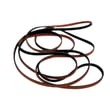
- Drum drive belt: dryer drum belt 341241
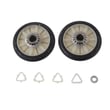
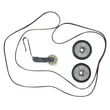
- Drum support and friction parts (often included in a kit): dryer repair kit 4392065
- Door safety circuit parts if the dryer will not start: dryer door switch WP3406107
- Air movement parts if drying is slow or noisy: dryer blower wheel WP694089
Quick maintenance schedule (simple and effective)
Use this as a baseline for most Kenmore dryers.
| Task | How often | Why it matters |
|---|---|---|
| Clean lint screen | Every load | Protects airflow and drying time |
| Check vent airflow at outside hood | Monthly | Prevents overheating and long dry times |
| Clean vent duct run | Every 6 to 12 months | Reduces heat stress on components |
| Listen for squeal/thump and address early | As needed | Prevents belt and drum support damage |
Why it matters
A dryer that runs hot or struggles to move air works harder every cycle. That extra heat and load accelerates wear on the drive system (belt, motor pulley, motor) and heating system (igniter, radiant sensor, gas valve), which is why airflow maintenance is the biggest factor in real-world lifespan.
Last updated: February 2026
Are dryer thermal fuses universal?
Dryer thermal fuses are not truly universal. For Kenmore model 11078622700, the correct thermal fuse must match the dryer’s exact temperature rating, mounting style, and electrical specs; a “universal” fuse that looks similar can fail early or not protect the dryer correctly. Use the 11078622700 owner's manual to confirm the right part by model.
What “universal” usually means (and why it’s risky)
Many listings use “universal” to mean “fits a group of dryers,” often within the same design family. That still leaves important differences that affect safety and performance.
- Cutoff temperature can differ (the most important spec)
- Terminal style and mounting holes can differ
- Some kits include extra parts that do not apply to your model
- Brand families vary (Kenmore models can be built on different platforms)
- A wrong fuse can mask the real problem (most often restricted airflow)
How we recommend choosing the correct thermal fuse
Use your model number 11078622700 as the compatibility filter, then match the fuse by the parts list for your dryer.
- Confirm the full model number from the dryer’s label.
- Use the model-based parts lookup to identify the exact thermal fuse used on your unit.
- Replace the fuse only with the exact replacement specified for the model.
- Fix the root cause before running the dryer again (usually venting or lint buildup).
Common symptoms of a blown thermal fuse
A thermal fuse typically opens when the dryer overheats. The most common result is a no-start condition.
| Symptom | What it often points to | What to check first |
|---|---|---|
| Dryer will not run | Open thermal fuse or power issue | Power supply, door switch, airflow |
| Runs but shuts off | Overheating condition | Vent restriction, blower, lint buildup |
| No heat (some cases) | Heating circuit issue | Household fuses/breakers, gas supply (if gas) |
Why it matters
The thermal fuse is a safety device. Using the correct fuse for Kenmore 11078622700 helps ensure the dryer shuts down at the intended temperature and reduces repeat failures caused by overheating.
Last updated: February 2026
How to tell if a dryer start switch is bad?
On Kenmore dryer model 11078622700, a bad start switch is likely when you press PUSH TO START and the dryer will not run (or only runs while you keep pressing). The most reliable check is a continuity test of the switch with a multimeter; no continuity when pressed means the switch has failed.
Quick symptoms vs. other common causes
Before replacing parts, we rule out the easy items listed in the troubleshooting section of the owner's manual.
- Dryer will not run even with a cycle selected
- Start button feels normal but nothing happens
- Dryer runs only while holding the start button
- Door must be firmly closed (a door switch issue can look similar)
- Power supply issues can mimic a bad start switch (blown fuse or tripped breaker)
How we test the start switch (basic method)
- Unplug the dryer (or shut off power at the breaker).
- Access the console and locate the push-to-start switch.
- Pull at least one wire off the switch terminal (so you do not read through the circuit).
- Set your multimeter to continuity or ohms.
- Test the switch:
- Not pressed: should read open (no continuity)
- Pressed: should read closed (continuity)
What the readings mean
| Test result | What it usually indicates | What to do next |
|---|---|---|
| No continuity when pressed | Failed start switch | Replace the start switch (match by model) |
| Continuity when pressed | Switch is likely OK | Check door switch, timer, control, thermal fuse, wiring |
| Intermittent continuity | Worn/loose internal contacts | Replace the start switch |
Why it matters
A failed start switch stops the motor from getting the “start” signal, so the dryer will not begin a cycle even when the door is closed and a cycle is selected. Confirming the switch with a meter prevents replacing the wrong part.
Parts that can cause similar “won’t start” symptoms
If the start switch tests good, these are common next checks on this style of Kenmore dryer:
- Door switch (if the dryer thinks the door is open) such as dryer door switch WP3406107
- Timer contacts (cycle must be selected and sending power) such as dryer timer WP3976576
- Drive motor (if it hums but will not run) such as drive motor 279827
- House fuses or breakers (many dryers use two)
For access steps, wiring routing, and start procedure details, use the installation guide.
Last updated: February 2026








