Owner’s manual
 Error Codes



How to clean drain pan on Kenmore refrigerator?
On Kenmore refrigerator model 59665232402, the drain pan (also called the drip pan) collects defrost water; cleaning it helps prevent odors and overflow. We recommend unplugging the refrigerator first, then removing the base grille to access and clean the pan with mild detergent and warm water.
Safety first
Disconnect power before cleaning to reduce shock risk, then restore power when everything is dry and reinstalled (see the 59665232402 owner's manual).
How to clean the drain pan (drip pan)
- Remove food only if you need extra room to work; the main step is unplugging the unit.
- Unplug the refrigerator.
- Remove the base grille (the manual notes the base grille is removed to access service areas like the condenser coil).
- Slide out the drain pan carefully; keep it level to avoid spills.
- Wash the pan with warm, soapy water and a soft cloth or sponge.
- Rinse with clean water and dry completely.
- Reinstall the pan and base grille, then plug the refrigerator back in.
What to use (and what to avoid)
The cleaning chart in the manual recommends gentle cleaning methods for refrigerator surfaces.
| Item | Use | Avoid |
|---|---|---|
| Drain pan | Warm, soapy water; mild detergent | Abrasive pads; harsh cleaners |
| Tight corners | Soft cloth; plastic bristle brush | Metal scouring pads |
| Final step | Rinse and dry immediately | Leaving standing water |
If you still notice odors or water issues
- Clean the cabinet interior and door gaskets using mild detergent.
- Check for debris or slime in the pan and the area around it.
- Make sure the pan is fully seated after reinstalling.
- If you see recurring puddles, inspect the defrost drain path for a clog.
Why it matters
A dirty drain pan can cause persistent refrigerator smells and can contribute to water puddles if the pan overflows or is not positioned correctly after cleaning.
Last updated: January 2026
Why is my refrigerator not getting cold at the bottom?
If your Kenmore 59665232402 is warm at the bottom of the fresh food section, the most common causes are restricted airflow (blocked rear air grille under the crispers), dirty condenser coils, or controls that need adjustment. Start with cleaning and airflow checks before replacing parts.
Quick checks that fix most “warm bottom” complaints
- Make sure the rear air grille under the crisper drawers is not blocked by food packages.
- Clean dust and pet hair from the condenser coils (cooling performance drops fast when coils are dirty).
- Confirm the doors close fully and seal tightly; a poor seal lets warm air settle low.
- Reduce long door openings and avoid overpacking the lower shelves.
- After any change, allow 24 hours for temperatures to stabilize.
Set the controls correctly (model-specific)
This model uses a 1 to 7 temperature range (7 is coldest). We recommend starting at 4 for Refrigerator and 4 for Freezer, then adjusting only one number at a time and waiting a full day to evaluate.
Use the 59665232402 owner's manual for the exact control steps and the temperature control guide.
| Symptom | What to do | What to expect |
|---|---|---|
| Bottom of fridge warm, top OK | Clear rear air grille; reorganize lower shelves | Airflow improves within hours; full recovery in 24 hours |
| Whole fridge warm | Clean condenser coils; verify doors seal | Compressor runs more normally after cleaning |
| Temps swing after changes | Adjust only 1 step; wait 24 hours | Stable temps after a full day |
When a part is more likely
If airflow is clear and coils are clean but the bottom stays warm, a cooling-air circulation issue is likely.
Common suspects:
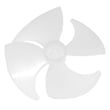
- Evaporator fan motor (moves cold air through the compartments)
- Electronic damper (controls cold air flow into the refrigerator section)
- Temperature sensor (feeds temperature data to the control)
For this model, parts that often relate to airflow and temperature control include the evaporator motor WPW10128551 and the refrigerator electronic damper WPW10196393.
Why it matters
Cold air needs a clear path to circulate; when the rear air grille is blocked or coils are dirty, the refrigerator can cool unevenly and the lowest shelves and drawers are usually the first area to warm up.
Last updated: January 2026
What are the common problems with Kenmore Elite refrigerators?
Common problems we see on Kenmore Elite refrigerators like model 59665232402 include warm temperatures from airflow issues, water leaks from the supply or drain system, excess frost from a defrost or door-seal problem, and louder-than-expected operating sounds. Use the 59665232402 owner's manual troubleshooting chart to match symptoms to the most likely cause.
Most common symptoms and what usually causes them
- Not cooling or weak cooling: dirty condenser coils, restricted airflow, or an evaporator fan issue
- Runs too often: doors opened frequently, dirty coils, controls set too cold, or door not sealing
- Water leaking: water line connection issues, clogged drain, or low-quality tubing/valve setup
- Frost or ice buildup: door gasket not sealing, frequent door openings, or a defrost system problem
- Unusual noises: normal operating sounds, or a failing start device/relay
Quick checks we recommend first (no parts swapping)
- Confirm the doors close fully and nothing is blocking them (bins, drawers, ice bucket).
- Clean the condenser area and improve airflow around the cabinet.
- Check door gaskets for gaps; clean the sealing surfaces.
- If you have an ice maker, verify household water pressure is strong and steady.
- Review the sound section in the manual; many clicks, pops, and fan noises are normal.
Parts that commonly relate to these symptoms on this model
| Symptom | Part to consider | What it affects |
|---|---|---|
| Warm fridge/freezer, poor airflow | Evaporator motor WPW10128551 | Circulates cold air through compartments |
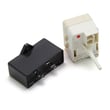
| Clicking, compressor struggles to start | Refrigerator start device W10613606 | Helps the compressor start and run |
| Frost patterns, temperature swings | Refrigerator defrost bi-metal thermostat WP67003426 | Protects and controls defrost operation |
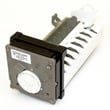
| Ice maker not producing | Refrigerator ice maker D7824706Q | Ice production and harvest cycle |
Why it matters
Cooling, frost, and leak complaints often share the same root causes: airflow restrictions, dirty coils, and door sealing problems. Fixing those basics first prevents unnecessary part replacement and helps the refrigerator maintain stable temperatures (and normal run times).
Last updated: January 2026