 Owner’s manual


What is the most common problem with Whirlpool washers?
For the Whirlpool GHW9300PW4 washer, the most common customer-reported issue is a “won’t drain or won’t spin” situation. In many cases, the root cause is excessive suds (non-HE detergent), a drain restriction, or a failing drain component; the troubleshooting steps in the GHW9300PW4 washer manual help narrow it down.
Quick checks we recommend first (no parts needed)
- Confirm you are using HE (High Efficiency) detergent; too much soap can trigger a “SUD” routine and extend or interrupt draining/spinning.
- Run DRAIN/SPIN and listen for the drain pump; a steady hum with little water flow often points to a clog.
- Check the drain hose for kinks, freezing, or a clog; also confirm the standpipe height is within the installation limits.
- Redistribute the load; a single bulky item can cause an out-of-balance condition that reduces or stops spinning.
- Power reset: unplug for 1 minute, then retry the cycle.
When it’s likely a part problem on GHW9300PW4
If the washer still won’t drain/spin after the checks above, these model-compatible parts are common suspects:
- Pump 280187 if the motor is noisy, seized, or not moving water
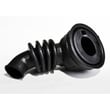
- Washer drain hose WP8181737 if the hose is split, restricted, or collapsing
- Washer water-level pressure switch WPW10514214 if the washer misreads water level and behaves erratically
Symptoms and what they usually mean
| Symptom | Most likely cause | What to do next |
|---|---|---|
| “SUD” shown, long cycle | Too much or wrong detergent | Switch to HE, reduce dose, rerun cycle |
| “F02” drain problem | Drain restriction or weak pump | Inspect hose and pump area, then test/replace pump |
| Hums but won’t drain | Clogged pump or failing pump | Check for blockage; replace pump if needed |
| Spins poorly, load too wet | Imbalance or drain issue | Rebalance load; verify full drain |
Why it matters
On a front-load washer like the Whirlpool GHW9300PW4, draining is required before a high-speed spin. A small drain restriction or oversudsing can prevent proper water removal, leaving clothes wet and extending cycle time.
Last updated: January 2026
What is the average lifespan of a Whirlpool washer?
Most Whirlpool washers, including the Whirlpool GHW9300PW4 front-load washer, commonly last around 10–14 years with typical household use. Some units run longer when they’re installed correctly, kept clean, and repaired promptly when small issues (like leaks or draining problems) show up. For model-specific care steps, use the GHW9300PW4 washer manual.
What affects lifespan the most
A washer’s life is usually determined by wear on moving parts, water exposure, and how often it runs. For the GHW9300PW4, these factors matter most:
- Load size and frequency: frequent heavy loads accelerate bearing, suspension, and pump wear
- Detergent choice: using HE detergent helps prevent oversudsing and residue buildup
- Moisture management: leaving the door slightly open helps reduce odor and gasket issues
- Installation and leveling: an unlevel washer increases vibration and stress on the suspension
- Water quality: hard water can increase scale and residue inside the tub and dispenser
Quick maintenance checklist (best ROI)
These habits are simple and make a real difference in longevity:
- Run a periodic cleaning routine and wipe the door seal dry
- Don’t overload; loads should tumble freely
- Use the correct amount of HE detergent (too much can cause “SUD” events and longer cycles)
- Check inlet hoses for bulges or leaks and replace as needed
- Address draining issues early; a struggling drain system can overwork the pump
Typical lifespan expectations (what to plan for)
| Usage pattern | Common outcome | What you’ll notice first |
|---|---|---|
| Light use (few loads/week) | Often reaches the high end of the range | Minor gasket odor, occasional vibration |
| Average family use | Usually lands in the middle of the range | Drain slowdowns, door seal wear |
| Heavy use (daily loads) | Often shorter lifespan without upkeep | Pump noise, more vibration, longer cycles |
Why it matters
Knowing the typical lifespan helps you decide when maintenance is enough versus when a repair makes sense. If your GHW9300PW4 is near the 10–14 year range and you’re seeing drain problems, inspecting the drain system and pump is a smart first step; the compatible replacement is the pump 280187.
Last updated: January 2026
What is the capacity of ghw9300pw4?
We can’t confirm an official cubic-foot capacity for the Whirlpool GHW9300PW4 washer from the model-specific information available here; the provided GHW9300PW4 washer manual focuses on use, cycles, and installation requirements rather than listing a tub volume spec.
How to estimate “how much it holds” in practical terms
Even without a published cu. ft. number, you can size loads correctly by how the drum is filled.
- Load items loosely so they can tumble; don’t pack the drum tight
- Stop loading when the drum is about 3/4 full for mixed loads
- Wash bulky items (comforters, heavy blankets) one at a time
- Mix large and small items to help balance during spin
- Use HE detergent only to reduce oversudsing and long cycle times
Quick load-sizing guide
| Load type | What to look for in the drum | Best practice |
|---|---|---|
| Mixed everyday load | Items tumble freely | Fill to about 3/4 full |
| Towels | Heavy, water-holding load | Don’t overfill; balance the load |
| Bulky bedding | Takes up most of the drum | One bulky item per load |
| Small delicates | Light, low volume | Use a mesh bag if needed |
Why it matters
Correct load size helps the GHW9300PW4 clean and rinse better, reduces vibration, and helps the washer reach full spin speed for better water extraction.
If you’re trying to match a replacement washer by capacity
Manufacturers sometimes publish capacity by model family or marketing name rather than printing it in the use & care guide. If you need an exact number for comparison, use the model and serial tag information and cross-check Whirlpool’s published specs for GHW9300PW4.
Last updated: January 2026
Does a Whirlpool front load washer have a filter to clean?
For Whirlpool model GHW9300PW4, the owner’s documentation focuses on routine cleaning (door seal, dispenser drawer, and a built-in monthly maintenance cycle) and does not identify a user-cleanable drain pump filter. For model-specific care steps, use the GHW9300PW4 use & care manual.
What we can confirm for GHW9300PW4
The manual for this exact model calls out these regular maintenance items:
- Clean the door seal (gasket) and check for trapped items
- Run the washer’s monthly maintenance cleaning procedure
- Clean the dispenser drawer and inserts
- Inspect and replace inlet hoses as needed
What “filter” can mean on front-load washers
On many front-load washers, customers use “filter” to describe one of these areas. Which ones are user-accessible varies by design:
- Drain pump clean-out (coin trap)
- Inlet valve screens (at the hose connections)
- Door seal area where small items collect
Because the GHW9300PW4 manual doesn’t specify a pump clean-out procedure, we recommend sticking to the model’s documented maintenance and troubleshooting steps.
If you’re having drain problems
This model’s manual lists F02 as a drain problem; common checks include:
- Make sure the drain hose isn’t kinked or clogged
- Confirm the drain hose height is within the installation limits
- Reduce oversudsing by using HE detergent only
| Symptom | What to check first | Why it matters |
|---|---|---|
| Slow/no drain | Drain hose routing and clogs | Prevents standing water and long cycles |
| F02 code | Hose, standpipe height, suds | Helps isolate a restriction vs. a part failure |
| Rattling during drain | Items trapped in drain path | Can damage the pump over time |
When a part may be involved
If the drain path is clear and the washer still won’t drain, the drain pump can be a suspect component for GHW9300PW4. The compatible replacement is the pump 280187.
Why it matters
Following the GHW9300PW4 maintenance routine helps prevent odors, leaks at the door seal, and performance issues; it also reduces the chance of unnecessary disassembly when a “filter” isn’t intended to be user-serviced.
Last updated: January 2026





