Owner’s manual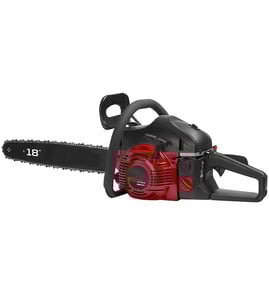









Does a Craftsman chainsaw have a fuel filter?
Yes. The Craftsman 358360121 gas chainsaw uses an in-tank fuel filter on the end of the fuel line; it helps keep debris out of the carburetor so the engine starts easier and runs more consistently. Replacement is a routine maintenance task.
Where the fuel filter is and what it does
The fuel filter sits inside the fuel tank, attached to the fuel line. As fuel is drawn to the carburetor, the filter screens out dirt that can cause hard starting, rough running, or stalling.
Common signs the fuel filter needs attention
- Chainsaw is hard to start, especially after sitting
- Engine runs rough or surges at idle
- Saw starts but dies when you squeeze the throttle
- Loss of power under load
- Fuel looks dirty or the tank has debris
How we replace the fuel filter (overview)
Follow the steps in the 358360121 owner’s manual for the exact procedure and safety notes. In general, we:
- Run the saw until it is out of fuel (or drain the tank safely).
- Remove the fuel cap and retainer.
- Pull the filter out of the tank and disconnect it from the fuel line.
- Install the new filter and reassemble.
| Step | What to do | Why it matters |
|---|---|---|
| Depressurize | Remove the fuel cap slowly | Reduces fuel splash risk |
| Access | Pull filter from tank | Confirms the filter is present and reachable |
| Replace | Swap filter on fuel line | Restores fuel flow and filtration |
Why it matters
A restricted fuel filter can starve the carburetor of fuel. That can mimic carburetor problems and lead to unnecessary parts replacement or repeated no-start issues.
Related parts to check at the same time
If you are already working in the fuel tank area, also inspect:
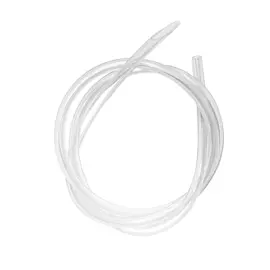
- Ayp lawn & garden equipment fuel line, large 530069216 for cracks or softness
- Ayp chainsaw fuel line fitting 530023877 for leaks or a loose connection
- Fuel tank cap seal and venting (a bad cap can cause fuel delivery issues)
Helpful DIY guidance
If the saw is still difficult to start after basic fuel system maintenance, use tips for a hard to start chainsaw to narrow down fuel, spark, and compression causes.
Last updated: February 2026
Is 40 1 or 50 1 better for chainsaws?
For the Craftsman 358360121 gas chainsaw, 40:1 is the better choice because the owner’s manual specifies 40:1 2-cycle oil for lubrication and engine protection. Using 50:1 can reduce lubrication and increase wear, especially under heavy cutting loads.
What we recommend for model 358360121
Follow the fuel guidance in the 358360121 owner’s manual. This model is designed around a 40:1 mix, and staying with the specified ratio helps the carburetor, piston, and crank bearings live longer.
Quick comparison
| Mix ratio | Oil amount | Best for | Common downsides |
|---|---|---|---|
| 40:1 | More oil | This Craftsman model, hot weather, long cuts, older 2-stroke designs | More smoke, can foul a spark plug if the saw is already running rich |
| 50:1 | Less oil | Saws explicitly designed for 50:1 | Less lubrication margin; higher risk of scoring and premature wear |
How to mix it correctly (practical steps)
- Use fresh, ethanol-free fuel when possible; stale fuel causes hard starting and rough running.
- Use air-cooled 2-cycle oil (not marine TC-W3).
- Mix in an approved fuel can; add half the gas, add oil, shake, then top off and shake again.
- Label the can “40:1” so it never gets confused with other equipment.
- If the saw will sit 30+ days, add stabilizer and run the engine a few minutes to circulate treated fuel.
If the saw is hard to start or runs rough after changing mix
A fuel ratio change often exposes an existing fuel delivery issue. Check these common causes:
- Cracked or soft fuel line (consider ayp lawn & garden equipment fuel line, large 530069216)
- Air leak at the fuel line connection (consider ayp chainsaw fuel line fitting 530023877)
- Primer bulb not pulling fuel (consider primer bulb 530071835)
- Carburetor mounting leak (consider chainsaw carburetor adapter 530049700)
- Carburetor wear or contamination (consider chainsaw carburetor 545081885)
Why it matters
Two-stroke engines rely on the oil in the fuel for lubrication and cooling. On the 358360121, the specified 40:1 ratio provides the oil film strength needed to reduce friction, prevent scoring, and support reliable starting and idle.
Last updated: February 2026
What is the Craftsman 358360121 42 cc 2 cycle gas 18 chainsaw?
The Craftsman 358360121 is a 2-cycle gasoline chainsaw that uses a 16-inch guide bar and is intended for occasional use. It ships fully assembled and the 358360121 owner's manual covers safety, operation, maintenance, troubleshooting, and the parts list.
Quick model overview (what it is and what it is not)
This model is identified in the manual as a 2.3 cu. in./38cc 2-cycle gas chain saw with a 16 in. bar. If you are seeing “42cc” or “18-inch” in other listings, treat those as descriptions of a different configuration or a retail bundle, not the core spec for model 358360121.
- Product type: gas chainsaw (2-cycle)
- Model number: 358360121
- Bar length covered by the manual: 16 in.
- Intended use: occasional use
- Documentation includes: safety rules, operation, maintenance, troubleshooting table, parts list
Specs at a glance
| Item | Craftsman 358360121 (manual-based) |
|---|---|
| Engine size | 2.3 cu. in. (38cc) |
| Fuel type | 2-cycle gasoline mix |
| Guide bar length | 16 in. |
| Assembly | Fully assembled from the factory |
Why it matters
Matching the correct model number to the correct bar length and engine size helps you buy the right replacement parts (fuel line, carburetor, oil pump, chain brake) and follow the right starting, fueling, and maintenance steps for safe operation.
Related parts customers commonly replace
If you are maintaining or repairing a 358360121, these model-matched parts are common starting points:
- Chainsaw carburetor 545081885 (fuel delivery issues, hard starting)
- Primer bulb 530071835 (won’t prime, cracked bulb)
- Chainsaw oil pump 530071259 (bar and chain not oiling)
- Ayp chainsaw chain brake assembly 530029850 (chain brake not engaging)
Last updated: February 2026
What is the best gas chainsaw on the market?
The “best” gas chainsaw depends on what you cut and how often you cut. For occasional homeowner use like the Craftsman 358360121 (38cc, 16-inch bar), a mid-size saw that starts easily, oils the bar consistently, and has strong parts support is the best fit; compare power class, bar length, and serviceability using the 358360121 owner’s manual.
How we recommend choosing the best gas chainsaw
- Engine size (cc) vs. workload: 35cc to 45cc for limbing and firewood; 50cc+ for frequent felling.
- Bar length match: choose a bar that fits your typical wood diameter (longer is not always better).
- Starting and tuning: easy starting, stable idle, and consistent acceleration matter more than peak power.
- Parts availability: common wear items (fuel lines, primer bulb, chain brake, carburetor) should be easy to source.
- Safety features: chain brake performance, throttle interlock, and anti-vibration design.
Quick comparison: what “best” means for different users
| User type | Best fit | Typical bar length | Typical engine size |
|---|---|---|---|
| Occasional homeowner | Light, easy-start, simple maintenance | 14 to 16 in. | 35 to 45cc |
| Property owner (regular firewood) | More torque, durable clutch and oiler | 16 to 20 in. | 45 to 60cc |
| Pro / daily cutting | Highest durability, strong dealer support | 18 to 28 in. | 60cc+ |
Why it matters
A chainsaw that is “best” on paper can feel worse in real use if it is over-barred, hard to start, or difficult to keep fueled and oiled. Matching the saw to your cutting frequency reduces downtime, improves cut quality, and helps the chain and bar last longer.
If you are comparing against your Craftsman 358360121
This model is designed for occasional use with a 16-inch bar and a 38cc-class engine. When you compare other gas chainsaws, use these as your baseline:
- Similar bar length (16 in.) for a fair handling comparison
- Similar cc range for comparable cutting speed
- Similar maintenance access (air filter, spark plug, carburetor area)
- Strong chain brake feel and consistent bar oiling
Last updated: February 2026
What kind of gas goes in a Craftsman chainsaw?
For the Craftsman 358360121 gas chainsaw, we use unleaded gasoline mixed with synthetic 2-cycle air-cooled engine oil at a 40:1 ratio (3.2 oz oil per 1 gallon of gas). We also fill bar and chain oil every time we refuel; see the 358360121 owner's manual.
Fuel mix you should use (40:1)
Use fresh, clean unleaded gasoline and a quality synthetic 2-cycle oil made for air-cooled engines.
- Mix 40 parts gas to 1 part oil
- Measure 3.2 oz of 2-cycle oil per 1 gallon of unleaded gasoline
- Shake the fuel container after mixing so the oil blends evenly
- Do not use automotive oil or marine (boat) oil
- Mix only what you expect to use soon (old fuel causes hard starting and rough running)
Quick mix chart
| Gasoline amount | 40:1 oil amount | What to do |
|---|---|---|
| 1 gallon | 3.2 oz | Standard full mix |
| 1/2 gallon | 1.6 oz | Small batch |
| 1 quart | 0.8 oz | Test or short-use batch |
Bar and chain oil is separate (do not mix it with gas)
This model uses a separate bar oil tank, and the oiler meters oil automatically during operation.
- Fill the bar oil tank whenever you fill the fuel tank
- Use chainsaw bar oil when possible
- If bar oil is not available, SAE 30 oil works as a temporary substitute
- If you see smoke from the chain or bar discoloration, stop and check oiling
If it is hard to start after fueling
Fuel issues are the most common cause of a no-start on a 2-cycle chainsaw.
- Dump old fuel mix and refill with fresh 40:1 mix
- Check for cracked or loose fuel lines (a common leak and air-ingress point)
- Inspect the primer bulb for damage or stiffness
- Make sure the fuel cap seals properly
Helpful DIY guidance: tips for a hard to start chainsaw.
Why it matters
A correct 40:1 mix protects the 2-cycle engine from internal damage, and proper bar oiling prevents rapid wear of the guide bar and chain. Using the wrong oil type or straight gas can quickly shorten the life of the saw.
Last updated: February 2026