Owner’s manual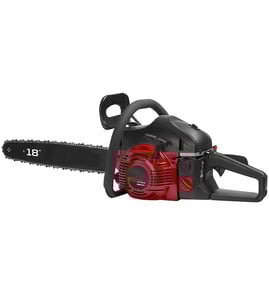





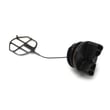
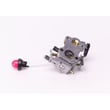
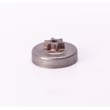


Where is the model number on a chainsaw?
On the Craftsman chainsaw model 358351900, the model number is typically printed on the saw’s identification label or ID tag on the body of the saw (often near the rear handle, starter housing, or fuel tank area). If the label is dirty or oil-stained, cleaning it usually makes the number readable.
Check these common spots first:
- On the housing near the rear handle (operator handle area)
- Near the starter/recoil cover
- On or near the fuel tank area
- Under the top cover (near the air filter/carburetor area)
- On a small ID tag or sticker on the main body
- Turn the chainsaw off and let it cool completely.
- Wipe the outside with a rag; use a small brush to remove sawdust.
- Look for a sticker or metal/plastic ID tag that lists MODEL (and often SERIAL).
- If the label is grimy, use mild soap and water on a rag (avoid soaking labels).
- Confirm the full model number matches exactly: 358351900.
| Label item | What it’s used for |
|---|---|
| Model number | Matching parts and diagrams for your exact saw |
| Serial number | Identifying production run/version for service |
| Engine/spec info | Helps when troubleshooting fuel, ignition, and carburetion issues |
We use the model number to match the correct Craftsman parts and diagrams for your exact chainsaw. Even small model variations can change the fuel line routing, bar/chain fit, or carburetor setup, which affects ordering and repair accuracy.
For model-specific identification details and diagrams, use the 358351900 manual.
Last updated: January 2026
Is a 16 or 18 inch chainsaw better?
An 18-inch chainsaw is better when you need more reach and faster cutting in thicker wood; a 16-inch chainsaw is better for lighter trimming and easier handling. For your Craftsman 358351900 gas chainsaw, the “better” choice depends on the diameter of the wood you cut most often and how much control you want.
| Feature | 16-inch bar | 18-inch bar |
|---|---|---|
| Best for | Limbing, small trees, storm cleanup | Medium trees, heavier bucking |
| Handling | Lighter feel, easier control | Heavier feel, more leverage |
| Cutting speed in thicker wood | Slower (more repositioning) | Faster (less repositioning) |
| Kickback potential | Typically lower | Typically higher |
- Match the bar to your typical wood size: a bar length close to the wood diameter reduces repositioning.
- Prioritize control for overhead or awkward cuts: a shorter bar is easier to keep stable.
- Think about fatigue: longer bars usually add weight and can tire arms and shoulders faster.
- Plan for maintenance: longer bars and chains still need the same basics (sharp chain, correct tension, steady oiling).
- Confirm fitment for your exact model: use the 358351900 owner’s manual to verify the recommended bar and chain specifications.
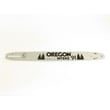
If you move between bar lengths, the chain and bar must match the saw’s required specs (pitch, gauge, and drive link count). These model-matched options are commonly used on this platform:
Choosing the right bar length helps you cut more efficiently while keeping the saw stable. The wrong setup can increase binding, slow cutting, and raise the chance of kickback, especially when the chain is dull or tension is off.
Last updated: January 2026
Should I use 40 1 or 50 1 fuel for a chainsaw?
For the Craftsman chainsaw model 358351900, we use the fuel-to-oil ratio specified in the manual; that is the correct mix for lubrication and engine life. If you are choosing between 40:1 and 50:1, the right answer is whichever ratio your model calls for in the 358351900 owner's manual.
- Find the fuel mix ratio section in the 358351900 owner's manual.
- Use fresh, name-brand gasoline and 2-cycle engine oil intended for air-cooled engines.
- Measure oil and gas accurately; do not “eyeball” the mix.
- Mix in an approved fuel can first, then fill the tank.
- Label the can with the ratio and date; discard old mix between seasons.
In general, 40:1 has more oil than 50:1. More oil can add lubrication but can also increase smoke and carbon buildup; less oil can reduce smoke but risks faster wear if the engine needs more lubrication.
| Ratio | Oil per 1 gallon gas | Typical effect |
|---|---|---|
| 40:1 | 3.2 oz | More lubrication; more smoke and deposits |
| 50:1 | 2.6 oz | Cleaner running; less lubrication margin |
These issues often look like “wrong ratio” but are actually fuel delivery or air intake problems:
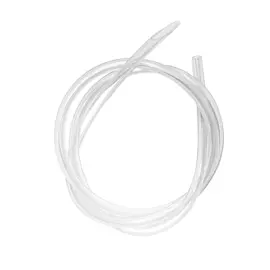
- Cracked or soft fuel line, loose fitting, or air leak (inspect ayp lawn & garden equipment fuel line, large 530069216 and ayp chainsaw fuel line fitting 530023877)
- Dirty air filter (check mcculloch lawn & garden equipment engine air filter 530057925)
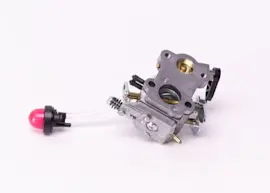
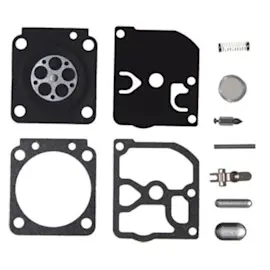
- Carburetor needs service or replacement (see how to replace a chainsaw carburetor)
The correct 2-cycle mix is the engine’s lubrication system. Using the manual-specified ratio helps prevent scoring, overheating, plug fouling, and hard starting.
Last updated: January 2026