Installation guide
 Owner’s manual



What is the lifespan of a KitchenAid dishwasher?
A KitchenAid dishwasher like model KDTM354ESS3 typically lasts 10 to 14 years with normal household use. Consistent cleaning, correct detergent and rinse aid use, and fixing small leaks or drainage issues early are the biggest factors in reaching the high end of that range.
- Water quality: hard water speeds up mineral buildup on the heating system and spray paths.
- Filter and sump cleanliness: debris left in the circulation area strains the pump and motor.
- Door sealing and leaks: even small leaks can damage components and cabinetry over time.
- Loading habits: overloading can block spray arms and reduce cleaning, increasing wear.
- Heat and dry settings: higher heat can improve drying but adds thermal stress over years.
For model-specific operating and care guidance, follow the maintenance and usage recommendations in the KDTM354ESS3 user manual.
| Task | How often | What it helps prevent |
|---|---|---|
| Clean the filter area and remove debris | Weekly | Poor cleaning, pump strain |
| Check spray arms for clogs | Monthly | Spots, redeposit, noise |
| Run a dishwasher cleaner cycle | Monthly | Odor, mineral buildup |
| Inspect door seal for tears or flattening | Every 3 months | Leaks, moisture damage |
If you notice leaking, a door that will not latch, or poor wash performance, replacing a worn part early can prevent bigger failures.
- If you see water at the front corners of the tub, inspect the dishwasher door seal W11177741.
- If the dishwasher fills slowly or will not fill, the inlet system may need attention; see the dishwasher water inlet valve W11175771.
- If drying gets worse and cycles seem cooler, the heating circuit may be involved; check the element assembly W10703867.
Dishwashers often fail gradually. Catching early symptoms (minor leaks, weak fill, reduced heat, unusual noise) helps you avoid secondary damage and can add years to the life of your KitchenAid dishwasher.
Last updated: January 2026
What is the most common problem with a KitchenAid dishwasher?
For the KitchenAid KDTM354ESS3 dishwasher, the most common day-to-day problem we see is poor cleaning (food left on dishes). It’s usually caused by a clogged filter/sump area, blocked spray arm holes, or loading that prevents water from reaching items; leaks are another frequent issue.
- Clean the filter and sump area (remove debris, labels, glass)
- Spin spray arms by hand to confirm they turn freely
- Clear spray arm holes with a toothpick and rinse thoroughly
- Avoid overloading; keep tall items from blocking the upper spray
- Use rinse aid and the correct detergent amount for your water hardness
- Run hot water at the sink until it’s hot before starting a cycle
If you want model-specific operating tips (cycle selection, loading patterns, and maintenance intervals), follow the guidance in the KDTM354ESS3 owner’s manual.
If cleaning and loading changes don’t help, these are common components to inspect on KDTM354ESS3:
- Spray arm: cracks, stripped hub, or clogged jets (water pressure drops)
- Circulation pump/motor: weak wash action, unusual humming, or intermittent cleaning
- Water inlet valve: underfilling leads to weak spray and poor wash results
- Door seal: drips at the corners or along the bottom edge
Helpful model-matched parts to consider:
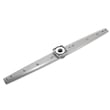
- Dishwasher spray arm WPW10448645
- Dishwasher water inlet valve W11175771
- Dishwasher door seal W11177741
| Symptom | Most likely cause | What we recommend first |
|---|---|---|
| Dishes still dirty | Clogged filter/spray arm, low fill | Clean filter, clear spray arms, verify hot water |
| White film or spots | Hard water, no rinse aid | Add rinse aid, adjust detergent amount |
| Water on floor | Door seal issue, loading, loose hose | Inspect seal, check for obstructions, verify connections |
| Won’t start or acts “dead” | Latch/control issue, power problem | Check latch engagement and household power |
Poor cleaning is often a simple maintenance or loading fix, but if you keep running cycles with restricted spray or low water fill, it can lead to repeat wash failures and extra wear on the pump and heating system.
Last updated: January 2026
Does a KitchenAid dishwasher have a filter to clean out?
Yes. The KitchenAid KDTM354ESS3 dishwasher uses a filter area in the bottom of the tub that can collect food soil, so we recommend checking and cleaning it periodically to help prevent odors, poor cleaning, and draining issues. Use the steps in the KDTM354ESS3 dishwasher manual for your exact filter style.
On KDTM354ESS3, you typically access the filter from inside the tub at the bottom, near the sump and lower spray arm.
- Pull out the lower rack.
- Locate the filter area on the tub floor around the sump.
- Remove the filter assembly (commonly twist to unlock, then lift out).
- Rinse under warm running water; use a soft brush for stuck-on debris.
- Reinstall the filter fully seated and locked before running a cycle.
How often you clean depends on how much food soil goes into the dishwasher.
| Usage pattern | Recommended check or clean interval |
|---|---|
| Heavy use or lots of food soil | Weekly to every 2 weeks |
| Typical household use | About monthly |
| Light use or well-scraped dishes | Every 1 to 2 months |
- Grit or residue left on glasses and plates
- Standing water or slow draining
- Odors coming from the tub
- Poor wash results (food redeposited)
- Debris collecting at the bottom after a cycle
If you are diagnosing weak spray or poor cleaning and you are already inspecting the wash system, a clogged or damaged spray arm can also contribute. For this model, see the dishwasher spray arm WPW10448645 if replacement becomes necessary.
A clean filter helps water circulate properly through the pump and spray arms, keeps food particles from redepositing on dishes, and reduces the chance of clogs that can lead to draining problems.
Last updated: January 2026