Owner’s manual
 Error Codes


Who makes Kenmore refrigerator model 10657799700?
Kenmore is a brand name, and model 10657799700 is a Kenmore Elite side-by-side refrigerator built on a Whirlpool-manufactured platform (the 106 model prefix is commonly associated with Whirlpool). For model-specific identification details, we recommend checking the product information section in the owner's manual.
How to confirm the manufacturer on your exact unit
Use these quick checks on your refrigerator’s model and serial tag (usually inside the fresh food compartment):
- Verify the model number is 10657799700 (exact match)
- Note the model prefix (the first three digits, 106)
- Record the serial number (helps identify production run)
- Look for any factory code or additional ID line on the tag
- Cross-check the identification section in the owner's manual
Why the maker matters for parts and repairs
Knowing the manufacturing platform helps match the correct parts and troubleshooting steps for your Kenmore Elite refrigerator.
Common examples on this model include:
| Repair need | Part type you may need | Example from this model’s parts list |
|---|---|---|
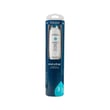
| Water tastes off or flow is slow | Water filter | Genuine Kenmore refrigerator water filter EDR3RXD1 |
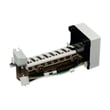
| No ice or poor ice production | Ice maker assembly | Refrigerator ice maker 2198597 |
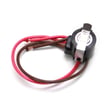
| Frost buildup or warm freezer | Defrost system component | Refrigerator defrost bi-metal WPW10225581 |
Helpful tip when ordering parts
Always order by the full model number 10657799700, not just “Kenmore Elite side-by-side.” Kenmore models can look similar but use different door bins, control boards, and defrost parts.
Why it matters
A correct manufacturer platform match reduces wrong-part returns and speeds up repairs, especially for water system parts (filter cap, tubing, inlet valve) and ice maker components.
Last updated: February 2026
How to tell cubic feet of Kenmore refrigerator by model number?
For Kenmore Elite model 10657799700, the model number by itself usually does not directly state the refrigerator’s cubic feet. The most reliable way is to look up the capacity in the specifications section of the owner's manual, or calculate an estimate from the interior measurements.
Fast ways to find capacity
1) Check the specs in the manual (best option)
The owner's manual typically lists the refrigerator and freezer capacities (in cubic feet) in the product data or specifications area.
2) Calculate an estimated cubic feet (works for any refrigerator)
Measure the usable interior space (not the outside cabinet):
- Measure refrigerator compartment: height, width, depth (in inches)
- Measure freezer compartment: height, width, depth (in inches)
- Multiply each compartment’s measurements to get cubic inches
- Add the two totals together
- Divide by 1,728 to convert cubic inches to cubic feet
Measurement tips that improve accuracy
- Measure inside wall to inside wall; ignore door bins and curved liners
- Measure depth to the back wall, not into the air tower or fan cover
- Subtract space taken by thick shelves, ice maker housing, or large duct covers
- Use the “flat box” method; treat each compartment like a rectangle for a close estimate
Quick reference table
| What you have | What it tells you | Best next step |
|---|---|---|
| Model number (10657799700) | Identifies the exact Kenmore Elite unit | Confirm capacity in the owner's manual |
| Interior measurements | Lets you estimate capacity | Use the 1,728 conversion |
| Freezer space (cu ft) | Helps with storage planning | Use freezer capacity for outage planning |
Why it matters
Capacity affects food storage planning, filter and ice maker expectations, and even emergency planning. For example, the manual’s outage guidance references dry ice amounts per cubic foot of freezer space, so knowing freezer capacity helps you plan correctly.
Last updated: February 2026
How to tell if a Kenmore refrigerator compressor is bad?
On Kenmore Elite model 10657799700, a “bad compressor” usually shows up as warm temperatures even though the unit has power and seems to be running. Before condemning the compressor, we confirm the basics (power, controls, airflow) and then look for signs the sealed system is not pumping refrigerant correctly. See the troubleshooting and normal-operation notes in the owner's manual.
Quick checks before blaming the compressor
- Verify the refrigerator is plugged into a grounded 3-prong outlet and the outlet works (test with a lamp).
- Check the household fuse or circuit breaker; reset if tripped.
- Make sure the temperature controls are turned on and set correctly.
- If it was just installed or moved, allow 24 hours to cool completely.
- Listen for normal operating sounds; some buzzing, pulsating, and gurgling can be normal.
Symptoms that point to a compressor or sealed-system problem
A compressor or sealed-system issue is likely when you see cooling failure plus one or more of these:
- Compressor runs for long periods but both compartments stay warm.
- Condenser area is hot and the refrigerator never reaches set temperature.
- Frost pattern is abnormal (for example, only a small patch of frost on the evaporator).
- You hear repeated clicking (start device trying to start the compressor).
- The compressor is silent and not running even though the refrigerator has power.
What “running too much” means on this model
The manual notes that a newer, high-efficiency compressor can run longer than older designs, especially with warm room temps, frequent door openings, or a large food load. Use this as a baseline: long run times are normal only if temperatures are still correct. Reference: owner's manual.
Fast decision guide
| What you observe | Most likely cause | What we do next |
|---|---|---|
| No lights, no fans, no compressor | Power supply issue | Outlet, breaker/fuse, cord, controls |
| Fans run, compressor runs, still warm | Sealed system or compressor not pumping | Check airflow, coils, frost pattern; then sealed-system diagnosis |
| Clicking, compressor won’t start | Start device/capacitor or compressor locked | Electrical tests; inspect start components |
Why it matters
Replacing a compressor is a major repair; confirming power, control settings, and airflow first prevents unnecessary parts replacement and gets you to the real root cause faster.
Last updated: February 2026
Which side-by-side refrigerator brand is most reliable?
For long-term reliability in a side-by-side refrigerator, we see the best results from brands with strong parts support and simpler designs; GE, Frigidaire, and KitchenAid are consistently solid mainstream choices, while Sub-Zero leads in premium durability. For your Kenmore Elite 10657799700, reliability also depends heavily on maintenance and correct installation clearances.
What “most reliable” means for side-by-side refrigerators
Side-by-side models tend to have more door features (ice and water dispenser, door wiring, valves), so reliability is usually driven by how well these systems hold up over time.
Common reliability drivers:
- Ice maker and dispenser mechanism wear
- Water filtration and water inlet valve performance
- Door seals (gaskets) and door alignment
- Defrost system health (heater and defrost thermostat)
- Airflow and ventilation around the cabinet
Brand reliability: practical comparison
These are typical ownership patterns we see across the category.
| Tier | Brands that commonly perform well | What usually makes them reliable |
|---|---|---|
| Mainstream | GE, Frigidaire, KitchenAid | Strong service ecosystem; fewer “fussy” features on many models |
| Value | Maytag (Whirlpool family) | Straightforward designs; good parts availability |
| Premium | Sub-Zero | Heavy-duty build; long parts support; higher cost |
How to improve reliability on your Kenmore Elite 10657799700
Even a dependable refrigerator becomes unreliable if airflow, water supply, or filtration is neglected.
We recommend:
- Replace the water filter on schedule; a restricted filter can reduce dispenser flow and stress the water system (use genuine Kenmore refrigerator water filter EDR3RXD1).
- Keep proper ventilation clearances: allow about 1/2 inch on each side and at the top; leave about 2 inches minimum at the wall side for door swing (depending on layout) and extra space behind if you have an ice maker water line.
- Avoid installing near heat sources and keep the room temperature above 55°F.
- Inspect door gaskets for gaps, tears, or stiffness; air leaks increase run time and frost.
- If ice production drops, check for a frozen fill tube, low water pressure, or a failing ice maker module.
Why it matters
“Reliable” is not just fewer breakdowns; it is stable temperatures, consistent ice and water dispensing, and lower compressor run time. Good airflow and timely filter changes reduce strain on key components like the evaporator fan motor, defrost system, and water valve.
For model-specific operating and care guidance, use the owner's manual.
Last updated: February 2026
What is the disadvantage of a side-by-side fridge?
The biggest disadvantage of a side-by-side refrigerator (including Kenmore Elite model 10657799700) is usable space: each compartment is narrower, so wide items do not fit as easily. You also tend to use more bending and reaching because both the fresh-food and freezer sections run top-to-bottom.
Common disadvantages you will notice day to day
- Narrow shelves: wide platters, pizza boxes, and sheet pans are harder to store.
- Less “wide-open” fresh-food space than many French-door designs.
- More bending and reaching: you access both freezer and refrigerator items at multiple heights.
- Door clearance needs: you need room for both doors to swing open.
- Potentially higher energy use on models with through-the-door ice and water (more openings, more components).
Space and access: quick comparison
| Feature | Side-by-side | French door (typical) |
|---|---|---|
| Fits wide items | Fair to poor | Good |
| Frozen food organization | Good (eye-level shelves) | Good (pull-out drawer) |
| Fresh-food visibility | Fair | Very good |
| Bending/reaching | Moderate | Often less for fresh food |
Installation and clearance considerations (model-relevant)
Your 10657799700 manual calls out clearance and placement basics that matter more with side-by-side doors:
- Plan for about 1/2 inch clearance on each side and at the top for ventilation.
- If installed next to a fixed wall, allow about 2 inches minimum (varies by setup) so doors can swing.
- If the refrigerator has an ice maker, leave extra space behind for water line connections.
For the exact guidance and diagrams for your unit, use the owner's manual.
Why it matters
Side-by-side refrigerators are great for keeping both fresh and frozen items at convenient heights, but the narrower compartments can be a deal-breaker if you regularly store wide containers or cook with large trays.
Last updated: February 2026