Owner’s manual
 View engine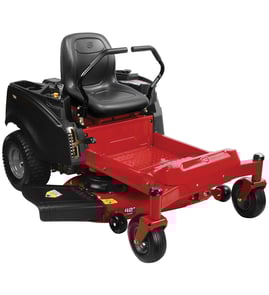
What is the difference between a front engine and rear engine riding lawn mower?
A front-engine riding mower carries the engine ahead of the operator, while a rear-engine riding mower (like the Weed Eater 28600) places the engine behind the seat. Rear-engine designs typically improve forward visibility and maneuverability; front-engine designs typically support larger decks and heavier-duty work.
| Feature | Front-engine rider | Rear-engine rider (Weed Eater 28600 style) |
|---|---|---|
| Engine location | In front of operator | Behind operator |
| Typical use | Larger lawns, heavier mowing | Smaller to mid-size lawns, tighter spaces |
| Visibility | More hood in front | Clearer view of cutting path |
| Turning/maneuvering | Often wider turning radius | Often easier to maneuver |
| Service access | Engine access from front | Engine access from rear |
- Visibility: With a rear-engine rider, you usually see more of the area directly in front of the mower, which helps when trimming around beds, trees, and edges.
- Deck size and power: Front-engine riders are commonly built to handle wider cutting decks and more demanding mowing conditions.
- Weight balance: Rear-engine riders put more weight over the drive wheels, which can help traction on flat ground.
- Noise and heat: Rear-engine riders place engine noise and heat closer to the operator.
- Controls and safety systems: Your 28600 uses standard rider controls and interlocks; for example, the engine should only start with the brake depressed and the deck clutch disengaged (details in the owner's manual).
Choosing between front-engine and rear-engine riders affects how comfortably you mow, how tight you can turn, and what size yard the mower is best suited for. For the Weed Eater 28600 rear-engine riding mower, the design is geared toward everyday mowing with good visibility and easy handling.
Last updated: February 2026
What is the advantage of a rear engine mower?
A rear-engine riding mower like the Weed Eater 28600 puts the engine weight over the drive wheels, which improves traction on flat lawns and makes the mower feel stable and easy to control. The compact layout also helps with visibility and maneuvering in tighter areas (with safe operation practices from the owner's manual).
- Better traction: More weight over the rear drive wheels helps reduce wheel slip on dry grass.
- Compact footprint: Typically easier to store and navigate through gates or around landscaping.
- Good visibility: The lower, rear-mounted engine can make it easier to see the mowing path ahead.
- Simple controls: Many rear-engine riders use straightforward levers for speed and deck engagement.
- Stable feel: Balanced weight distribution helps the mower track predictably on level ground.
Rear-engine riders are a strong fit for routine mowing on mostly level yards. They are designed for controlled, steady cutting, with deck engagement and height adjustments that you set before or during mowing.
| What you care about | Rear-engine rider (like 28600) | Typical benefit |
|---|---|---|
| Traction | Weight over drive wheels | Smoother starts and fewer spin-outs |
| Maneuvering | Compact chassis | Easier trimming around obstacles |
| Operator control | Simple lever-based operation | Less complexity for basic mowing |
The manual highlights features that support safer operation, especially around reverse mowing.
- Wear eye protection while operating or repairing.
- Disengage the deck clutch to stop the blade.
- Avoid mowing in reverse unless absolutely necessary.
- Use the Reverse Operation System (ROS) only when you are certain the area is clear.
Choosing the right mower layout affects traction, turning control, and how confidently you can mow around trees, beds, and tight corners. Rear-engine riders are popular because they deliver practical handling without the bulk of larger tractors.
Last updated: February 2026
What is the best engine for a riding mower?
For a riding mower, the “best” engine is the one that matches your yard size and workload and is maintained correctly; for the Weed EATER 28600 rear-engine rider, following the oil, tune-up, and safety guidance in the owner's manual is what most directly determines starting reliability and engine life.
When comparing riding mower engines (Briggs, Kohler, Kawasaki, and others), we focus on practical fit and supportability:
- Duty level: occasional mowing vs. weekly heavy mowing (thick grass, hills, towing)
- Parts availability: filters, spark plugs, belts, switches, and battery support
- Maintenance friendliness: easy oil checks, air filter access, and tune-up intervals
- Cold-weather starting: oil viscosity options and battery condition
- Safety systems: operator presence and reverse operation system (ROS) working correctly
Your Weed EATER 28600 manual calls out key specs that matter more than brand debates:
| Item | Spec for model 28600 | Why it matters |
|---|---|---|
| Gas type/capacity | Unleaded regular; 1.2 qt | Helps prevent fuel-related no-start issues |
| Oil type | SAE 30 (above 32°F); SAE 5W-30 (below 32°F) | Correct viscosity protects the engine |
| Oil capacity | 20 oz | Prevents low-oil damage and smoking |
| Spark plug | Champion RC12YC; gap .030" | Correct plug and gap improves starting |
A strong maintenance routine beats brand reputation in real-world results:
- Check engine oil level before each use
- Replace the spark plug at least once a year
- Clean or replace the air filter at least once a year (more often in dusty conditions)
- Inspect the blade and belt for wear at least once a season
- Check for loose fasteners before each use
Most “bad engine” complaints trace back to oil viscosity, dirty air filtration, old fuel, or neglected tune-ups. Keeping your 28600 within the manual’s oil and service guidance is the most reliable way to get long engine life and consistent power.
Last updated: February 2026
How to stop a small engine from backfiring?
On the Weed Eater 28600 rear-engine riding mower, backfiring is usually caused by fuel issues, a dirty air filter, or an ignition problem. We stop it by cleaning the air intake and cooling areas, using fresh fuel, and checking common tune-up items listed in the owner's manual.
- Reduce engine speed gradually before shutting the mower off (avoid snapping the throttle closed).
- Replace or clean the air filter cartridge if it is dirty; do not oil the cartridge and do not blow it out with pressurized air.
- Clean the air screen and cooling fins so the engine runs cooler and more consistently.
- Use fresh, clean gasoline; stale fuel and alcohol-blended fuel can cause poor combustion and afterfire.
- Inspect the muffler and spark arrester (if equipped) for corrosion or restriction.
Old fuel is one of the most common reasons a mower starts running rough and pops on decel.
- If fuel is stale or contaminated, drain the tank and run the engine until the fuel lines and carburetor are empty.
- For storage, add fuel stabilizer and run the engine about 10 minutes so treated fuel reaches the carburetor.
- Start each season with fresh fuel.
Use this to narrow the cause before replacing parts.
| Symptom | Most likely cause | What to do next |
|---|---|---|
| Backfires mainly on shutdown | Throttle closed too fast, hot muffler igniting fuel | Idle down slowly; inspect muffler/spark arrester |
| Backfires under load | Dirty air filter, overheating, fuel restriction | Service air filter; clean cooling areas |
| Hard starting plus popping | Bad spark plug, stale fuel, wiring issue | Replace plug; refresh fuel; check wiring |
If the engine intermittently loses spark, unburned fuel can ignite in the exhaust.
- Check the key switch and safety interlock circuit for loose connections.
- If starting and ignition behavior is inconsistent, test or replace the lawn tractor ignition switch 532193350.
Backfiring is more than noise; it can signal overheating, restricted airflow, or fuel breakdown that leads to hard starting, loss of power, and muffler damage over time.
Last updated: February 2026
Is it worth repairing a lawn mower engine?
Yes, it’s worth repairing the engine on your Weed EATER 28600 rear-engine riding mower when the problem is a maintenance or electrical issue (battery, wiring, ignition, fuel quality) and the fix is straightforward. If the engine has internal damage or needs major machine work, replacement is usually the better value.
- Repair it when it has a no-start caused by battery, terminals, wiring, fuse, or a safety switch
- Repair it when it runs rough due to dirty air filter, stale fuel, or low or dirty oil
- Repair it when the mower is otherwise solid (deck, transaxle, steering, and frame are in good shape)
- Replace the engine when it has low compression, severe knocking, or heavy smoke that persists after basic service
- Replace the engine when repair cost approaches about half the value of a comparable working mower
The manual’s troubleshooting and maintenance schedule point to several common, fixable causes of poor running or no-start.
| Symptom | Most common fix | Parts that may apply |
|---|---|---|
| Won’t crank or start | Charge/replace battery; clean terminals; check wiring and fuse | Lawn mower battery 586457801, lawn tractor ignition switch 532193350, husqvarna lawn tractor interlock switch 532176138 |
| Starts then stalls or runs rough | Fresh fuel; service air filter; check oil level and spark plug | Maintenance items per owner's manual |
| Runs poorly intermittently | Inspect for loose or damaged wiring and connectors | Lawn tractor wire harness 532428477 |
A riding mower engine problem is often caused by neglected maintenance (oil, air filtration, fuel quality) or a simple electrical interlock issue. Fixing those restores reliability without the cost and downtime of an engine swap.
- Check engine oil level and condition; change oil on schedule
- Drain stale fuel and refill with fresh gasoline; avoid overfilling the tank
- Inspect wiring for loose or damaged connectors (especially around safety switches)
- Verify the operator presence and reverse operation systems are working
- Replace only what tests bad; a multimeter test is the fastest way to confirm electrical failures
Last updated: February 2026