Owner’s manual
 Error Codes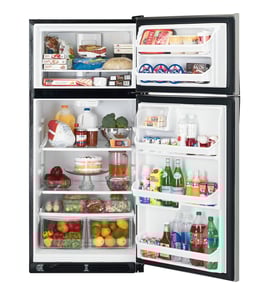



What size is a Kenmore refrigerator model 25373072300?
The Kenmore top-mount refrigerator model 25373072300 is a full-size top-freezer style unit. For exact exterior dimensions (width, height, depth), use the specifications section in the 25373072300 owner's manual; that is the most reliable source for the precise measurements.
Typical size you can expect for this style
Most Kenmore 253-series top-mount refrigerators are in these common ranges:
- Width: about 28 to 30 inches
- Height: about 65 to 67 inches
- Depth: about 30 to 33 inches (varies with handle)
- Capacity: typically around 18 to 20 cubic feet
Measure it the right way (so it fits)
Use a tape measure and record three numbers:
- Width: widest point across the cabinet (and include handles if they stick out)
- Height: floor to the top of the hinge cover (not just the cabinet)
- Depth: back of cabinet to the front edge of the door or handle (whichever is farther)
Clearance requirements (from the manual)
For Kenmore 25373072300, the Use & Care Guide calls out these installation clearances:
| Location | Recommended clearance |
|---|---|
| Sides and top | 3/8 inch |
| Back | 1 inch |
Why it matters
Getting the size right prevents door-swing interference, improves airflow for the compressor and condenser, and helps avoid cooling problems caused by tight installation spaces.
Last updated: February 2026
Who makes Kenmore refrigerator model 25373072300?
Kenmore is a brand name, and different companies have manufactured Kenmore refrigerators over the years. For Kenmore model 25373072300, the 253 model prefix is commonly associated with Frigidaire (Electrolux/Frigidaire) manufacturing for Sears.
How to confirm the manufacturer on your exact unit
The most reliable way is to check the model and serial tag inside the fresh food compartment (the manual notes the serial plate is located inside the refrigerator compartment). Use the tag details to match parts and service information.
- Look for the full model number 25373072300 and the serial number
- Note any additional codes or a manufacturer name on the label
- Record the information for future reference
- Use only mild soap and water if you need to clean the serial plate
Why the “253” prefix matters
Kenmore model numbers often include a prefix that points to the original manufacturer. The 253 prefix is widely used on Kenmore refrigerators built by Frigidaire, which helps explain why many replacement parts cross to Frigidaire-style components.
| What you see | What it usually indicates | Why it helps |
|---|---|---|
| Model starts with 253 | Frigidaire-built Kenmore | Improves accuracy when matching parts like gaskets, fans, and ice maker components |
| Different prefix (not 253) | Different manufacturer | Parts and procedures can vary significantly |
Why it matters when ordering parts
Knowing the manufacturer family helps you choose compatible components for common repairs like door sealing, cooling airflow, and ice maker issues. For example, this model’s parts list includes items such as the refrigerator defrost bi-metal thermostat 5303918202 and refrigerator evaporator fan blade 5308000010.
For operating and identification details (including where to find the serial plate), use the owner's manual.
Last updated: February 2026
How to tell what model Kenmore refrigerator?
Your Kenmore refrigerator’s model number is printed on the serial plate inside the fresh food (refrigerator) compartment. For Kenmore model 25373072300, the Use & Care Guide notes the serial plate is located inside the refrigerator compartment; once you have that number, you can match parts and instructions in the owner's manual.
Where to look for the model number tag
Check these common spots first (use a flashlight and look for a sticker or metal plate):
- Inside the refrigerator compartment on a side wall
- On the ceiling of the fresh food compartment
- Behind or beside the crisper drawers
- Along the door frame when the refrigerator door is open
- Near the bottom front area (sometimes visible after removing the toe grille)
What to write down (and why it matters)
Record both the model number and serial number exactly as shown. The manual also recommends cleaning the serial plate with only soap and water so the printing stays readable.
Why it matters
The model number tells us the exact design version of your refrigerator so we can match the right door gasket, evaporator fan parts, ice maker components, and other replacement parts without guesswork.
Quick guide: model number vs. serial number
| Item | What it identifies | When you use it |
|---|---|---|
| Model number | The exact refrigerator design (example: 25373072300) | Ordering parts, looking up diagrams, using the correct instructions |
| Serial number | Your unit’s unique production identifier | Service history, warranty paperwork, production details |
If the label is hard to read
Try these steps to make the tag legible:
- Wipe gently with a damp cloth and a drop of dish soap; dry completely
- Take a close-up photo and zoom in
- Copy the number twice and compare (misreading 0, O, 8, and B is common)
- If the sticker is scratched, view it from an angle with a bright light
Related parts you might match by model
Once you confirm your model number, common model-matched items include the refrigerator light bulb 316538904 and the ice maker 5304458371.
Last updated: February 2026
Can you still get parts for Kenmore refrigerators?
Yes. We still offer replacement parts for Kenmore refrigerators, including your Kenmore model 25373072300 top-mount refrigerator. You can match parts by model number and then choose the exact component you need (for example, an ice maker, door bin, gasket, or light bulb) using the parts list and diagrams, plus the owner's manual.
Best way to make sure you get the right part
Using the model number is the most reliable way to avoid ordering the wrong item, especially for fit and electrical compatibility.
- Confirm the full model number on the rating label (use 25373072300 exactly).
- Identify the failed symptom (no ice, warm fridge, frost buildup, door not sealing, light out).
- Use the parts diagrams to pinpoint the correct location and part description.
- Compare your original part to the listing (shape, connectors, mounting holes).
- If multiple similar parts appear, match by part ID and part number.
Common Kenmore 25373072300 parts customers replace
These are examples of parts available for this model that often solve everyday problems:
| Problem you see | Part that often fixes it | Example from this model’s parts |
|---|---|---|
| Ice maker not making ice | Ice maker assembly or ice maker components | Ice maker 5304458371 or ice maker mold 241798231 |
| Door not sealing, moisture or frost | Door gasket | Refrigerator gasket 241872512 or refrigerator freezer door gasket 242193211 |
| Fridge light out | Light bulb | Refrigerator light bulb 316538904 |
| Frost buildup, warm temps | Defrost system parts | Refrigerator defrost bi-metal thermostat 5303918202 or refrigerator defrost heater 5303918247 |
Why it matters
Kenmore refrigerators are built to be serviceable. Replacing the correct OEM-style part restores cooling performance, helps prevent food spoilage, and can reduce issues like frost buildup, leaks, and temperature swings.
Quick safety note before you start
- Unplug the refrigerator before servicing.
- Turning the temperature control to “0” stops the compressor but does not cut power to the light and other components.
- Use the wiring and component guidance in the owner's manual for safe access and reassembly.
Last updated: February 2026
What are the common problems with Kenmore 25373072300 refrigerators?
Common problems with the Kenmore 25373072300 top-mount refrigerator include not running at all, warm temperatures, excessive frost from defrost issues, ice maker failures, and interior light problems. Many of these trace back to control settings, airflow blockage, or a failed cooling or defrost component.
Most common symptoms and what they usually mean
- Refrigerator not running: temperature control set to 0, unit in a defrost cycle (wait about 20 minutes), loose power cord, tripped breaker, or blown fuse.
- Refrigerator or freezer too warm: controls set too warm, vents blocked by food, doors not sealing, or a fan not moving air.
- Noisy or vibrating: cabinet not level or floor is weak; leveling often fixes it.
- Ice maker not working (some models): shutoff arm up, water supply off, low water pressure, or freezer not cold enough.
- Light not working: bulb burned out or the door/light switch is stuck.
Quick checks we recommend before replacing parts
- Confirm the temperature control is not set to 0 (on this model, 0 turns off the compressor but does not cut power to the light and other components).
- Give temperature changes time; allow 24 hours for temperatures to stabilize after adjustments.
- Make sure packages are not blocking cold air vents.
- Check door sealing and closing; a poor seal can cause warm temps and frost.
- If the unit is silent and warm, verify power at the outlet and reset the breaker if needed.
Parts that commonly solve these problems
If troubleshooting points to a failed component, these parts are commonly involved on this model:
| Problem area | Common part involved | Example part on this model |
|---|---|---|
| Defrost system frost buildup | Defrost thermostat, defrost heater, defrost timer | Refrigerator defrost bi-metal thermostat 5303918202, refrigerator defrost heater 5303918247, refrigerator timer 215846602 |
| Warm temps, poor airflow | Evaporator fan blade, condenser fan motor | Refrigerator evaporator fan blade 5308000010, refrigerator condenser motor 5303918774 |
| Ice maker not making ice | Ice maker assembly or ice maker components | Ice maker 5304458371, ice maker mold 241798231 |
| Interior light out | Light bulb | Refrigerator light bulb 316538904 |
Why it matters
Catching airflow, control-setting, and defrost problems early helps protect food temperatures and prevents heavy frost buildup that can block vents and make the refrigerator run longer than it should.
For model-specific operating guidance (temperature controls, shelf adjustment, “before you call” checks), use the owner's manual.
Last updated: February 2026