Installation guide
 Owner’s manual
 Error Codes


How do I run a diagnostic on my Whirlpool washer?
The Whirlpool LSQ9544KQ0 is a mechanical, knob-controlled top-load washer and it does not use the modern “button sequence” diagnostic mode found on many electronic-control Whirlpool washers. For this model, troubleshooting is done by observing symptoms during fill, agitate, drain, and spin, then checking likely components using the LSQ9544KQ0 washer use & care manual.
What you can do instead (model-appropriate checks)
Use these quick checks to “diagnose” what stage is failing:
- Won’t fill: verify both faucets are on; check for kinked hoses and clogged inlet screens.
- Fills but won’t agitate: confirm the cycle knob is set correctly and pulled out; listen for motor running.
- Won’t drain: check the drain hose for clogs or improper height; listen for pump noise.
- Won’t spin: make sure the lid is fully closed; redistribute the load to reduce out-of-balance.
- Stops mid-cycle: allow normal pauses; check power supply and avoid extension cords.
Common parts to suspect by symptom
If a symptom points to a specific component, these are common matches for LSQ9544KQ0:
| Symptom | What it often points to | Example compatible part |
|---|---|---|
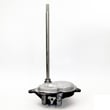
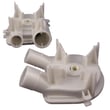
| Won’t drain or drains slowly | Drain pump or internal drain hose restriction | Washer drain pump WP3363394 |
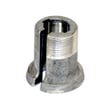
| Motor runs but washer won’t agitate/spin | Motor-to-transmission coupling | Coupling 285753A |
| Won’t spin (intermittent) | Lid switch not closing consistently | Switch 3949247V |
Why it matters
Running the wrong “diagnostic mode” steps for a different Whirlpool platform can waste time and lead to unnecessary part replacement. With LSQ9544KQ0, isolating the failing cycle stage (fill, agitate, drain, spin) is the fastest path to an accurate repair.
Last updated: January 2026
How to test a Whirlpool pressure switch?
On Whirlpool washer model LSQ9544KQ0, you can test the water-level (pressure) switch by safely accessing it, checking the air hose for leaks or clogs, and using a multimeter to verify the switch contacts change state when you apply gentle air pressure. Use the wiring and safety guidance in the LSQ9544KQ0 washer manual.
Safety first
- Unplug the washer before removing any panels or touching wiring.
- Turn off both water faucets.
- If you need to move the washer, follow the leveling and access steps in the LSQ9544KQ0 installation guide.
- Use a multimeter rated for appliance work.
- Take a photo of wire locations before disconnecting anything.
What to check before you meter-test
Many “bad pressure switch” symptoms are actually caused by the hose or an air leak.
- Inspect the pressure hose for cracks, kinks, or loose connections.
- Blow through the hose (removed from the switch) to confirm it is clear.
- Check the tub air dome connection point for soap scum buildup.
- If the hose is brittle or leaking, replace it with the exact compatible part.
Helpful part for this model: hose-wl WP353244.
How to test the pressure switch with a multimeter
- Unplug the washer.
- Access the control area where the pressure switch is mounted (typically behind the console on many Whirlpool top-load designs).
- Remove the pressure hose from the switch and inspect it.
- Label and remove the wires from the switch terminals.
- Set your meter to ohms/continuity.
- Test the common (COM) to normally closed (NC) and common to normally open (NO) terminals:
- With no pressure, COM to NC is typically closed (continuity) and COM to NO is open.
- Apply gentle air pressure by blowing into the switch port; you should hear 1 to 2 clicks and the readings should swap (NC opens, NO closes).
Quick results guide
| Test result | What it usually means | What to do next |
|---|---|---|
| No click, no change in continuity | Switch diaphragm/contacts not responding | Recheck hose, then consider switch replacement |
| Clicks but continuity does not change | Worn/burned contacts | Replace the pressure switch |
| Works on bench test but washer still overfills/underfills | Hose leak, air dome issue, or inlet valve problem | Inspect hose/air dome; then evaluate inlet valve |
Why it matters
The pressure switch tells the washer when to stop filling and start agitating. If it misreads water level, you can get underfilling, overfilling, long fill behavior, or cycles that seem “stuck.”
Last updated: January 2026
How do I reset the lid lock on my Whirlpool washer?
On the Whirlpool LSQ9544KQ0, there is no electronic “lid lock” to reset like on newer washers; this model uses a mechanical lid switch circuit. If the washer won’t run or won’t spin, we reset it by removing power briefly and then confirming the lid switch is being activated correctly (see the LSQ9544KQ0 use & care manual).
Quick reset steps (safe, model-appropriate)
- Turn the Cycle Control knob to OFF.
- Unplug the washer (or switch off the breaker) for 5 minutes.
- Plug back in.
- Close the lid firmly.
- Set the knob to a normal cycle and pull the knob out to start.
If it still acts “lid locked” (common causes on LSQ9544KQ0)
Because LSQ9544KQ0 agitation can occur with the lid up or down, the symptom is usually no spin/no drain or won’t start, which points to the lid switch not closing.
- Make sure the lid is fully closed and not flexing (press down on the right side of the lid while starting).
- Check for a broken lid strike area or misalignment that prevents the switch from clicking.
- If the washer stops mid-cycle, push the knob in to stop, then pull it back out to restart.
- If the unit won’t drain or spin, inspect for a drain restriction or a failing pump.
- If you suspect a failed lid switch, the compatible replacement is the switch 3949247V.
Parts that may be involved
| Symptom | Most likely area | Example compatible part |
|---|---|---|
| Won’t start or won’t spin | Lid switch circuit | Switch 3949247V |
| Won’t drain, hums, or drains slowly | Drain pump or hose | Washer drain pump WP3363394 |
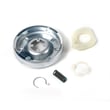
| Agitates poorly (top half not moving) | Agitator dogs | Agitator dog 80040 |
Why it matters
On LSQ9544KQ0, the lid switch is a key safety interlock for spin. If it is intermittent, the washer can appear “stuck” even after a power reset, and cycles may stop or refuse to spin until the switch is reliably triggered.
Last updated: January 2026
What is the most common problem with Whirlpool washers?
On Whirlpool washers, the most common service complaints are draining or spinning problems, leaks, and excessive noise or vibration. For Whirlpool model LSQ9544KQ0, we start with the model-specific basics in the LSQ9544KQ0 use & care manual and then verify correct drain hose installation because an incorrect standpipe setup can mimic a bad pump.
Most common Whirlpool washer problems (what they usually point to)
- Won’t drain or spin: drain hose restriction, incorrect standpipe setup, lid switch issue, or a failing drain pump
- Leaks: loose fill hoses, missing or worn hose washers, drain hose connection problems, or an off-balance load deflecting water
- Loud banging or walking: washer not level, load not balanced, worn suspension components
- Won’t fill or rinses poorly: clogged inlet screens, kinked inlet hose, water supply turned off
- Agitator “slips”: worn agitator dogs or related drive components
LSQ9544KQ0 drain hose setup (the “air gap” detail)
The LSQ9544KQ0 installation guidance is specific: the drain hose must be able to breathe so the washer can drain correctly.
- Do not tape or seal the drain hose to the standpipe; it needs an air gap
- Do not force excess hose down into the standpipe
- Keep the hose “hook” formed and secured so it cannot pop out during drain
- Confirm the standpipe height is within the allowed range
Standpipe height quick reference (LSQ9544KQ0)
| Item | Requirement |
|---|---|
| Minimum standpipe height | 39 in. |
| Maximum standpipe height | 96 in. |
(If the drain is too high, the washer may not drain or may act like it has a pump problem.)
When a part is commonly involved
If the checks above do not resolve the symptom, these parts are often involved on this Whirlpool direct-drive design:
| Symptom | Commonly related part | What it affects |
|---|---|---|
| Won’t drain or leaves water in tub | Washer drain pump WP3363394 | Pumps water out during drain and spin |
| Agitator top won’t ratchet | Agitator dog 80040 | Helps the agitator auger grip and move clothes |
| Won’t spin or agitates intermittently | Coupling 285753A | Connects motor to the drive system |
Why it matters
A loose, correctly sized standpipe connection prevents siphoning and drain failures; it also helps you avoid replacing good parts (like the pump) when the real issue is the drain hose installation.
Last updated: January 2026