

How to clean a Crosley washer?
For the Crosley CAW42114GW1 top-load washer, we recommend running a dedicated cleaning cycle (or a hot Normal cycle) with the tub empty, then wiping key surfaces and improving airflow between loads. This removes detergent residue, odors, and buildup that can affect wash performance.
Quick cleaning steps (monthly)
- Empty the washer completely.
- Select the hottest water setting available; choose a Normal cycle if there is no “Clean Washer” cycle.
- Add a washer cleaner tablet or liquid washer cleaner directly into the basket (not the dispenser).
- Start the cycle and let it complete fully.
- When finished, wipe the lid underside, rim, and top of the tub with a soft cloth.
- Leave the lid open for a few hours to dry out the tub.
What to clean by hand (weekly)
- Lid and lid underside
- Tub ring and top rim (where residue collects)
- Dispenser area (if equipped)
- Exterior control panel (use a damp cloth only)
If you still have odor or residue
Odors usually come from trapped moisture plus detergent or fabric softener buildup.
| Symptom | Most common cause | What to do next |
|---|---|---|
| Musty smell | Moisture left in tub | Leave lid open; run a hot cleaning cycle |
| Slimy residue | Too much detergent/softener | Reduce detergent; run 2 cleaning cycles |
| Poor draining smell | Standing water in system | Check drain path; consider a drain pump inspection |
If the washer is not draining well, a restricted or failing drain system can contribute to odor. For model CAW42114GW1, the washer drain pump W10876600 is the common service part to address a pump issue.
Why it matters
Regular cleaning helps your CAW42114GW1 wash more effectively, reduces odors, and prevents residue from redepositing on clothes.
For code-related cleaning or maintenance prompts, use our Crosley compact top load washer error codes reference to match the display behavior to the right next step.
Last updated: February 2026
How to reset washing machine error code?
On the Crosley CAW42114GW1 washer, the most reliable way to clear an error code is a power reset: unplug the washer (or switch the breaker off) for 1 to 5 minutes, restore power, then start a new cycle. If the code returns, it is signaling a condition that still needs attention.
Quick reset steps (power cycle)
- Press Power/Cancel to stop the cycle.
- Unplug the washer (or turn the breaker OFF).
- Wait 1 to 5 minutes.
- Restore power.
- Select a Rinse/Spin or Drain/Spin cycle to test.
- If the code reappears, troubleshoot the cause using Crosley compact top load washer error codes.
If the code comes back: what to check first
Many “reset” requests are really a symptom of a fill, drain, lid lock, or drive issue. Check these common causes:
- Drain problem: Kinked drain hose, clogged standpipe, or a slow drain pump.
- Lid not locking: Lid not fully closed, strike misaligned, or a failing lock.
- No fill or slow fill: Closed water valves, clogged inlet screens, or low water pressure.
- Out of balance: Overloaded tub or bulky items causing repeated rebalancing.
- Drive system fault: Belt or actuator issues that prevent shifting or spinning.
Parts that commonly relate to recurring error codes
If troubleshooting points to a failed component, these are common on this model:
| Symptom you see | Part that often fixes it | Part ID |
|---|---|---|
| Won’t drain, hums, or stops before spin | Washer drain pump W10876600 | W10876600 |
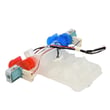
| Won’t fill or fills slowly | Water inlet valve assembly W11210459 | W11210459 |
| Lid won’t lock, won’t start, or stops mid-cycle | Washer lid lock W11307244 | W11307244 |
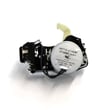
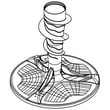
| Won’t shift between agitate and spin | Washer actuator W10913953 | W10913953 |
Why it matters
Clearing the code gets you running again, but the washer stores and displays codes to prevent damage (for example, spinning with an unlocked lid or running with a drain restriction). Fixing the root cause prevents repeat shutdowns and protects the drive motor and control.
Last updated: February 2026
What is the average lifespan of a washer machine?
Most washers last 10 to 15 years on average. For the Crosley CAW42114GW1 (a top-load washer), a realistic expectation is about 12 to 15 years with normal household use, good leveling, and routine cleaning; heavy use and chronic overloading shorten that.
What affects washer lifespan the most
- Load size and frequency: fewer, properly sized loads reduce wear on the drive system.
- Leveling and vibration: an unlevel washer stresses the suspension and tub support.
- Water quality: hard water can increase buildup and valve wear.
- Detergent habits: too much detergent leaves residue that can cause odors and extra strain.
- Drain performance: slow draining makes the pump work harder and can lead to repeated cycle issues.
Typical lifespan ranges (quick guide)
| Washer type | Typical lifespan | Notes |
|---|---|---|
| Top-load (like CAW42114GW1) | 12 to 15 years | Often lasts longer due to simpler mechanics |
| Front-load | 10 to 12 years | More seals and bearings to maintain |
| Heavy-use household | 7 to 10 years | Multiple loads daily accelerates wear |
Maintenance that helps you reach the high end of the range
- Keep the washer level and stable to reduce shaking during spin.
- Run periodic cleaning cycles and wipe the lid and tub ring to prevent residue and odor (see how to clean and maintain your washing machine).
- Avoid chronic overloading; it strains the drive belt, gear case, and suspension.
- Check fill hoses and inlet screens if filling slows; restricted flow can stress the valve.
- Address drain issues early; a struggling pump can lead to no-drain or no-spin symptoms.
When repairs make sense vs replacement
| If you’re seeing… | Common wear area | Typical next step |
|---|---|---|
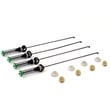
| Excessive shaking or banging | Suspension | Inspect/replace damper assembly W11130362 |
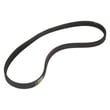
| Won’t spin or weak spin | Drive system | Check washer drive belt WPW10006384 and whirlpool washer drive pulley W10721967 |
| Won’t drain | Drain system | Inspect washer drain pump W10876600 and drain hose routing |
Why it matters
Knowing the expected lifespan helps us decide whether a symptom is likely routine wear (belt, pulley, suspension) or a bigger investment (gear case, basket). That makes it easier to choose the right repair path for the CAW42114GW1.
Last updated: February 2026
What is the most common problem with front load washers?
The most common front-load washer complaint is musty odor caused by moisture and detergent residue trapped around the door boot (rubber gasket) and dispenser area. Even though Crosley model CAW42114GW1 is a top-load washer, this is the leading front-load issue customers work to prevent.
Why front-load washers develop odor
Front-loaders seal tightly to keep water in; that same tight seal holds humidity after the cycle.
- Water sits in the bottom folds of the door boot
- Excess HE detergent leaves residue that feeds mildew
- Fabric softener buildup creates a sticky film
- Closing the door immediately after a load traps moisture
- Frequent cold-water washing leaves more residue behind
Prevention checklist (works for most front-load brands)
- Leave the door slightly open between loads so the tub dries
- Wipe the door boot folds dry, especially at the bottom
- Use HE detergent and measure carefully (avoid oversudsing)
- Run a monthly cleaning cycle (tub clean or hot wash with washer cleaner)
- Rinse and dry the dispenser drawer and its housing
Other common front-load problems and what they point to
| Symptom | Common cause | What to check first |
|---|---|---|
| Small leak at the door | Debris on boot, oversudsing, worn boot | Clean sealing surfaces; reduce detergent |
| Heavy vibration in spin | Unlevel washer, overloaded drum | Leveling feet; load size and balance |
| Slow drain or standing water | Drain restriction, pump issue | Drain hose path; pump area |
Why it matters
Odor and residue can transfer to clothing and can shorten the life of seals and hoses by keeping them damp and dirty.
For a step-by-step cleanup process, use how to get rid of mold in a front load washer.
Last updated: February 2026
Where is the model number on a Crosley washer?
On a Crosley washer like model CAW42114GW1, the model number is printed on a rating label attached to the washer cabinet. On top-load models, it’s most often found under the lid opening or on the back of the control area; on front-load models, it’s commonly in the door opening.
Common places to check on CAW42114GW1 (top-load)
Look for a sticker or metal tag with the model number and serial number in these spots:
- Under the lid, around the tub opening (top rim of the cabinet)
- On the back of the control panel or rear panel
- On the side of the main cabinet near the bottom edge
- Along the lid underside or lid frame area (less common)
What the label looks like
The model label is usually a white or silver tag and typically includes:
- Model number (example: CAW42114GW1)
- Serial number
- Electrical rating (volts/amps)
- Sometimes a barcode
| What you need | Why you need it | Example |
|---|---|---|
| Model number | Ensures parts fit your exact washer | CAW42114GW1 |
| Serial number | Helps match production changes | (varies by unit) |
Why it matters
We use the model number to match the correct Crosley washer parts and diagrams for your exact build. Even small design changes can affect fit for items like a lid lock, water inlet valve, or drive belt.
If the label is hard to read
- Wipe it gently with a damp cloth and mild soap; dry completely
- Use your phone camera and zoom in for clearer text
- If the washer won’t start and you suspect a control issue, checking the model number helps when using resources like Crosley compact top load washer error codes
Last updated: February 2026
Why is my Crosley auto sensing washer not draining?
On the Crosley CAW42114GW1 washer, a no-drain problem is usually caused by a clogged drain path, a failed drain pump, or a lid lock issue that prevents the control from advancing to drain and spin. We start by checking for simple blockages, then test the pump and lid lock.
Quick checks that fix most no-drain issues
- Unplug the washer for 1 minute to reset the control, then try a Drain/Spin cycle.
- Make sure the drain hose is not kinked, crushed, or pushed too far down the standpipe.
- Check the standpipe or laundry tub for a slow household drain (backups can mimic a washer failure).
- Reduce the load size; heavy, waterlogged loads can stall draining and spinning.
- Listen for the drain pump: a steady hum with no water movement often points to a clog or a jammed pump.
What to inspect (in order)
- Drain hose and outlet: Look for lint, coins, socks, or sludge. If the hose is soft-collapsed or split, replace it with the washer drain hose W11244231.
- Drain pump: If the pump runs but does not move water, the impeller may be jammed or worn. The correct replacement is the washer drain pump W10876600.
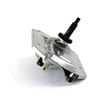
- Lid lock: If the washer will not transition into spin, it may not drain fully. A failing lock can stop the cycle for safety. Check the washer lid lock W11307244.
Symptoms and the most likely cause
| What you notice | Most likely cause | What we do next |
|---|---|---|
| Pump hums but little or no water leaves | Clog in pump or hose | Clear blockage; replace pump if impeller is damaged |
| No pump sound at all | Pump not getting power or failed pump | Check wiring; replace pump if power is present |
| Stops before spin, lid won’t lock | Lid lock problem | Replace lid lock |
| Drains slowly, sometimes backs up | Standpipe/house drain restriction | Clear household drain; verify hose height and fit |
Why it matters
Not draining leaves water in the tub, prevents high-speed spin, and can trigger repeated cycle stops. Fixing the drain path early also helps protect the drive system and reduces odor and residue buildup.
For model-specific fault clues, we use the Crosley compact top load washer error codes guide to match symptoms to the control’s stored error.
Last updated: February 2026
Why won't my Crosley washer spin or agitate?
If your Crosley CAW42114GW1 washer won’t spin or agitate, the most common causes are a failed lid lock, a worn drive belt, or a shifting problem in the actuator. We start by checking the lid lock and then inspect the belt and drive system underneath.
Quick checks first (no parts removed)
- Make sure the lid fully closes and you hear the lock click during spin.
- Redistribute the load; a heavy, off-balance load can stop spin.
- Run a Drain/Spin cycle; listen for the motor running without basket movement.
- Unplug the washer for 2 minutes, then retry a cycle (resets control logic).
- If the washer drains but never spins, focus on lid lock and drive components.
Parts that most often cause “motor runs but no spin/agitate”
These are the most likely CAW42114GW1-RELATED parts to inspect or replace:
| Symptom | Most likely part | What it affects |
|---|---|---|
| Won’t spin and lid never locks | Washer lid lock W11307244 | Prevents spin/agitate for safety |
| Motor runs, tub barely moves or slips | Washer drive belt WPW10006384 | Transfers motor power to the drive |
| Agitates weakly or won’t shift into spin | Washer actuator W10913953 | Shifts between agitate and spin modes |
| Loud squeal, burning rubber smell | Whirlpool washer drive pulley W10721967 | Belt traction and drive engagement |
Why it matters
Spin and agitation are “permission-based” functions on modern top-load washers: the control must see a locked lid, then the drive system must transmit power through the belt, pulley, and shifting mechanism. One failed component can stop both functions to protect the washer.
When to use error codes
If the control is flashing an error or the cycle stops mid-way, use the Crosley compact top load washer error codes guide to match the code to the most likely failure (lid lock, actuator, drain, or control).
Last updated: February 2026