Owner’s manual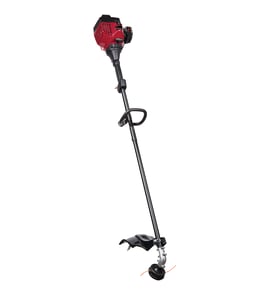



Can I use .095 trimmer line in a .080 trimmer?
Yes, you can use .095-inch trimmer line in a trimmer that normally runs .080-inch line only when the trimmer head is designed to accept .095. On the Craftsman 358795800, the safest approach is to match the line size listed for your trimmer head in the 358795800 owner's manual.
How to choose the right line size
Use these checks before committing to thicker line:
- Confirm the trimmer head’s supported line diameter range in the manual.
- Load a short length first; the line must feed smoothly without sticking.
- Run at normal cutting throttle; the engine should not bog down in light trimming.
- Watch for excessive vibration; it signals poor line fit or incorrect winding.
- If the head jams repeatedly, return to .080 line.
What changes when you go from .080 to .095
Thicker line increases cutting power on heavier weeds, but it also increases drag on the trimmer head and engine.
| Line diameter | Best for | What you may notice |
|---|---|---|
| .080 in | Light to medium trimming | Easier feeding, less load |
| .095 in | Medium to heavier trimming | More load, more frequent line-feed issues if the head is not sized for it |
Safety and setup reminders
We follow the same core safety practices for any line size:
- Wear eye protection and keep bystanders well away from the cutting area.
- Stop the engine and let moving parts fully stop before clearing a jam.
- Disconnect the spark plug wire before servicing the trimmer head.
Why it matters
Line diameter directly affects how easily the head feeds and how hard the engine works. Staying within the trimmer head’s specified range prevents constant jams, stalling, and premature wear.
Last updated: January 2026
What is the strongest string trimmer line?
For the Craftsman 358795800 gas line trimmer, the strongest trimmer line is typically a heavy-duty, larger-diameter nylon line that your trimmer head is designed to handle. We recommend matching the line type and diameter to the specifications in the 358795800 operator's manual so you get maximum durability without overloading the head.
What “strongest” means for trimmer line
Strength usually comes from a combination of diameter, material, and shape:
- Thicker diameter line lasts longer and resists breakage better in heavy weeds
- Premium nylon blends (often marketed as heavy-duty) resist abrasion and heat
- Twisted or serrated profiles can cut aggressively but may wear differently than round line
- Round line is a good all-around choice and is often easiest on the trimmer head
How to choose the best line for your 358795800
Use these checks before buying a “strongest” line:
- Confirm the maximum line diameter your trimmer head supports (in the manual)
- Choose round for general trimming; choose twisted/serrated for thicker weeds
- For longer line life, avoid constant contact with fences, wire, and tree bark
- Use less than full throttle for light trimming to reduce line wear (a technique called out in the manual)
- Use only replacement line intended for trimmers (never wire, rope, or string)
Quick comparison: common line options
| Line type | Best for | Tradeoff |
|---|---|---|
| Round | Everyday trimming | Less aggressive in thick brush |
| Twisted | Durability and quieter cutting | Can be harder to feed on some heads |
| Serrated or “aggressive” | Thick weeds | Faster wear, more vibration |
| Heavy-duty (thicker) | Maximum toughness | Must match head capacity |
Why it matters
Using a line that is too thick or too aggressive for the trimmer head can increase vibration, reduce cutting efficiency, and accelerate wear on the head and drive components. Matching the correct line and using proper technique helps the trimmer cut cleaner and the line last longer.
Last updated: January 2026
How do I find the model number on my 358795800?
The model number is printed on the product ID label on your Craftsman trimmer; for this unit, it appears as 358.795800 in the documentation. Use that full number when ordering parts or looking up diagrams in the owner's manual.
Where to look on the trimmer
On Craftsman gas trimmers like model 358795800, the ID label is typically placed where it stays readable but protected from heat and debris.
Check these common locations:
- On the shaft/tube near the handlebar clamp
- Near the engine housing (recoil starter/fan housing area)
- On or near the fuel tank area
- Under a shield/cover you can view without disassembly
What the label should show
You are looking for a line that says Model No. followed by the number.
| Label field | What it means | Example for this unit |
|---|---|---|
| Model No. | Identifies the exact trimmer version | 358.795800 |
| Serial (if present) | Production identifier | Varies |
| Engine size (may be listed) | Helps confirm you have the right manual | 32cc/1.9 cu. in. |
Why it matters
The model number controls parts fit. Small differences in a fuel system, ignition, or cutting head can change which parts you need (for example, a fuel line, primer bulb, or kill switch). Using 358795800 helps us match the correct diagrams and part listings the first time.
Quick tips if the label is hard to read
- Wipe the label with a damp cloth; avoid harsh solvents
- Use a flashlight at an angle to make faded print stand out
- Take a close-up photo and zoom in
Last updated: March 2026