Owner’s manual
 View engine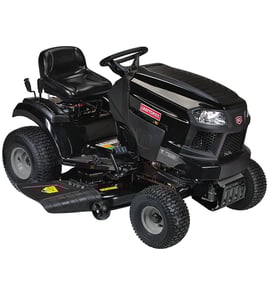


How much horsepower does a Husqvarna M24-54T have?
The Husqvarna M24-54T is a 24-horsepower riding lawn tractor (the “M24” in the model name indicates 24 HP). For operating specs and maintenance details tied to this exact tractor, use the M24-54T operator’s manual.
We recommend verifying the horsepower on the engine label because engines can vary by production run.
- Lift the hood and locate the engine ID label (often on the blower housing or valve cover)
- Record the engine model and type code
- Compare that information to the specifications section in the manual
- If the label is missing, use the tractor’s model number (M24-54T) when looking up engine-related parts
These specs help when you are servicing the tractor and can indirectly confirm you are working with the correct configuration.
| Spec item | What to use on M24-54T |
|---|---|
| Gasoline capacity | 3 gallons, unleaded regular |
| Oil type | SAE 30 (above 32°F), SAE 5W30 (below 32°F) |
| Oil capacity | 64 oz with filter; 60 oz without filter |
| Battery | 28 Ah; 230 CCA minimum; U1R case |
Horsepower affects cutting performance under load, towing capability, and which maintenance parts you select (for example, ignition and starting components). If your tractor cranks slowly or only clicks, the battery and starting circuit are the first things to check.
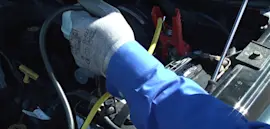
If you are troubleshooting a no-start or clicking condition, the riding lawn mower engine clicks but doesnt turn over video walks through the most common causes and checks.
Last updated: February 2026
Is 500 hours a lot for a Husqvarna riding mower?
Yes. On a Husqvarna M24-54T riding mower, 500 hours is a high-use milestone for a residential tractor; it usually means the mower is in its wear-and-maintenance phase, not “worn out,” as long as routine service has been kept up per the owner's manual.
At this hour level, we expect more frequent attention to drive, deck, and starting components.
- Belts commonly start slipping, glazing, or cracking
- Deck spindles and idlers can get noisy or develop play
- Battery and starting circuits become more failure-prone
- Steering and front-end wear becomes more noticeable
- Maintenance intervals matter more than the hour number alone
Use these checks to decide whether the tractor is “healthy” at 500 hours.
- Starts quickly without repeated key cycling
- No clicking-only start symptoms (often battery/solenoid related)
- Mows evenly without excessive vibration from the 54-in deck
- Ground drive feels steady under load (no surging or belt squeal)
- No burning smell from the deck or drive area after mowing
| Area | What you might notice around 500 hours | Common next step |
|---|---|---|
| Ground drive | Slipping, slow climb, squeal | Inspect/replace belt such as lawn tractor ground drive belt, 5/16 x 98-1/2-in 592855001 |
| Deck drive | Vibration, uneven cut, rumble | Inspect spindle/mandrel such as lawn tractor mandrel housing 587819701 and idlers |
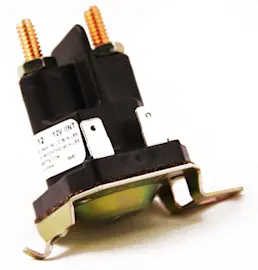
| Starting | Clicks but no crank | Test battery, cables, solenoid such as lawn tractor starter solenoid 582042802 |
| Ignition/PTO | Intermittent run or blade engagement issues | Check switches such as ignition switch 532193350 or pto switch 582107601 |
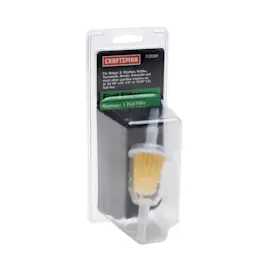
Hours tell you how much the engine has run, but condition tells you how it was run. Your M24-54T has an hour meter/service reminder that tracks run time and flashes when service is due; staying on schedule (spark plugs about every 100 hours and seasonal fuel filter replacement) is what keeps a 500-hour tractor dependable.
If you are evaluating a mower that clicks, cranks but will not start, or will not turn over, we use these step-by-step resources:
Last updated: February 2026
Is it worth repairing a lawn mower engine?
Yes, repairing the engine on your Husqvarna M24-54T is worth it when the fix is straightforward (tune-up, starting, fuel, or cooling related) and the tractor is otherwise in solid shape; major internal engine damage usually makes replacement the better value.
- Repair it if the problem is maintenance-related: dirty cooling fins, old spark plug, clogged air filter, stale fuel
- Repair it if the tractor still cuts and drives well (deck, steering, and transmission feel normal)
- Repair it if the issue is electrical starting (battery, solenoid, ignition switch) rather than engine internals
- Replace the engine if it has low compression, heavy knocking, or seized components
- Replace the engine if repair cost approaches about half the cost of a comparable replacement tractor
The M24-54T manual emphasizes keeping the engine cooling system clean and replacing spark plugs at the start of each mowing season or every 100 hours; those items prevent overheating damage and hard-start complaints. Use the maintenance schedule and specs in the owner's manual.
- Clean the grass screen and cooling fins (overheating causes expensive damage)
- Replace spark plug(s) on schedule
- Inspect wiring and safety circuits if cranking is inconsistent
- Check battery condition and cable connections
If the engine clicks, cranks slowly, or is dead when you turn the key, these model-matched parts are common repair wins:
| Symptom | What to check first | Example part for M24-54T |
|---|---|---|
| Single click, no crank | Battery cables, solenoid | Lawn tractor starter solenoid 582042802 |
| No dash power or intermittent crank | Key switch, wiring | Husqvarna lawn tractor ignition switch 532193350 |
| Weak crank after charging | Battery health | Battery 532123899 |
A “bad engine” diagnosis is often really a cooling, ignition, or electrical starting issue. Fixing those early protects the engine from overheating and restores reliability without the cost of an engine swap.
Last updated: February 2026
Why do the front tires of my Husqvarna lawn mower keep falling off?
On your Husqvarna M24-54T tractor, a front tire usually falls off when the wheel-retaining hardware is missing, loose, or worn (typically a push nut, clip, or washer stack) or when the axle end is worn so the retainer cannot stay seated. Fixing it is usually a quick hardware replacement and inspection.
- Park on level ground, set the parking brake, remove the key, and let moving parts stop.
- Jack up the front safely and spin the wheel by hand; look for wobble at the hub.
- Confirm the wheel retainer is present and fully seated on the axle.
- Check for a missing spacer/washer that lets the wheel walk outward.
- Inspect the axle end for a worn groove, mushrooming, or damage.
- Verify tire pressure is correct; uneven inflation can increase side-load and loosen retainers over time (see the owner's manual).
| What you see | Most likely cause | What to do |
|---|---|---|
| Wheel slides off easily | Retaining clip/push nut missing or weak | Replace the retainer and any worn washers/spacers |
| Wheel stays on but wobbles | Worn hub/bushing or axle wear | Replace worn wheel hardware; inspect axle for damage |
| Retainer keeps popping off | Axle end damaged or wrong retainer size | Replace correct retainer; repair/replace axle if needed |
| Wheel binds then works loose | Bent wheel or debris at hub | Clean hub area; replace bent parts |
If your wheel uses a push-on style retainer, a common replacement is a push nut such as the nut 532110452. Also inspect nearby fasteners and replace any that are stripped or won’t hold torque.
A front wheel coming off can cause loss of steering control and increases the risk of a tip-over, especially on uneven ground or slopes. Keeping the wheel hardware tight and correctly installed helps the tractor track straight and protects the front axle and steering components.
Last updated: February 2026