Installation guide
 Owner’s manual



What is the capacity of the mvwc416fw0?
The Maytag MVWC416FW0 washer is a 3.6 cu. ft. top-load, high-efficiency washer. This capacity is the usable tub volume for typical loads; cycle choice (like Bulky/Sheets) and water level settings affect how much you can wash comfortably.
How this capacity translates to real loads
A 3.6 cu. ft. top-load washer like the MVWC416FW0 is typically a good fit for everyday family laundry, including mixed loads and medium-size bulky items.
- Wash clothes in loose heaps around the basket wall (do not pack tightly)
- Avoid wrapping sheets around the agitator; load them around the sides
- Use Bulky/Sheets for comforters, jackets, and small washable rugs
- Expect Auto Sensing to use less visible water than older washers
- Use only HE (High Efficiency) detergent to prevent oversudsing and poor rinsing
For cycle and loading guidance specific to this washer, use the MVWC416FW0 use and care guide.
Capacity vs. water level: what’s different on this model
This Maytag high-efficiency design may not fully cover the load with water on many cycles, especially with Auto Sensing. That is normal and helps cleaning performance.
| Setting / cycle choice | What to expect | Best for |
|---|---|---|
| Auto Sensing water level | Lower visible water, load moves more | Most everyday loads |
| Deep Water Wash water level | Higher fill, longer fill time | Larger loads needing more water |
| Bulky/Sheets cycle | Higher water level than many cycles | Bulky items |
Why it matters
Knowing the MVWC416FW0 capacity helps you avoid overloading, reduce off-balance spinning, and get better cleaning and rinsing. Overpacking is one of the most common causes of poor wash results and vibration.
Last updated: January 2026
What is the most common problem with a Maytag washer?
For the Maytag MVWC416FW0 washer, the most common customer-reported issues we see are not draining or not spinning (clothes still wet) and excessive vibration/off-balance during spin. Many times the root cause is simple (loading, suds, or a drain restriction), but worn drive or drain components can also be involved.
Most common symptoms (and what they usually point to)
- Washer won’t drain / clothes still wet: drain restriction, too many suds, or a failing drain component
- Washer won’t spin: unbalanced load, lid lock not engaging, or a drive system issue
- Loud clicking/metallic noise: items in pockets getting into the drain path
- Shaking or walking: leveling feet not set, uneven floor, or consistently unbalanced loads
- Not enough water visible: normal for HE auto-sensing operation on this model
For model-specific operating details (lid lock behavior, auto-sensing water levels, and troubleshooting), use the MVWC416FW0 use and care manual.
Quick checks we recommend first (MVWC416FW0)
- Load items in loose heaps around the basket wall; avoid washing single heavy items
- Use HE detergent only and measure carefully; excess suds can slow draining/spinning
- If the washer is off-balance, pause, redistribute the load, then restart
- Verify the washer is level and all feet are firmly on the floor
- Run Drain & Spin to remove extra water after correcting the load
Parts that commonly relate to these problems
If basic checks do not fix the issue, these model-compatible parts are often involved:
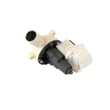
- Washer drain pump W10919003 (draining problems, humming with poor water removal)
- Washer lid lock W11307244 (won’t start or won’t spin if the lid won’t lock)
- Washer drive belt WPW10006384 (weak/no spin, burning rubber smell, slipping)
- Washer actuator W10913953 (shifting between agitate and spin)
Symptom-to-likely-cause guide
| Symptom | Common cause | First action |
|---|---|---|
| Wet clothes after cycle | Drain restriction or suds | Run Drain & Spin; reduce detergent |
| Spin light stays on / long drain | Slow pumping | Check drain hose routing; inspect pump |
| Heavy shaking in spin | Off-balance or not level | Re-level; reload evenly |
| Lid locked light flashing | Lid not closed/lock issue | Close lid; check lid lock |
Why it matters
Drain and spin problems can leave clothes soaked and can also trigger repeated off-balance events. Fixing loading habits and suds first prevents unnecessary part replacement and helps the MVWC416FW0 run the way it was designed.
Last updated: January 2026
What is the average lifespan of a Maytag washing machine?
A Maytag washing machine typically lasts 10 to 13 years. For your Maytag MVWC416FW0 top-load washer, consistent care (using HE detergent, avoiding overloads, and doing routine cleaning) is what most often determines whether it lands on the low or high end of that range. See the MVWC416FW0 use and care guide for the maintenance routine.
What affects lifespan the most
- Load habits: frequent overloading strains the drive system and suspension
- Detergent choice: use only HE (High Efficiency) detergent to reduce residue and odor buildup
- Monthly cleaning: run the Clean Washer cycle about every 30 loads
- Water supply health: replace inlet hoses every 5 years and check for bulges or leaks
- Drain performance: keep pockets empty to prevent small items from reaching the pump
Maintenance checklist for MVWC416FW0
We recommend these habits to help your washer reach (or exceed) the typical lifespan:
- Run Clean Washer with affresh monthly (empty tub)
- Leave the lid open between loads to help the tub dry
- Measure HE detergent carefully (too much can cause suds and draining issues)
- Load items in loose heaps; do not pack tightly
- Inspect hoses and connections; replace hoses at the 5-year mark (installation details are in the MVWC416FW0 installation instructions)
Common wear items vs. “big repairs”
| Category | Examples | What you may notice |
|---|---|---|
| Routine wear | Hoses, clamps, lid bumpers | Small leaks, rattles, lid noise |
| Performance-related | Drain pump, inlet valve, lid lock | Not draining, not filling, won’t start/spin |
| Drive system | Belt, pulley, actuator | Slow/no agitation, slipping, loud squeal/grind |
If your MVWC416FW0 won’t drain or leaves clothes wet, the drain system is a common place to start; the compatible replacement is the washer drain pump W10919003.
Why it matters
Knowing the typical lifespan helps you decide when maintenance is worth doing versus when repeated breakdowns suggest it is time to plan for replacement. Simple monthly cleaning and correct loading are the easiest ways to extend washer life.
Last updated: January 2026
How do I reset the lid lock on a Maytag washer?
On the Maytag MVWC416FW0 washer, the lid typically unlocks by pausing the cycle correctly: press START/PAUSE and wait until all washer movement stops (it can take several minutes during high-speed spin). If the lock seems “stuck,” a power reset often clears the control.
Reset steps we recommend for MVWC416FW0
- Press START/PAUSE once to pause.
- Keep the lid closed and wait for the basket to stop completely.
- When the Lid Locked light turns off, open the lid.
- If it will not unlock, unplug the washer (or turn off the breaker) for 5 minutes.
- Restore power, then try START/PAUSE again.
If the lid still will not unlock
These checks are specific to how MVWC416FW0 is designed to operate (lid locks before spin and only unlocks after motion stops). See the operating notes in the MVWC416FW0 use & care manual.
- Make sure the washer is not actively draining or spinning.
- If the lid was opened and left open too long earlier in the cycle, the washer may cancel and pump out water; close the lid and restart a cycle.
- Check the lid strike area for detergent residue or a misaligned lid.
- If the lock clicks but will not sense closed, inspect the lid strike and lock alignment.
Parts that commonly affect lid locking
If troubleshooting points to a failed lock or a broken strike, these are the compatible parts we list for MVWC416FW0:
| Symptom | Likely area to inspect | Model-compatible part |
|---|---|---|
| Lid won’t lock or unlock, Lid Locked light acts erratic | Lid lock mechanism | Washer lid lock W11307244 |
| Lid won’t “catch” or doesn’t line up with lock | Lid strike | Strike pima W10837741 |
Why it matters
The MVWC416FW0 uses the lid lock as a safety interlock for higher spin speeds. The control will not unlock the lid until the basket stops; forcing the lid can damage the latch, strike, or lid alignment.
Last updated: January 2026