 Installation guide
 Owner’s manual
 Error Codes





What is the average lifespan of a GE dishwasher?
A GE dishwasher typically lasts 10 years on average. For your GE GDT695SSJ0SS, the exact lifespan depends most on water quality, how often it runs, and routine care like keeping filters and spray arms clear; see the GDT695SSJ0SS installation instructions for setup details that help prevent early wear.
What affects lifespan the most
- Hard water and scale can shorten the life of the circulation system and heating components.
- Drain issues (kinks, clogs, disposer plug left in place) can strain the drain pump.
- Overloading can stress racks, rails, and the door latch.
- Poor cleaning performance from clogged spray arms can lead to repeat cycles and extra run time.
- Leaks from worn seals or loose connections can damage electrical parts.
Quick maintenance that helps you reach (or beat) 10 years
- Clean the coarse filter area regularly; remove debris before it recirculates.
- Inspect and rinse spray arm holes if you see food residue left behind.
- Use the right detergent amount for your water hardness.
- Run hot water at the sink before starting a cycle to improve wash performance.
- Check for slow draining and correct it early to protect the pump.
Common “wear-out” items vs. big-ticket parts
| Category | Examples | Typical impact on lifespan |
|---|---|---|
| Routine wear items | Filters, spray arms, door seals | Often restore performance with basic upkeep |
| Functional components | Drain pump, circulation pump, inlet valve | Can extend service life if replaced when symptoms start |
| Controls/electronics | Control board, user interface | Failures can be more costly; protect by preventing leaks |
Why it matters
Knowing the typical 10-year lifespan helps you decide whether to maintain and repair your GDT695SSJ0SS (often worthwhile for performance issues) or plan for replacement if multiple major components are failing.
Last updated: January 2026
How do I reset my GE dishwasher control board?
To reset the control board on your GE GDT695SSJ0SS dishwasher, we recommend first canceling the current cycle, then doing a full power reset by turning the breaker off for about 5 minutes and restoring power. This clears many temporary control glitches without replacing parts.
Quick reset steps (most common)
- Press and hold Start for about 3 seconds to cancel the cycle and force a drain.
- Wait until the dishwasher stops draining.
- Turn OFF power at the circuit breaker for 5 minutes.
- Turn the breaker ON.
- Select a normal cycle and press Start, then fully latch the door.
For model-specific button behavior and cycle cancel details, follow the steps in the GDT695SSJ0SS owner's manual.
If the dishwasher still will not respond
A reset will not fix a failed user interface, a door latch problem, or a damaged control board. Check these common causes:
- Door not fully latched; the dishwasher will appear “dead” or will not start.
- Stuck keys or moisture on the control panel.
- Tripped breaker or loose power connection at the junction box.
- Control lock enabled (varies by model and UI).
- Error code stored that points to a specific failure.
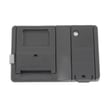
If you suspect the main board is not powering up or is behaving erratically after a reset, the compatible replacement is the dishwasher electronic control board WD21X24901C.
What to do based on symptoms
| What you see | What to try next |
|---|---|
| Lights on, won’t start | Confirm door latch engagement; cancel cycle, then power reset |
| No lights, no response | Check breaker and wiring connection; then power reset |
| Stops mid-cycle | Power reset; then check for stored error codes |
| Beeping or flashing | Look up the code and address the indicated circuit/part |
For code help specific to GE dishwashers, use our GE dishwasher error codes reference.
Why it matters
A proper reset helps you separate a temporary software lockup from a real hardware issue. That saves time and helps you avoid replacing the control board or control panel when the root cause is power, latching, or an error condition.
Last updated: January 2026
What is the most common problem with GE dishwashers?
Across GE dishwashers like model GDT695SSJ0SS, the most common day-to-day complaint we hear is that dishes are not getting clean. That is usually tied to water flow, spray coverage, or filtration, not a single “one part” failure. For model-specific operating tips, use the GDT695SSJ0SS owner’s manual.
What “not cleaning well” usually means
When a dishwasher runs but results are poor, the root cause is often one of these:
- Clogged filter or debris in the sump area
- Spray arm jets blocked by food or hard-water scale
- Low incoming water temperature or not enough hot water at start
- Loading issues that prevent spray arms from rotating
- Weak circulation from a worn pump or a diverter problem
Quick checks we recommend first (no parts swapping)
- Run the kitchen faucet hot until it is fully hot before starting the cycle.
- Remove and rinse the filter area; clear any debris from the sump.
- Spin the spray arms by hand to confirm they rotate freely.
- Check spray arm holes for clogs; clean with a toothpick if needed.
- Use the correct detergent and add rinse aid if your model uses it.
Parts to consider if cleaning is still poor on GDT695SSJ0SS
If the basic checks do not help, these model-matched parts are common next inspection points:
| What you notice | What to inspect | Model-matched part example |
|---|---|---|
| Lower rack items stay dirty | Lower spray coverage | Dishwasher spray arm, lower WD22X33499 |
| Grit or food redeposits | Filtration | Dishwasher coarse filter WD22X10093 |
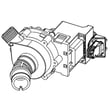
| Weak wash action or unusual wash noise | Circulation | Dishwasher circulation pump assembly WD26X23258 |
Why it matters
Dishwashers clean by combining hot water, strong circulation, and good filtration. When any one of those drops, you can see residue, cloudy glassware, and longer cycles with worse results.
Last updated: January 2026





