Owner’s manual
 View engine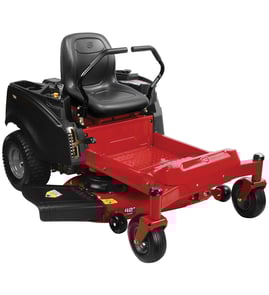



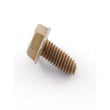
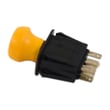
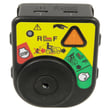
How to find Craftsman mower parts?
To find the right parts for your Craftsman 247204201 rear-engine riding mower, match parts to the exact model number from the ID label, then use the model parts list and diagrams to select the correct replacement. The fastest path is confirming the model and using the illustrated breakdown in the owner's manual.
Where to find the model number on the mower
On Craftsman rear-engine riders, the model/serial label is typically on the rear frame area between the rear wheels. Once you have the model number (247204201), you can confidently match belts, blades, electrical parts, and hardware.
- Look on the rear frame between the wheels
- Wipe dirt and grass off the label so all digits are readable
- Write down the full model number and serial number
- Use the model number to filter parts by exact fit
- Compare the diagram callout number to the part description before ordering
How we recommend choosing the correct part
Use the model-specific parts diagrams to avoid ordering a look-alike part that mounts differently or has a different length, thread, or connector.
| What you’re replacing | What to match | Example from this model’s parts |
|---|---|---|
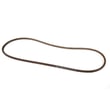
| Drive system belt | Width and length | Lawn tractor ground drive belt 954-04317A |
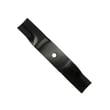
| Cutting blade | Deck size and blade style | Lawn tractor 48-in deck high-lift blade 942-04417 |
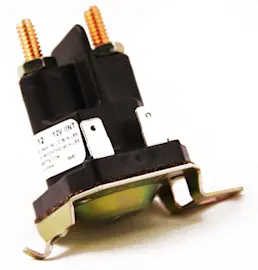
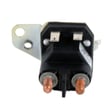
| Starting issue | Electrical component type | Lawn tractor starter solenoid 725-06153 |
Why it matters
Riding mower parts are highly model-specific; small differences in deck configuration, belt routing, or electrical connectors can cause poor performance, premature wear, or a no-start condition. Using the 247204201 diagrams keeps the repair accurate.
Quick tips before you order
- Confirm whether you have a 48-in deck before selecting blades
- Inspect belt routing and pulley condition before replacing a belt
- For no-start, check battery connections and safety switches along with the solenoid
- Replace missing fasteners with the correct size and type (lock nuts, flange nuts, cotter pins)
Last updated: February 2026
What brand engine does CRAFTSMAN use?
Craftsman riding mowers like model 247204201 have been built with engines from multiple manufacturers over the years; the exact engine brand on your mower depends on the engine model installed on your specific unit. The fastest way to confirm yours is to match the engine ID tag to the engine information in the owner's manual.
How to identify the engine brand on model 247204201
Look for an engine identification label (usually on the blower housing, valve cover, or near the starter). Then record:
- Engine manufacturer name (if shown)
- Engine model number
- Type and code (common on Briggs and Stratton)
- Spec number (common on Kohler)
- Serial number
Once you have those numbers, you can confirm the brand and order the correct tune-up and repair parts.
Common engine brands used on Craftsman riding mowers
Across Craftsman riding mower lines, these are the most common engine suppliers you will see:
- Briggs and Stratton (very common on many Craftsman riders)
- Kohler (common on some higher-output configurations)
- Kawasaki (less common, but used on select models)
Quick checks that help you avoid ordering the wrong parts
Even within the same mower model family, engine variations can change filters, spark plugs, and belts. Before ordering, we recommend:
- Confirming the engine model and spec numbers from the ID tag
- Checking the deck size and belt routing in the manual
- Matching the part description and measurements (length, width, thread size)
- Inspecting for prior engine swaps or replacement short blocks
Related parts you might replace during engine or drive troubleshooting
These parts on the 247204201 are commonly involved when the mower will not crank or will not move:
| Symptom | Part to check | Example part on this model |
|---|---|---|
| No crank, click/no click | Starter solenoid, wiring connections | Lawn tractor starter solenoid 725-06153 |
| Won’t drive or slips | Ground drive belt, idlers | Lawn tractor ground drive belt 954-04317A |
Why it matters
Craftsman is the equipment brand, but the engine brand determines the correct maintenance and repair parts. Confirming the engine ID first prevents mismatched ignition parts, fuel system parts, and service specs.
Last updated: February 2026
Is it worth replacing a lawn mower engine?
Yes, replacing the engine on your Craftsman 247204201 rear-engine riding mower is worth it when the mower’s deck, steering, and drive system are solid and the total swap cost stays well below the cost of replacing the whole machine. Use the owner's manual to confirm engine specs, wiring, and safety steps before you commit.
Quick decision checklist
- The mower starts, steers, and stops safely (no brake or steering issues)
- The deck shell is not cracked or severely rusted through
- The drive system still pulls strongly (no constant slipping or grinding)
- You can source the correct engine and any required pulleys, wiring, and hardware
- The engine failure is major (thrown rod, no compression, cracked block) rather than a tune-up issue
Cost and value: a simple rule of thumb
Engine swaps make sense when you are restoring a good chassis, not when you are chasing multiple big repairs.
| If this is true | Then an engine swap is usually | Why |
|---|---|---|
| Deck and transaxle are in good shape | Worth it | You keep the expensive core components |
| You also need a transaxle or frame | Not worth it | Costs stack fast |
| Swap cost is under ~50% of a comparable replacement mower | Worth it | Better value per dollar |
| Swap cost is over ~50% | Not worth it | You are paying near replacement value |
What to inspect on model 247204201 before you buy an engine
Focus on the parts that determine whether the mower is a solid “platform”:
- Ground drive belt condition and tension; a worn belt can feel like a weak engine (see lawn tractor ground drive belt 954-04317A)
- Transaxle performance; if it is noisy, leaking heavily, or won’t pull, the repair can outweigh an engine swap
- PTO and deck drive; if the blades do not engage smoothly, you may also be looking at clutch or idler issues
- Electrical starting circuit; a no-crank problem can be a solenoid or wiring issue, not the engine (see lawn tractor starter solenoid 725-06153)
Why it matters
An engine is only one part of the total cost of ownership. If the deck, drive, and electrical systems are healthy, an engine replacement can extend the life of your Craftsman riding mower for years and keep your mowing setup familiar.
Last updated: February 2026
What is the advantage of a rear engine mower?
A rear-engine riding mower like the Craftsman 247204201 puts the engine weight over the drive wheels, which improves traction on typical lawns and helps the mower feel stable and easy to steer. It also keeps the hood area lower for better forward visibility while mowing.
Key advantages you will notice
- Better traction: more weight on the rear tires helps reduce wheel slip on grass.
- Good visibility: the engine sits behind you, so you can see the cutting path more easily.
- Compact footprint: rear-engine riders are typically easier to store than larger lawn tractors.
- Simple controls: many rear-engine designs are straightforward for basic mowing.
- Maneuverability: the shorter front end helps when turning around trees and beds.
How it compares to other mower types
| Mower type | Best for | Main tradeoff |
|---|---|---|
| Rear-engine riding mower | Flat to gently rolling lawns; tighter storage | Not built for heavy towing or rough ground |
| Front-engine lawn tractor | Larger yards; towing carts and attachments | Larger turning radius; more bulk |
| Zero-turn mower | Fast trimming around obstacles | More learning curve; higher maintenance cost |
Why it matters
Choosing the right layout affects traction, cut quality, and how much time you spend trimming. Rear-engine riders are a strong fit when you want a step up from a walk-behind mower without moving to a full-size tractor.
Tips to get the most from your rear-engine rider
- Keep tire pressure even side-to-side to prevent uneven cutting.
- Replace worn drive components early; a slipping belt reduces ground speed and hill performance.
- If the mower hesitates or will not move smoothly, inspect the lawn tractor ground drive belt 954-04317A for glazing, cracking, or stretching.
- For safe operation, slope limits, and control locations, follow the owner's manual.
Last updated: February 2026
What is the most reliable Briggs and Stratton engine?
Briggs and Stratton reliability is highest in their commercial-duty engine families (often labeled “Commercial” or “Vanguard”) because they are built for longer run time and heavier loads. For your Craftsman model 247204201, the most reliable setup is the correct engine for the mower plus consistent maintenance from the 247204201 owner's manual.
What “most reliable” means for a mower engine
Reliability is about how consistently the engine starts, runs under load, and avoids fuel and heat-related failures.
- Starts easily hot and cold
- Holds steady RPM in thick grass
- Stays cool with clean cooling fins and screen
- Resists fuel varnish with fresh fuel practices
- Maintains compression with regular oil changes
How to choose the most reliable Briggs and Stratton engine (practical guide)
If you are comparing engines for long-term dependability, prioritize build class and maintenance features over marketing series names.
| What to look for | Why it improves reliability | Typical indicator |
|---|---|---|
| Commercial-duty build | Designed for higher hours and heavier use | “Commercial” or “Vanguard” labeling |
| Full-pressure lubrication (if equipped) | Better wear control at higher loads | Oil filter and pressurized oil system |
| Cast-iron sleeve (if equipped) | Improves cylinder durability | Listed in engine specs |
| Easy service access | Increases odds maintenance gets done | Accessible filter, drain, spark plug |
Keeping your Craftsman 247204201 dependable
This model is listed as a zero-turn riding lawn mower; overall reliability depends as much on the drive system and electrical starting circuit as it does on the engine.
- Follow the oil type and change interval in the manual
- Use fresh fuel and stabilize fuel for storage
- Service the air filter more often in dusty mowing
- Keep grass and debris off the engine cooling areas
- If cranking is intermittent, inspect battery cables and the starter circuit; a failing lawn tractor starter solenoid 725-06153 is a common cause of click-no-crank symptoms
Why it matters
Many “engine problems” on a zero-turn are actually starting or drive issues; keeping the electrical system, fuel, and cooling clean prevents most no-start and power-loss complaints.
Last updated: February 2026