Owner’s manual
 Error Codes


How many cubic feet is my Kenmore refrigerator by model number?
For Kenmore model 10658144800, the most reliable way to get the exact cubic-foot capacity is to check the model and serial (rating) label inside the refrigerator compartment and confirm the listed specifications in the 10658144800 owner's manual. This avoids guessing based on similar 106-series models.
Where to find the capacity on the refrigerator
On most Kenmore side-by-side refrigerators, the rating label is inside the fresh food section (often on a side wall near the crisper area or upper cabinet).
- Look for a label that lists model, serial, and electrical information
- Check for a line that says capacity, total volume, or cu. ft.
- If the label is hard to read, take a photo and zoom in
- Confirm the number in the specifications section of the manual
How model numbers relate to cubic feet (what to expect)
Kenmore model numbers do not consistently encode cubic-foot capacity in a way that is accurate for every revision. For a 36-inch side-by-side like 10658144800, total capacity is typically in a mid-to-high range.
| Method | What you get | Accuracy |
|---|---|---|
| Rating label inside the fridge | Exact capacity for your unit | Highest |
| Manual specifications | Exact capacity for the model | High |
| Estimating by size/class | Typical range only | Medium |
Why it matters
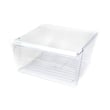
Cubic-foot capacity helps when we are matching storage parts (bins, shelves, crisper pans) and setting expectations for cooling load. It also prevents ordering the wrong-fit items for your Kenmore 106-series platform.
Related parts customers often match by model (not by capacity)
If you are shopping for common maintenance items, we match by model number and part ID, not cubic feet.
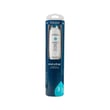
- Genuine Kenmore refrigerator water filter EDR3RXD1 (water and ice filtration)
- Refrigerator temperature control WP2315562 (temperature regulation)
- Refrigerator evaporator fan motor WP2315549 (air circulation)
Last updated: February 2026
What are the most common problems with Kenmore refrigerators?
The most common problems we see on Kenmore refrigerators like model 10658144800 are cooling issues (often airflow or defrost related), water leaks, ice maker and dispenser troubles, and new or unusual noises. Many fixes start with correct temperature settings, keeping vents clear, and checking key components.
Most common symptoms and what usually causes them
- Not cooling or warm temperatures: blocked vents, dirty condenser area, evaporator fan problems, or a defrost system issue causing frost buildup
- Freezer cold but refrigerator warm: restricted airflow between sections, iced-up evaporator area, or a weak evaporator fan motor
- Water leaking or puddles: clogged defrost drain, loose water line connections, or door seal problems causing excess moisture
- Ice maker not making ice: water supply issue, frozen fill tube, or a failing ice maker assembly
- Noises (buzzing, rattling, pulsating): normal water valve fill sounds, refrigerant movement, or fans and compressor adjusting during operation
Quick checks we recommend first (model 10658144800)
Use these steps before replacing parts; they match common troubleshooting guidance in the 10658144800 owner's manual.
- Confirm the unit is plugged into a grounded 3-prong outlet and the breaker is not tripped
- Make sure the controls are on and set near the factory mid-settings
- Wait 24 hours after any temperature change or new installation for temps to stabilize
- Do not block airflow vents with food packages (blocked vents cause temperature and moisture problems)
- If the refrigerator seems to run a lot, consider room temperature, door openings, and large food loads
Common parts that solve frequent complaints
If symptoms point to a specific system, these parts are commonly involved on this model:
| Problem area | What you may notice | Example part for this model |
|---|---|---|
| Water quality or slow dispensing | bad taste, odor, reduced flow | Genuine Kenmore refrigerator water filter EDR3RXD1 |
| Ice maker failures | no ice, small cubes, intermittent harvest | Refrigerator ice maker WPW10190961 |
| Warm temps from poor airflow | warm fresh food section, noisy fan | Refrigerator evaporator fan motor WP2315549 |
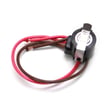
| Defrost-related warming | heavy frost, warming after days | Refrigerator defrost bi-metal thermostat WPW10225581 |
Why it matters
Most “not cooling” and “leaking” complaints come down to airflow and moisture control. Keeping vents open, using stable temperature settings, and addressing early frost or seal issues prevents food spoilage and reduces compressor run time.
Last updated: February 2026
What does er if mean on a Kenmore refrigerator?
On Kenmore model 10658144800, the ER IF code points to an ice maker fan (ice compartment fan) airflow problem. Most often, the fan is blocked by ice buildup, the fan motor is failing, or the wiring/control is not powering the fan correctly; clearing the ice and restoring airflow usually fixes it.
What to check first (fast, no parts)
- Unplug the refrigerator or turn off power at the breaker before accessing the fan area.
- Empty the ice bin and look for frost or a solid ice mass around the ice maker and fan ducting.
- Make sure the freezer door closes fully and the door seal is making full contact.
- Confirm the vents between the freezer and ice storage area are not blocked by packages.
- Restore power and listen for the fan; a working fan typically runs when cooling is needed.
Step-by-step troubleshooting
- Reset and observe: Power the unit off for 2 minutes, then back on; watch if ER IF returns.
- Defrost the ice room area: If you see heavy frost, fully defrost the ice compartment (doors open, towels down). Do not chip ice with sharp tools.
- Inspect the fan blade: If the blade is rubbing ice or not spinning freely, clear obstructions.
- Check for recurring frost: If frost returns quickly, the issue often ties to defrost/airflow problems.
Parts that commonly relate to ER IF symptoms
If the fan is noisy, stalled, or not running after ice is cleared, these model-compatible parts are common fixes:
| Symptom | Most likely area | Example part on this model page |
|---|---|---|
| Fan hums or squeals, then stops | Fan motor | Refrigerator evaporator fan motor WP2315549 |
| Fan blade cracked or slipping | Fan blade | Refrigerator evaporator fan blade WP2169142 |
| Heavy frost keeps coming back | Defrost sensing | Refrigerator defrost bi-metal thermostat WPW10225581 |
Why it matters
When the ice fan cannot move cold air, the ice maker area warms up, ice production drops, and frost can spread. Fixing airflow early helps protect food temperatures and reduces compressor run time.
For control settings, airflow guidance, and ice maker section details, use the owner's manual.
Last updated: February 2026