 Installation guide
 Owner’s manual
 Error Codes



What is the average lifespan of a Frigidaire dishwasher?
A Frigidaire dishwasher typically lasts about 7 to 10 years with normal household use. For your Frigidaire FGID2476SF1A, consistent cleaning, correct detergent use, and avoiding running it without water connected help you reach the high end of that range (and beyond). See the FGID2476SF1A owner’s manual for care and cleaning routines.
Most dishwashers wear based on heat, water quality, and how often they run. These factors have the biggest impact:
- Usage frequency: 1 load/day wears parts faster than 3 to 4 loads/week
- Water hardness: hard water speeds up mineral buildup on the sump, spray system, and inlet valve
- Maintenance: cleaning filters and the tub reduces pump strain and odors
- Loading habits: blocked spray arms and overcrowding reduce cleaning and increase rewash cycles
- Drying heat: higher-heat options add thermal stress over time
A dishwasher is usually nearing replacement time when you see repeated failures in the same systems:
| Symptom | Common system involved | What to check first |
|---|---|---|
| Won’t fill or fills slowly | Water supply, inlet valve | House shutoff fully open; inlet screen clear |
| Won’t start or stops mid-cycle | Door latch, user interface/control | Door closes firmly; no stuck keys |
| Poor cleaning | Spray system, turbidity sensing, sump | Spray arms clear; correct detergent; hot water |
| Leaks | Door seal, sump gasket, hose connections | Inspect seals for tears; clamps tight |
We recommend these habits to keep the FGID2476SF1A running longer:
- Run hot water at the sink before starting a cycle so the first fill is hot
- Clean the tub and wash system regularly (scale and grease shorten component life)
- Keep the door seal clean and seated; replace if torn (example: crosley dishwasher door seal 117158011)
- Use the right detergent amount; too much can cause residue and poor rinsing
- Never run the dishwasher with the water supply turned off (this can damage seals)
A dishwasher that is cleaned and supplied with proper water flow runs shorter, more efficient cycles. That reduces strain on the pump, heater, and seals, which are the components that most often determine whether you get 7 years or 10+ years.
Last updated: February 2026
What is the most common problem with a Frigidaire dishwasher?
On the Frigidaire FGID2476SF1A dishwasher, the most common problems are drain and cleaning issues caused by restricted water flow: clogged filters/sump, a blocked drain hose, or spray-arm blockage. These show up as poor cleaning, standing water, or drain-related error codes.
- Food soils left on dishes: loading issues, low water temperature, or spray arms blocked
- Not draining or slow draining: filters/sump area clogged, drain hose pinched, disposer knockout plug still in place
- Low fill symptoms: water shutoff not fully open or supply line pinched
- Leak/overflow symptoms: loose connections or a leak into the bottom pan
- Won’t start: door not fully closed or START/CANCEL not pressed (some models display prompts)
For model-specific operating details and care steps, follow the FGID2476SF1A owner’s manual.
| Symptom | Most common cause | What to do next |
|---|---|---|
| Standing water after cycle | Clogged filters or restricted drain line | Clean filters and sump area; check drain hose routing |
| Dishes still dirty | Blocked spray arms, poor loading, low temp | Clear spray-arm holes; avoid nesting; use hotter water |
| “Low fill” behavior | Shutoff not open, supply line pinched | Fully open shutoff; straighten supply line |
| Water in bottom pan / leak code | Leak or overflow into bottom pan | Inspect inlet and hose connections; check door sealing surfaces |
If troubleshooting points to a failed component (not just a clog), these parts are commonly involved:
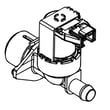
- Dishwasher water inlet valve 807445905 (no/low fill)
- Crosley dishwasher door seal 117158011 (leaks at the door)
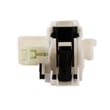
- Crosley dishwasher door latch assembly 111315040 (won’t start because the door won’t latch)
Drain and fill restrictions change water level and spray pressure, so the dishwasher cannot wash or rinse correctly. Catching a clogged filter, pinched hose, or weak fill early helps prevent leaks, poor performance, and repeat cycle failures.
Last updated: February 2026
Can I replace dishwasher parts myself?
Yes, for Frigidaire dishwasher model FGID2476SF1A, we see many DIYers successfully replace basic mechanical parts (like seals and some rack hardware) as long as power is disconnected and the water supply is shut off; electrical and leak-related repairs take more care and planning. Use the FGID2476SF1A owner’s manual for safety steps and access guidance.
These repairs are typically straightforward with basic hand tools and careful reassembly:
- Door sealing parts (for example, a worn crosley dishwasher door seal 117158011 that causes drips)
- Rack rolling issues (for example, replacing a damaged lower roller kit)
- Simple access parts inside the tub (cleaning filters, checking spray paths)
- Some “no fill” symptoms after confirming the water supply is on
These can involve wiring, tight spaces, or higher leak risk:
- Water fill components (for example, the dishwasher water inlet valve 807445905)
- Control and console components (user interface, control panel, electronic control)
- Sump and gasket work (higher chance of leaks if not seated correctly)
The manual calls out key safety points that matter for DIY service.
- Disconnect electrical power before servicing
- Shut off the water supply before opening any fill hoses
- Do not operate the dishwasher unless all enclosure panels are in place
- Keep children away while testing cycles
- If hot water has not been used for 2 weeks or more, run hot water at the sink for several minutes before starting the dishwasher
| What you’re fixing | Typical DIY difficulty | Main risk |
|---|---|---|
| Door leak at the front edge | Easy | Misaligned seal, continued dripping |
| Dishwasher not filling | Medium | Leaks at connections, valve wiring |
| Dishwasher won’t start | Medium to hard | Misdiagnosis, electrical handling |
| Sump or internal leak | Hard | Persistent leaks, rework time |
Dishwashers combine electricity and pressurized water. Doing the right shutdown steps first helps prevent shocks and reduces the chance of property damage from leaks, especially when you’re working around the inlet valve, sump, or door sealing surfaces.
Last updated: February 2026
What are the commonly replaced parts in a dishwasher?
On the Frigidaire FGID2476SF1A dishwasher, the most commonly replaced parts are the components that control water flow, sealing, and washing action. We most often see wear or failure in the door latch and seals, water inlet parts, wash sensors, and rack hardware after years of heat, detergent, and daily use.
- Door latch and door seal: Keep the door closed and watertight during the cycle.
- Water inlet valve: Opens to let hot water fill the tub; a common cause of “not filling.”
- Water-level sensing parts: Help prevent overfilling and protect the pump seal.
- Wash sensors and controls: Manage cycle decisions and button response.
- Drying and venting parts: Help move moist air out for better drying.
- Rack rollers and rack assemblies: Wear down, crack, or bind from heavy loads.
| Symptom | Part that commonly fixes it | Example part for this model |
|---|---|---|
| Won’t fill or fills slowly | Water inlet valve | Dishwasher water inlet valve 807445905 |
| Door won’t latch, won’t start | Door latch assembly | Crosley dishwasher door latch assembly 111315040 |
| Leaks at the door | Door seal | Crosley dishwasher door seal 117158011 |
| Poor cleaning, cycles seem “off” | Turbidity sensor | Dishwasher turbidity sensor A00040106 |
| Buttons unresponsive | User interface | Dishwasher user interface A06115601 |
| Lower rack hard to roll | Lower roller kit | Crosley dishwasher dishrack roller kit, lower 405507213 |
Heat, detergent, and hard water gradually wear rubber seals, clog small water passages, and stress electrical components. The manual also emphasizes having water connected and turned on before starting to help avoid pump seal damage and leaks.
- Confirm the water supply is on and hot water is available.
- Clean the filters regularly; the manual describes removing and rinsing the cylinder fine filter.
- Load so items do not block the detergent dispenser from opening.
- Make sure nothing protrudes through the rack that could block spray arm rotation.
- If your dishwasher uses a drain air gap, keep it clean so the unit drains properly.
For model-specific operation, loading patterns, and cleaning steps, use the FGID2476SF1A owner’s manual.
Last updated: February 2026





