Owner’s manual
 Error Codes
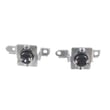


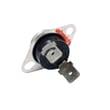
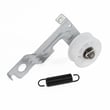

How to hard reset a Kenmore dryer?
To hard reset a Kenmore dryer model 79681182310, we recommend a simple power reset: turn the dryer off, unplug it (or switch the breaker off) for about 1 minute, then restore power and turn it back on. This clears many control glitches and stuck cycles.
- Press POWER to turn the dryer off.
- Unplug the dryer (or turn the circuit breaker off).
- Wait 60 seconds.
- Restore power.
- Press POWER, select a cycle, and press START/PAUSE.
For control and feature behavior (including how Control Lock works and what “CL” means on this style of control), follow the instructions in the 79681182310 use & care manual.
On this model family, “CL” commonly indicates Control Lock is enabled (not a failure).
Try these checks:
- Press and hold the TOUCH UP button for 5 seconds to toggle Control Lock.
- Confirm the dryer is powered on (the display must be lit).
- Close the door firmly; the dryer will not start if the door switch is not made.
- If the dryer was paused and left idle, it can shut off automatically; press POWER again.
A reset helps with software-like glitches, but it will not fix airflow restrictions or failed parts.
Check these items next:
- Clean the lint screen before every load.
- Inspect the vent run for crushing, kinks, or heavy lint buildup.
- If CHECK VENT is blinking, address the household vent restriction first.
- If the dryer will not start, the door switch can be a likely suspect.
| Symptom after reset | Most likely area to check | What to do next |
|---|---|---|
| “CL” on display, buttons disabled | Control Lock setting | Hold TOUCH UP 5 seconds |
| Runs but no heat | Heating circuit or airflow | Check venting, then heating components |
| Won’t start at all | Power supply or door switch | Verify breaker/outlet, test door switch |
If you’re diagnosing a no-start condition and need a compatible replacement, use the dryer door switch EBF61496102 for this model.
Resetting restores normal control operation quickly and safely, but airflow problems (lint screen, exhaust duct, vent hood) can trigger long dry times, overheating protection, and repeated shutdown symptoms that look like “electronics issues.”
Last updated: January 2026
What does PF stand for on a Kenmore dryer?
On the Kenmore dryer model 79681182310, PF stands for power failure. It means the dryer detected an interruption in incoming electrical power during or just after a cycle, so the cycle may pause, stop, or reset. For display and operation details, see the 79681182310 use & care manual.
- Press Power to clear the code.
- Re-select your cycle and press Start/Pause to restart.
- Make sure the dryer plug is fully seated in the outlet.
- Check the home breaker or fuse for the dryer circuit; reset if tripped.
- Avoid extension cords or power strips; plug the dryer directly into a properly grounded outlet.
| Likely cause | What you may notice | What to check |
|---|---|---|
| Brief outage or voltage dip | PF after a storm or utility work | Restart cycle; watch for repeat events |
| Loose outlet or plug | PF when the dryer vibrates | Outlet grip, scorch marks, heat at plug |
| Breaker trip/overload | Dryer stops mid-cycle | Breaker condition; other loads on circuit |
| Power cord or terminal connection issue | Intermittent power, burning smell | Stop using; have a technician inspect |
A PF event can leave clothes damp and can look like a “won’t start” problem. Confirming stable power first helps prevent repeat interruptions and avoids unnecessary parts replacement.
Last updated: January 2026
Why does my dryer keep saying check lint screen?
On Kenmore model 79681182310, the “check lint screen” message is usually a reminder to clean the lint filter before each load; if you’re seeing a CHECK VENT light/blink, that points to restricted airflow in the exhaust duct system. Follow the cleaning and venting steps in the 79681182310 use & care manual.
- Remove the lint filter and clean it thoroughly; reinstall it fully seated.
- If the screen looks “waxy” or clogged, scrub it with hot soapy water and a stiff brush; dry it completely before reinstalling.
- Check the vent hose behind the dryer for crushing, kinks, or sagging.
- Inspect and clean the wall vent hood outside; make sure the damper opens freely.
- If drying times are long, clean the entire vent run from the dryer to the outside.
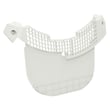
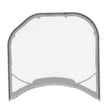
If your lint filter is torn, warped, or won’t sit correctly, replace it with the correct part for this model: lint filter - dryer part by lg ADQ56656401.
| What you see on the dryer | What it usually means on 79681182310 | What to check |
|---|---|---|
| “Check lint screen” / Check filter light | Routine reminder before a cycle | Lint filter cleanliness and fit |
| CHECK VENT indicator (may blink) | The duct blockage sensing system detects restricted exhaust airflow | Vent hose, duct length, elbows, outside hood, lint buildup |
Good airflow keeps drying times consistent, helps prevent overheating, and reduces lint buildup in the exhaust system. A restricted vent can also trigger the CHECK VENT warning and make the dryer run longer and less efficiently.
Consider inspecting or replacing the lint filter if you notice any of these:
- Lint passes through the screen or collects inside the lint housing
- The filter frame is cracked or the mesh is damaged
- The filter won’t slide in smoothly or pops up during operation
Last updated: January 2026