Owner’s manual
 Error Codes



Is a top mount or bottom mount fridge better?
A bottom-mount refrigerator like Kenmore model 59672003011 is better when you want everyday convenience and organization because fresh food sits at eye level and the freezer uses pull-out baskets. A top-mount is better when you want the simplest layout and typically lower energy use.
| Feature | Top-mount (freezer on top) | Bottom-mount (freezer drawer) |
|---|---|---|
| Fresh food access | You bend more often | Eye-level access for most-used items |
| Freezer access | Easy reach | Drawer style, great for bulk storage |
| Organization | Basic shelves/bins | More baskets and zones are common |
| Energy use | Often slightly lower | Often slightly higher |
| Best for | Budget, simplicity | Meal prep, families, frequent fridge use |
- Choose bottom-mount if you use the refrigerator section far more than the freezer and want better day-to-day ergonomics.
- Choose top-mount if you want a straightforward design, fewer moving drawer parts, and typically lower operating cost.
- If you have tight clearance next to a wall, confirm door swing space and ventilation clearances in the 59672003011 owner's manual.
Bottom-mount designs reduce bending for fresh-food access, which is where most households spend the most time. Layout and airflow also matter for performance; for this Kenmore model, proper ventilation clearances and correct leveling help doors close well and keep temperatures stable.
- Leave ventilation space around the cabinet (sides, top, and behind) as specified in the manual.
- Level the refrigerator so doors close easily and seals stay tight.
- Keep the freezer drawer from being overpacked so it closes fully.
- If you have an ice maker, allow extra space behind for the water line.
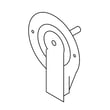
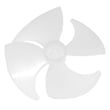
- If cooling seems uneven, inspect the evaporator fan area; the refrigerator evaporator fan motor W11024089 is a common service part on this model.
Last updated: January 2026
Are all refrigerators 70 inches high?
No. Refrigerators are not all 70 inches high; height varies by style and capacity. For the Kenmore 59672003011 bottom-mount refrigerator, the exact height is listed in the 59672003011 owner's manual, and many refrigerators in this category commonly land in the upper-60s to low-70s inch range.
Heights vary by configuration, hinge design, and whether the unit has a taller top-hinge cover.
- Top-freezer: often about 60 to 67 inches
- Bottom-freezer/bottom-mount: often about 67 to 70+ inches
- Side-by-side: often about 65 to 71 inches
- French door: often about 68 to 72 inches
- Counter-depth models: can be similar height, but depth is reduced
Use a tape measure and confirm the measurement method used in the specs.
- Measure from the floor to the highest point (hinge cover or top cap)
- Measure with the refrigerator level (front-to-back and side-to-side)
- Account for flooring changes (tile, thick mats, transitions)
- If installing under cabinets, leave clearance for airflow
- If the refrigerator has an ice maker, plan extra room behind for the water line
Even if the height fits, clearances can make or break an installation. For this Kenmore model, we follow these common clearances noted in the manual.
| Clearance area | Typical minimum clearance |
|---|---|
| Each side and top | 1/2 inch |
| Behind refrigerator | 1 inch |
| Next to a fixed wall (door swing) | 3 3/4 inches |
A refrigerator that is “about 70 inches” can still fail to fit once you include hinge height, leveling legs, and ventilation space. Confirming the exact height and clearances helps prevent door-swing issues, poor cooling from restricted airflow, and installation headaches.
Last updated: January 2026
What is the bottom part of a refrigerator called?
On Kenmore refrigerator model 59672003011, the “bottom part” most people mean is the machine compartment (also called the compressor compartment): the lower rear area that houses the compressor and other cooling-system components. For diagrams and access notes, use the 59672003011 owner's manual.
In a bottom-mount refrigerator, the lower area can refer to two different things:
- Machine compartment (rear, outside): compressor, condenser, fan, electrical components
- Freezer compartment (front, inside): freezer drawer, baskets, rails
- Lower fresh-food area (front, inside): crisper/pantry drawers and covers
| What you’re looking at | Common name | Where it is |
|---|---|---|
| Black “pump-like” sealed unit | Compressor | Bottom rear |
| Hot tubing/coil area | Condenser area | Bottom rear |
| Pull-out bottom drawer | Freezer drawer | Bottom front |
| Bottom interior drawers | Crisper/pantry area | Fresh-food section |
Using the right term helps us match the correct part category for your Kenmore 59672003011.
- If the refrigerator is not cooling or you hear clicking/humming, the issue is often in the machine compartment (compressor, start components, controls).
- If the freezer drawer is hard to open or won’t close, you are usually dealing with drawer hardware.
- If you see water under the refrigerator, it can be a drain or defrost-related issue; a common related part is the refrigerator drain tube W10619951.
Use these details when troubleshooting or selecting parts:
- Front or back of the refrigerator
- Inside or outside the cabinet
- Any symptoms (warm temps, water leak, loud fan noise)
- Whether the issue is in the freezer drawer or rear cooling area
Last updated: January 2026