Owner’s manual
 View engine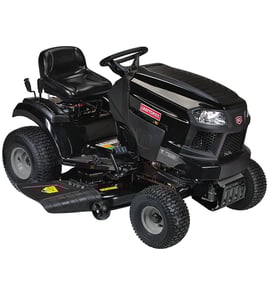


What brand engine does Craftsman use?
Craftsman riding mowers and lawn tractors use engines from several manufacturers depending on the model and production year. For the Craftsman lawn tractor model 917289280, the engine is a low-emission internal combustion design; the exact engine brand is identified on the engine label and in the specifications section of the 917289280 owner's manual.
Where to find the engine brand on model 917289280
Check these spots first; they give the most reliable match for parts and tune-up items:
- Engine blower housing or valve cover label (often shows the engine maker and model)
- Emissions label near the muffler or on the engine shroud
- Engine model and type code stamped on the engine (varies by manufacturer)
- Product specifications section in the 917289280 owner's manual
- Parts diagrams when ordering engine-related items (starter, solenoid, wiring)
Common engine brands used on Craftsman tractors
Across Craftsman tractors, the most common engine suppliers include:
- Briggs & Stratton
- Kohler
- Kawasaki
Quick comparison (what changes by engine brand)
| What you need | Why the engine brand matters | Example impact |
|---|---|---|
| Tune-up parts | Filters, plugs, and oil specs vary | Wrong plug heat range can cause hard starting |
| Starting system parts | Solenoid and wiring layouts can differ | Miswired solenoid causes clicking/no crank |
| Service procedures | Adjustments and torque specs vary | Incorrect torque can strip threads |
Why it matters for repairs and parts
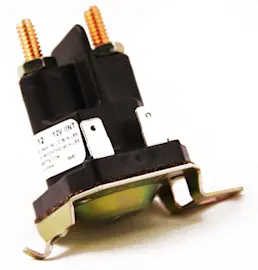
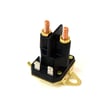
When we match the correct engine brand and engine model, we can help you choose the right maintenance parts and troubleshoot faster, especially for no-start or no-crank problems. If you are chasing a starting issue, the lawn tractor starter solenoid 582042802 is one of the common electrical parts involved.
Last updated: February 2026
How to find Craftsman model number?
On a Craftsman riding mower like model 917289280, the model number is typically on an ID label on the frame under the seat area or on the underside of the seat. Once you have the full model number, you can match the correct parts list and diagrams in the 917289280 owner's manual.
Where to look on the tractor
Check these common spots first (wipe dirt and grass off the label so you can read it clearly):
- Under the seat on the frame (lift the seat and look at the frame rails and crossmembers)
- Underside of the seat pan (flip the seat up and look underneath)
- Rear fender pan area near the seat hinge
- Near the engine compartment on the frame (less common, but worth a quick look)
What to write down (so parts match correctly)
For Craftsman tractors, we use the model number to pull the exact parts breakdown. Record:
- Model number (example: 917289280)
- Serial number (helps confirm production run)
- Engine model/type/code (useful for engine-specific parts like filters and ignition items)
Quick check: model number vs. engine number
| Item | What it identifies | Used for |
|---|---|---|
| Tractor model number (917289280) | The mower/tractor chassis and deck system | Belts, blades, mandrels, steering, electrical |
| Engine numbers | The engine itself | Tune-up parts, carburetion, ignition, fuel system |
Why it matters
Using the correct model number prevents ordering the wrong deck belt, blade, or spindle parts. For example, deck and drive components can vary by deck size and configuration, even within similar Craftsman tractors.
Last updated: February 2026
What kind of engine does a Craftsman riding lawn mower have?
The Craftsman riding lawn mower model 917289280 is equipped with a low-emission gasoline engine (horsepower and engine maker vary by exact build). For the most accurate engine specifications for your tractor, match the engine details listed in the 917289280 owner's manual.
How to identify the exact engine on your 917289280
We recommend confirming the engine by reading the engine label and comparing it to the specifications section in the manual.
- Lift the hood and locate the engine model/type code label (often on the blower housing or valve cover)
- Record model, type, and code (or model and serial)
- Compare those numbers to the Product Specifications section in the manual
- If ordering tune-up parts, match by engine model, not just tractor model
- If the tractor has been repowered, rely on the current engine tag
What “low-emission engine” means on this model
The manual notes this tractor uses a low-emission engine that can operate differently than older designs (for example, different choke behavior or warm-up needs). Using the correct starting procedure helps prevent hard-start and stalling complaints.
Quick starting and safety reminders
Before service or inspection, follow the shutdown steps in the manual.
| Task | What to do first | Why it matters |
|---|---|---|
| Check engine ID | Read engine label under hood | Ensures correct parts and specs |
| Basic troubleshooting | Verify fuel, spark, air | Most no-start issues are simple |
| Service work | Key off, blades stopped, disconnect spark plug wire | Prevents accidental start/injury |
Related DIY help (common engine symptoms)
If you hear clicking or the starter will not crank, use riding lawn mower engine clicks but doesnt turn over video to narrow down battery, solenoid, and starter circuit issues.
Why it matters
Engine identification drives everything: correct oil type, spark plug, air filter, and even the right troubleshooting steps. Confirming the engine model first prevents ordering the wrong parts and speeds up repairs.
Last updated: February 2026
How much does it cost to replace a riding lawn mower engine?
For a Craftsman riding lawn tractor like model 917289280, a typical engine replacement (parts plus labor) runs about $800 to $2,500 total, depending on the engine type, whether the wiring and fuel system need work, and local labor rates. Plan on roughly 4 to 8 labor hours for most riding mower engine swaps.
What drives the total cost
- Engine price: Most replacement riding mower engines fall in the $500 to $1,800 range.
- Labor time: Commonly 4 to 8 hours (more if rusted hardware, seized pulleys, or wiring repairs).
- Extra parts and supplies: Oil, filter, fuel line, clamps, battery cables, belts, and hardware.
- Related repairs found during the swap: A weak battery, damaged wiring, or fuel contamination can add time.
- Shop minimums and pickup/delivery: Many small-engine shops charge diagnostic or transport fees.
Quick cost breakdown (typical ranges)
| Cost item | Typical range | Notes |
|---|---|---|
| Replacement engine | $500 to $1,800 | Varies by horsepower, shaft size, and brand compatibility |
| Labor | $300 to $900 | Based on 4 to 8 hours and local rates |
| Fluids, filters, small parts | $50 to $250 | Oil, filter, fuel filter, clamps, hardware |
| Total installed | $800 to $2,500 | Most common real-world range |
Before you replace the engine, confirm it is the real problem
We recommend checking the basics first because many “bad engine” symptoms are caused by starting or fuel issues. The troubleshooting section in the 917289280 owner's manual covers common no-start and power-loss causes such as a weak battery, dirty fuel filter, stale fuel, loose wiring, and spark plug issues.
If the engine clicks but will not start, these checks often save money:
- Recharge or replace the battery; clean terminals
- Inspect wiring connections at the starter and solenoid
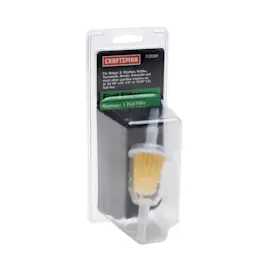
- Replace a dirty fuel filter; drain stale fuel
- Check spark plug and plug wire connection
- Verify safety interlock switches are working
Why it matters
An engine replacement is one of the highest-cost repairs on a riding mower. A short diagnostic step can prevent paying for an engine when the real fix is a battery, wiring repair, or a starting component such as the lawn tractor starter solenoid 582042802.
Last updated: February 2026
How much oil does a Craftsman 917289280 take?
For the Craftsman 917289280 riding lawn tractor, the engine oil capacity is 60 oz without an oil filter and 64 oz with an oil filter. We use these capacities when doing an oil change so the crankcase is properly filled without overfilling.
Oil capacity details for model 917289280
Use the capacity that matches how you service the engine:
- With oil filter change: 64 oz (2.0 qt)
- Without oil filter change: 60 oz (1.875 qt)
- Oil type above 32°F: SAE 30
- Oil type below 32°F: SAE 5W-30
- Confirm the spec in the 917289280 owner's manual
How we recommend filling the oil (best practice)
Even with the correct capacity, the safest way to hit the right level is to fill and verify on the dipstick.
- Park on a level surface and set the parking brake
- Add about 3/4 of the capacity first
- Wait 1 to 2 minutes for oil to settle
- Check the dipstick, then top off to the full mark
- Do not overfill; overfilling can cause smoking and poor running
Quick reference table
| Service situation | Fill amount | In quarts |
|---|---|---|
| Oil change with filter | 64 oz | 2.0 qt |
| Oil change without filter | 60 oz | 1.875 qt |
Why it matters
Correct oil capacity on a front-engine lawn tractor helps prevent low-oil wear (too little oil) and oil aeration or seal leaks (too much oil). Using the right viscosity for temperature also improves starting and lubrication.
Last updated: February 2026
What are the parts of a lawn mower engine?
On the Craftsman 917289280 front-engine lawn tractor, the engine system is made up of fuel, air-intake, ignition, and starting components that work together to create combustion and keep the tractor running safely. For the exact component locations and control identification, use the 917289280 owner's manual.
Core engine systems (what they do)
- Fuel system: stores and delivers clean gasoline to the carburetor.
- Air intake system: filters air so dirt does not enter the engine.
- Ignition system: creates spark at the right time to ignite the air-fuel mixture.
- Starting/charging system: cranks the engine and keeps the battery charged.
- Lubrication and cooling: oil reduces wear; airflow over fins/screens helps control heat.
Common engine-related parts you will see on most riding mowers
Even when part shapes vary by engine brand, these are the typical engine components:
- Fuel tank and fuel cap
- Fuel line and fuel filter
- Carburetor (or throttle body on some engines)
- Air filter and air box
- Spark plug and spark plug wire
- Ignition coil and flywheel
- Starter motor and starter solenoid
Quick troubleshooting: which “engine part” to suspect
| Symptom | Most likely system | What to check first |
|---|---|---|
| Engine clicks but will not start | Starting/charging | Battery charge, cable connections, wiring, solenoid/starter |
| Engine spins but will not start | Fuel/ignition | Fresh fuel, fuel flow, spark plug condition |
| Loss of power | Fuel/air/exhaust | Air filter, fuel quality, muffler screen/fins |
If you are chasing a no-start with a single click, the starter circuit is a common place to begin; a replacement option for this model is the lawn tractor starter solenoid 582042802.
Why it matters
Knowing which system a part belongs to helps you diagnose faster and avoid replacing the wrong component. It also supports safer service practices, like keeping debris off hot engine parts and avoiding adjustments with the engine running.
Last updated: February 2026