Owner’s manual
 Error Codes


Where is the model number on a Kenmore side by side refrigerator?
On Kenmore model 10658953800 side-by-side refrigerators, the model number is printed on the appliance identification label. We typically find this label inside the fresh food (refrigerator) compartment, most often along the side wall near the top or around the door opening; confirm the exact spot in the 10658953800 owner's manual.
Common places to check first
Look in these areas before pulling the refrigerator out:
- Inside the refrigerator compartment on the left side wall
- Inside the refrigerator compartment on the right side wall
- Along the ceiling of the refrigerator compartment near the light housing
- On the frame around the door opening (door jamb area)
- Behind the crisper drawers (on the back wall in some builds)
What the label looks like and what to write down
The ID label usually includes both the model number and a serial number. For parts lookup and service, we recommend recording:
- Full model number (for example, 10658953800)
- Full serial number (exactly as printed)
- Any revision or manufacturing codes shown on the tag
| Item on label | Why it matters | Example format |
|---|---|---|
| Model number | Ensures correct parts diagrams and fit | 10658953800 |
| Serial number | Helps identify production range and variations | Letters plus numbers |
Why it matters
Kenmore refrigerators can look similar across multiple model series, but parts like the water filter, ice maker, and inlet valve can vary by model. Using the exact model number helps us match the correct components and avoid returns.
Last updated: February 2026
How do I read my Kenmore refrigerator model number?
Your Kenmore refrigerator model number is the full identifier we use to match the correct parts and instructions for your exact unit. On model 10658953800, you will find the model and serial tag inside the fresh food section or freezer section, most often on an interior wall or behind lower bins.
Where to find the model number tag
Check these common locations on a Kenmore side-by-side refrigerator:
- Inside the refrigerator compartment on a side wall
- Inside the freezer compartment on a side wall
- On the frame behind the crisper drawers (remove the drawers to look)
- Along the door jamb (the cabinet frame the door closes against)
- Behind the base grille or kick plate area
For diagrams and model-specific details, use the 10658953800 owner's manual.
How to read the number once you find it
We recommend copying the model number exactly as shown on the tag.
- Use the entire number, not just the first few digits
- Keep the order the same (no added spaces)
- Include any extra suffix characters if they appear
- Take a clear photo so you can zoom in later
Quick example
| What you see on the tag | What to enter when ordering parts |
|---|---|
| 10658953800 | 10658953800 |
Why it matters
Kenmore model numbers often look similar across different refrigerator designs, but parts like the water filter, ice maker, and inlet valve can vary by revision. Using the exact model number helps us match items like the genuine Kenmore refrigerator water filter EDR3RXD1 correctly and avoid returns.
Last updated: February 2026
What are the most common problems with Kenmore refrigerators?
The most common problems we see on Kenmore refrigerators like model 10658953800 are cooling issues, water leaks, ice maker or dispenser trouble, and unusual noises. Many of these come down to airflow (dirty coils, fan problems), defrost system issues, or water supply and filter restrictions; use the 10658953800 owner's manual troubleshooting section to narrow it down.
Most common symptoms and what usually causes them
- Not cooling or warm temperatures: restricted airflow, dirty condenser coils, evaporator fan issues, or a defrost problem (ice buildup)
- Water leaking or puddles: clogged defrost drain, loose water line connections, or a door not sealing
- Ice maker not making ice: water supply issue, frozen fill tube, filter restriction, or ice maker failure
- Water dispenser slow or weak: clogged filter, low house water pressure, or a failing inlet valve
- Noises (buzzing, clicking, rattling): normal operating sounds, fan blade contact with ice, or compressor/start component concerns
Quick checks we recommend first (fast, high-impact)
- Confirm airflow: keep vents clear and avoid overpacking; the manual calls out “ensuring proper air circulation.”
- Clean condenser coils: dust buildup is a top cause of poor cooling and longer run times.
- Look for frost buildup on the freezer back wall (points to a defrost system issue).
- Check door sealing: gaps or a warped gasket can cause moisture, frost, and temperature swings.
- For water and ice issues: flush the system after filter changes; the manual notes dispenser water is typically chilled only to about 50°F (10°C).
Common parts involved on this model
| Problem area | Parts that commonly relate | What the part does |
|---|---|---|
| Water tastes bad, slow flow | Genuine Kenmore refrigerator water filter EDR3RXD1 | Filters water; restrictions reduce flow and ice production |
| No water to dispenser/ice maker | Refrigerator inlet valve W10408179 | Opens to send water to the dispenser and ice maker |
| Ice maker not producing | Refrigerator ice maker WPW10190965 | Cycles to harvest and refill ice |
| Frost buildup, warm freezer | Refrigerator heater WP2323198, refrigerator bi-metal thermostat WPW10225581 | Defrosts the evaporator and monitors defrost temperature |
Why it matters
Catching airflow, defrost, and water-supply problems early helps prevent food spoilage, recurring ice buildup, and dispenser failures. It also reduces compressor run time, which can extend overall refrigerator life.
Last updated: February 2026
What causes a side-by-side refrigerator to stop cooling?
On Kenmore side-by-side refrigerator model 10658953800, a “stopped cooling” problem is usually caused by a power interruption, controls set to OFF or too warm, blocked airflow vents, or a cooling-system issue such as a failed evaporator fan, defrost problem, or compressor start/cooling component. Use the checks in the 10658953800 owner's manual to narrow it down fast.
Quick checks first (no tools)
- Confirm the unit has power; test the outlet with a lamp and reset the breaker if needed.
- Make sure the temperature controls are ON and not turned to OFF.
- Allow 24 hours after a new install or major temperature change for temperatures to stabilize.
- Check that food packages are not blocking the air vents between the freezer and fresh-food sections.
- Verify doors are closing fully; frequent door openings can make temperatures climb.
Airflow and temperature control basics
Your refrigerator depends on air moving between compartments; when vents are blocked, cooling performance drops and moisture issues can follow.
| Symptom | Most likely area to check | What to do next |
|---|---|---|
| Both sections warm | Power, controls, compressor/fans | Verify power and control settings; listen for fan/compressor operation |
| Freezer cold, fridge warm | Airflow/vents, evaporator fan, damper area | Clear vents; check for strong airflow into the refrigerator section |
| Frost buildup, weak cooling | Defrost system | Look for heavy frost on the freezer back panel; plan defrost troubleshooting |
When it points to a part problem
If power and settings are correct and vents are clear, these parts commonly cause loss of cooling:
- Evaporator fan issues (no air circulation)
- Defrost heater or defrost control problems (ice blocks airflow)
- Temperature control/thermostat problems
- Compressor start or compressor problems
For defrost-related cooling loss, the refrigerator heater WP2323198 is one of the components used in the defrost system on this model.
Why it matters
A refrigerator that is not cooling can warm food into unsafe temperature ranges and can also overwork the compressor and fans. Catching a simple issue (controls, airflow, door closing) early often prevents a bigger repair.
Last updated: February 2026
What's the average lifespan of a Kenmore refrigerator?
Kenmore refrigerators typically last 10 to 15 years on average. For a Kenmore 10658953800 side-by-side refrigerator, lifespan depends most on steady temperatures, clean airflow (condenser coils), tight door seals, and keeping the ice and water system maintained per the 10658953800 owner's manual.
Typical lifespan ranges (what we see most often)
| Appliance type | Typical lifespan | What shortens it fastest |
|---|---|---|
| Side-by-side refrigerator (Kenmore) | 10 to 15 years | Dirty condenser coils, poor door sealing, heavy ice maker use |
| Water/ice dispensing models | 10 to 15 years | Skipped filter changes, low water pressure, valve issues |
Maintenance that adds years (high impact)
- Clean condenser coils at least every 6 to 12 months (more often with pets).
- Confirm doors seal tightly; warm air leaks force longer run times and create moisture.
- Keep vents clear inside both compartments so air can circulate.
- Replace water filters on schedule to protect flow and taste.
- Address small issues early (noisy fan, slow ice, temperature swings) before they strain the compressor.
Water and ice system care (often overlooked)
Your manual notes that dispenser water is chilled only to about 50°F (10°C), and it can take 24 hours after installation or heavy dispensing for the water supply to cool again. That is normal behavior and helps prevent unnecessary service calls. For step-by-step flushing and dispenser checks, use the 10658953800 owner's manual.
If you are replacing the filter for this model, we commonly see customers use the refrigerator water filter EDR3RXD1.
Why it matters
A refrigerator can keep running for years while slowly losing efficiency. Basic upkeep reduces run time, helps stabilize food temperatures, and lowers the chance of expensive sealed-system or compressor-related repairs.
Last updated: February 2026
How to tell if a Kenmore refrigerator compressor is bad?
If your Kenmore side-by-side refrigerator model 10658953800 is not cooling and you hear repeated clicking, constant running with warm temperatures, or the compressor is unusually hot, the compressor or its start components are failing. Use the sound and cooling checks in the 10658953800 owner's manual to separate normal operating noises from true compressor trouble.
Quick checks we use before blaming the compressor
- Confirm the refrigerator has power and the controls are turned on.
- Allow 24 hours after a new install or major temperature change for full cooling.
- Listen for normal sounds: buzzing (ice maker fill), pulsating (compressor/fans adjusting), gurgling (refrigerant movement).
- Check whether the unit runs longer when the room is warm or doors are opened often.
- Verify the condenser area is not blocked by dust or airflow restrictions.
What “bad compressor” symptoms look like
| Symptom | What it usually means | What to check next |
|---|---|---|
| Repeated click every few minutes, little or no cooling | Start device overload tripping or compressor locked | Start relay/capacitor, wiring, compressor amps (tech test) |
| Runs constantly but both sections stay warm | Sealed system or compressor not pumping | Frost pattern on evaporator, airflow, sealed system diagnosis |
| Very hot compressor shell and shutdowns | Overheating from hard-start or poor ventilation | Clean condenser, check fan operation, start components |
| Quiet unit, lights on, no cooling | Compressor not running at all | Power to compressor circuit, control, start components |
Parts that are commonly involved (not always the compressor)
If the compressor is not starting or is hard-starting, these model-compatible parts are often part of the diagnosis:
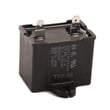
- Upright freezer run capacitor WPW10662129 (helps the compressor start)
- Refrigerator compressor W10139460 (the sealed-system pump)
- Refrigerator thermostat WP2198202 (can affect cooling control on some designs)
Why it matters
A compressor replacement is one of the highest-cost refrigerator repairs. Ruling out normal “new refrigerator” sounds and simpler causes (power, controls, airflow, start components) prevents unnecessary parts replacement and gets cooling restored faster.
Last updated: February 2026
What is the cubic foot of my Kenmore refrigerator model 10658953800?
The total capacity (cubic feet) for Kenmore side-by-side refrigerator model 10658953800 is listed in the specifications section of the product literature; use the 10658953800 owner's manual to confirm the exact rated total volume for your unit.
Where to find the cubic feet rating
Capacity is typically shown as “total volume” or “total capacity,” and sometimes it is split between the refrigerator and freezer compartments.
- Check the specifications or features pages in the manual
- Look for terms like “cu. ft.,” “total volume,” or “capacity”
- If the manual lists separate compartment volumes, add them for total capacity
- Use the model number 10658953800 when comparing specs to avoid mix-ups with similar Kenmore 106 models
Typical capacity range for this style
Most Kenmore side-by-side refrigerators in this design class are commonly in the 21 to 26 cu. ft. total-capacity range. Your exact rating depends on the specific build and interior configuration.
| Item | What it means | What changes it |
|---|---|---|
| Rated total capacity | Standardized cubic feet used for comparisons | Fixed by the model’s design |
| Usable storage space | What you can practically fit | Shelves, bins, ice maker, and door storage |
| Freezer vs. fresh food split | How the total is divided | Fixed by the model’s design |
Why it matters
Knowing the rated cubic feet helps when you are comparing replacement refrigerators, planning kitchen storage, or choosing correctly sized accessories such as an ice bin or water filter for your Kenmore unit.
Last updated: February 2026