Error Codes


How to identify a Kenmore washer model?
To identify your Kenmore washer model, we look for the model number tag on the machine itself. For Kenmore model 11026051690, the tag is typically under the lid on top-load washers, inside the door opening on front-load washers, or on the back panel near the power cord.
Where to find the model number tag
Check these common locations first:
- Under the washer lid, around the tub opening (most common on top-loaders)
- Inside the door opening on front-loaders (on the cabinet frame)
- On the back panel near the power cord entry
- Along the side of the control console or cabinet edge
What the model number looks like (Kenmore)
Kenmore washer model numbers often:
- Start with 110 (a common Kenmore prefix)
- Are 10 to 12 characters long
- Include only numbers, or numbers with a few letters depending on the series
- Appear on a sticker or metal plate labeled “Model” and sometimes “Serial”
Quick check table
| What you see on the tag | What it means | What to do next |
|---|---|---|
| Model number (example: 11026051690) | Identifies the exact washer design | Use it to match diagrams and parts |
| Serial number | Production code and date info | Keep it for service records |
| Type/voltage info | Electrical rating | Useful for troubleshooting power issues |
Why it matters
Using the exact model number prevents ordering the wrong parts for your Kenmore commercial washer. Small design changes can affect fit for items like a drain pump, motor coupling, lid switch, or agitator components.
Parts you may commonly match by model
If you are already diagnosing a symptom, these are common model-matched items customers replace:
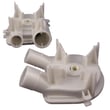
- Washer drain pump WP3363394 (won’t drain, leaks at pump)
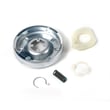
- Coupling 285753A (won’t agitate or spin, motor runs)
- Switch 285671 (won’t start or won’t spin with lid closed)
- Agitator dog 80040 (agitator slips or doesn’t move properly)
Last updated: February 2026
Is it worth repairing a Kenmore washing machine?
Yes; repairing a Kenmore washer is worth it when the fix restores reliable wash and spin performance for less than about half the cost of a comparable new washer. For Kenmore model 11026051690 (a commercial washer), durable mechanical repairs are often a strong value.
Quick decision checklist
- Repair it if the problem is a common wear item (agitator, drain pump, motor coupling, clutch).
- Repair it if the tub and cabinet are solid (no major rust-through) and it is not leaking from the center seal.
- Consider replacement if the gear case is failing (loud grinding, oil leak) and you also have multiple other issues.
- Consider replacement if the basket is wobbling badly from a worn bearing/seal and the machine has heavy corrosion.
- Repair it if downtime matters; commercial-style top-loaders are typically straightforward to service.
Typical repair costs vs. what they fix
| Symptom | Common cause | Part examples for 11026051690 | Usually worth it? |
|---|---|---|---|
| Won’t drain or leaves water | Failed pump, clogged pump | Washer drain pump WP3363394 | Yes |
| Agitates weakly or not at all | Worn agitator dogs/cam | Agitator dog 80040 | Yes |
| Motor runs but won’t spin/agitate | Broken motor coupling | Coupling 285753A | Yes |
| Slow spin, burning smell, poor turnover | Worn clutch | Clutch 285785 | Often |
| Loud gear noise, oil leak underneath | Gear case failure | Gear 3360629 | Sometimes |
Why it matters
A targeted repair keeps wash quality high (proper agitation, full-speed spin, correct draining) and prevents secondary damage. For example, continuing to run with a slipping clutch can overheat drive components; running with a weak drain pump can leave standing water that causes odors.
Our practical rule of thumb
- Price the part(s) and estimate labor time.
- If the total is under 50% of replacement cost and the washer is otherwise solid, repair it.
- If the repair involves the gear case or bearing/seal plus other major issues, replacement is usually the better long-term value.
Helpful DIY reading: must have tools for appliance repair
Last updated: February 2026
What is the average lifespan of a Kenmore washer?
A Kenmore washer typically lasts 10 to 15 years; commercial-style models like Kenmore 11026051690 often reach the higher end when loads are balanced, water supply is clean, and wear items are replaced as symptoms appear (instead of running the machine until a major failure).
Typical lifespan and what affects it
Most washer life is determined by how hard the drive system works and how well the tub and drain system stay protected from overloads and debris.
- Load size and balance: chronic overloading shortens bearing, clutch, and drive life.
- Water quality: sediment can stress the inlet/mixing valve and cause slow fills.
- Drain health: coins, lint, and small items can damage the pump.
- Agitation performance: worn agitator components reduce cleaning and increase strain.
- Vibration control: weak suspension parts increase cabinet and tub wear.
Common “end-of-life” symptoms (and the parts that often fix them)
If your washer still fills and drains but performance is slipping, these are the most common repair paths for this platform.
| Symptom | What you notice | Often involved part(s) for this model |
|---|---|---|
| Won’t agitate well | Clothes barely move, top agitator slips | Agitator dog 80040, agitator cam 285748 |
| Won’t spin or makes grinding noise | Tub struggles to spin, loud noise | Clutch, gear case, drive components |
| Won’t drain | Water left in tub, humming at drain | Washer drain pump WP3363394 |
| Excessive shaking | Walking, banging, off-balance often | Washer suspension spring WP63907 |
Maintenance that helps you reach 15 years
- Keep loads evenly distributed; mix large and small items.
- Check pockets to prevent debris from reaching the pump.
- Use the right detergent amount to reduce residue buildup.
- Level the washer and re-check if it starts vibrating.
- Address early symptoms promptly (slipping agitation, slow drain, repeated off-balance).
Why it matters
Replacing a few high-wear parts early can prevent secondary damage to the drive system and tub components, which is the difference between a practical repair and a full replacement.
Last updated: February 2026