Owner’s manual
 Error Codes



Do I need a 20 or 30 amp breaker for a water heater?
For the Kenmore 153320690HT electric water heater, you use a 20-amp breaker when the heater is configured for 3800W at 240V, and a 30-amp breaker when it is configured for 5500W at 240V. The correct breaker size depends on the element wattage shown on the rating plate and in the owner's manual.
How to choose the right breaker size
Use the heater’s element wattage and the wiring requirements as your decision point.
- Check the rating plate near the lower access panel for the configured wattage (3800W vs 5500W).
- Match the breaker to the heater’s maximum circuit breaker rating.
- Match the wire gauge to the heater’s wiring chart (copper wire, 60°C rating).
- Use a dedicated 240V circuit (double-pole breaker) for the water heater.
- If the run from the panel is long (commonly over about 90 feet), size wiring per local electrical code.
Quick reference (240V)
| Element configuration | Minimum wire size (copper) | Max breaker size |
|---|---|---|
| 3800W upper / 3800W lower | 12 AWG | 20A |
| 3800W upper / 5500W lower (conversion) | 10 AWG | 30A |
Why it matters
Using the correct breaker and wire size prevents nuisance tripping, overheating at connections, and damage to the water heater’s wiring and thermostats. It also ensures the heater can safely deliver its rated recovery rate.
Related parts that often come up with breaker or heating issues
If the breaker trips or you have little to no hot water, these model-matched parts are common suspects:
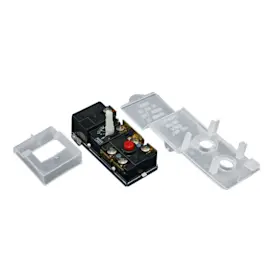
- Thermostat 100108683 (upper thermostat)
- Thermostat 100108421 (lower thermostat)
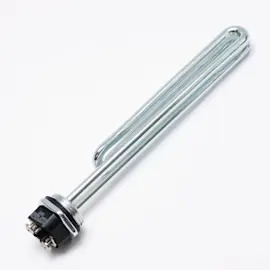
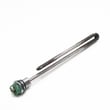
- Element 5500 100093526 (heating element)
Last updated: February 2026
How to reset a water heater thermostat?
To reset the thermostat high-limit (reset) on your Kenmore 153320690HT electric water heater, turn OFF power, remove the upper access panel and insulation, press the red RESET button on the upper thermostat, then reinstall insulation and the panel and restore power. See the steps in the owner's manual.
Reset steps (high-temperature shutoff)
- Turn OFF electrical power to the water heater at the junction box or breaker.
- Remove the upper access panel.
- Pull back or remove the insulation block to expose the thermostat.
- Press the red button marked RESET (high limit) until it seats.
- Reinstall the insulation so it fully covers the thermostat and element.
- Reinstall the access panel, then turn ON power.
If it trips again
A high-limit reset that keeps tripping usually points to an overheating or control issue. Use this quick check list:
- Make sure the insulation block and thermostat cover are installed correctly.
- Confirm thermostat dials were not set excessively high (many units are factory set around 120°F).
- Look for loose or heat-damaged wiring at the thermostat terminals.
- If you suspect a control problem, replace the failed control parts rather than repeatedly resetting.
| Symptom after reset | Most common cause | What we recommend |
|---|---|---|
| No hot water | Tripped high limit, failed thermostat, or failed element | Reset first; then test thermostat and elements |
| Water too hot | Thermostat set too high or thermostat stuck | Lower setting; replace thermostat if it will not regulate |
| Rumbling noise | Scale on heating element | Clean or replace the element |
Parts that commonly relate to this issue
If testing shows a failed component, these model-matched parts are commonly involved:
- Thermostat 100108683 (upper control)
- Thermostat 100108421 (lower control)
- Element 5500 100093526 (heating element)
Why it matters
The red RESET button is a safety shutoff designed to cut power if water temperature gets too high. Resetting restores operation, but repeated trips mean the underlying cause needs correction to prevent overheating and loss of hot water.
Last updated: February 2026
What is the average cost of a new electric hot water heater?
A new electric tank water heater typically costs $600 to $3,500 installed, with many like-for-like replacements landing around $1,100 to $2,500. For Kenmore model 153320690HT, your final price depends on tank size, electrical requirements, and how much plumbing and code-related work is needed; use the 153320690HT owner's manual to match capacity and electrical specs.
What drives the total installed price
These items usually change the quote the most:
- Tank capacity (more gallons and higher recovery usually cost more)
- Electrical work (breaker size, wire gauge, adding a disconnect, correcting unsafe wiring)
- Plumbing updates (shutoff valve, piping changes, dielectric connections)
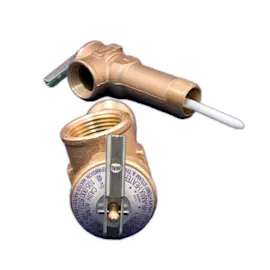
- Safety and code items (T&P relief valve discharge piping, drain pan, seismic strapping where required)
- Access and labor time (tight closets, attic installs, long carry distance)
Typical cost ranges to plan around
| Replacement type | Typical total cost (unit + install) | Best fit |
|---|---|---|
| Standard electric tank, like-for-like swap | $1,100 to $2,500 | Same size and similar electrical hookup |
| Larger tank or higher-efficiency standard tank | $1,800 to $3,500 | Higher hot water demand |
| Heat pump water heater | $2,500 to $6,000+ | Efficiency upgrade; needs space and condensate handling |
If you are repairing instead of replacing
On the Kenmore 153320690HT, common fixable no-hot-water issues involve the thermostats, heating element, or a leaking element seal. Parts that are often replaced include:
- Thermostat 100108683 (upper thermostat)
- Thermostat 100108421 (lower thermostat)
- Water heater heating element gasket 100108379 (seal for the element)
Why it matters
Matching the new heater to your existing capacity and electrical setup prevents slow recovery, nuisance breaker trips, and repeat failures. A like-for-like replacement that fits your current wiring and plumbing is usually the most cost-effective.
Last updated: February 2026
What is the life expectancy of a Kenmore water heater?
Most Kenmore electric water heaters, including model 153320690HT, have a typical life expectancy of 8 to 12 years. Regular maintenance (especially flushing sediment and checking temperature settings) helps the tank and heating components last closer to the high end of that range; see the owner's manual.
What affects how long it lasts
- Water quality and sediment: Hard water speeds sediment buildup, which makes the heater work harder.
- Temperature setting: Higher settings increase stress on the tank and heating elements.
- Maintenance habits: Periodic draining and inspection reduces corrosion and overheating.
- Part wear: Thermostats and heating elements wear out before the tank does.
- Installation quality: Loose connections and poor wiring can cause nuisance failures.
Maintenance checklist to help reach 12 years
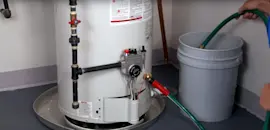
- Flush a few gallons from the drain valve periodically to reduce sediment.
- Inspect for moisture around fittings and the access panels.
- Verify tight, clean wiring connections at the thermostats and elements (power off).
- Keep the area around the heater dry and well ventilated.
- Replace worn heating parts promptly to prevent overheating and cycling issues.
Common “wear parts” vs. tank life
| Item | Typical role | What failure looks like |
|---|---|---|
| Heating element | Heats the water | Slow recovery, lukewarm water |
| Thermostat | Controls temperature | Water too hot, too cool, or inconsistent |
| Drain valve | Allows flushing/draining | Drips, won’t open/close |
If you are troubleshooting performance issues on 153320690HT, the parts list for this model commonly includes the element 5500 100093526 and the thermostat 100108683.
Why it matters
A water heater often fails in two different ways: the tank eventually corrodes and leaks (end of service life), while components like a thermostat or heating element can fail earlier and are usually replaceable. Staying ahead of sediment and temperature control helps you avoid premature tank wear.
Last updated: February 2026