Installation guide
 Owner’s manual
 Error Codes


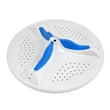
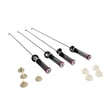
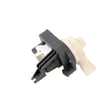
How to hard reset a Kenmore washing machine?
For Kenmore washer model 11028133411, the most reliable “hard reset” is a power reset: unplug the washer (or switch off the breaker) for 1 to 2 minutes, then restore power. If you’re clearing an error code, use the control’s START/PAUSE/Unlock Lid button steps shown in the owner's manual.
Quick reset options (start here)
- Power reset: Unplug for 1 to 2 minutes; plug back in.
- Control reset after a pause: Close the lid, then touch and hold START/PAUSE/Unlock Lid for up to 3 seconds to restart.
- Clear an F-type error code: Touch START/PAUSE/Unlock Lid once to clear the code; then touch it again to restart.
- If the washer will not start: Confirm the lid is fully closed and the outlet has power (no extension cord).
When a “reset” is really an error-code clear
Many Kenmore top-load washers do not have a single master reset button. Instead, the control lets you clear certain faults and restart.
| What you see | What it usually means | What to do |
|---|---|---|
| F## code | System error | Press START/PAUSE/Unlock Lid once to clear; press again to restart. |
| “--” | Cycle knob not on a cycle | Rotate the knob until a cycle lights up. |
| Won’t run/fill | Power, lid, or normal pauses | Verify power, close lid, and let the cycle continue without interruption. |
If the washer still acts “stuck” after resetting
- Make sure the lid is closed; the washer will not run with the lid open.
- Wait through normal pauses; this model can pause during phases of the cycle.
- Reduce oversudsing; too much (or non-HE) detergent can cause the washer to stop to manage suds.
- If you opened the lid to add items, restart correctly: press START/PAUSE/Unlock Lid to pause, wait for the lid to unlock, then close the lid and touch and hold START/PAUSE/Unlock Lid up to 3 seconds.
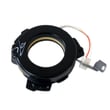
- If the lid will not lock or unlock consistently, a failed lid lock can mimic a control problem; check the washer lid lock assembly W10810403.
Why it matters
A true power reset clears temporary control glitches, while the START/PAUSE/Unlock Lid steps clear many display codes and safely restart the cycle. Using the correct method prevents unnecessary part replacement and helps protect the control from repeated interruptions.
Last updated: February 2026
What is the average lifespan of a Kenmore washer?
A Kenmore washer typically lasts 10 to 15 years under normal household use. For your Kenmore 11028133411 top-loading high efficiency washer, consistent maintenance and avoiding overloads are the biggest factors that keep the drive system, suspension, and water-handling parts running longer (see the owner's manual).
Typical lifespan and what changes it
Most washers reach the end of their service life because of wear in moving parts, water leaks, or control issues, not because the cabinet “wears out.”
Common factors that extend lifespan:
- Use HE detergent only and measure it correctly to reduce residue and stress on the drain system
- Load items in loose heaps evenly around the washplate to reduce out-of-balance wear
- Keep the washer level and stable to protect the suspension and tub components
- Run periodic cleaning/maintenance routines to reduce odor and buildup
- Address small issues early (slow drain, noisy spin, lid not locking) before they cascade
Parts that often drive repair decisions
When a washer is aging, a few assemblies tend to be the “make-or-break” repairs because they affect spin, agitation, draining, and safety interlocks.
| Symptom | Common system involved | Example part for this model |
|---|---|---|
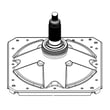
| Won’t spin or makes grinding/clicking noises | Drive/clutch components | Drive assembly W11393685 |
| Won’t drain or leaves water in tub | Drain system | Washer drain pump W10876600 |
| Won’t start or lid won’t lock | Lid lock/safety circuit | Washer lid lock assembly W10810403 |
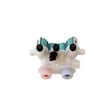
| Won’t fill or fills slowly | Water inlet system | Washer water inlet valve W11165546 |
Why it matters
Knowing the 10 to 15 year average helps you decide whether to invest in a larger repair (drive, tub, basket) versus a targeted fix (lid lock, inlet valve, drain pump). It also helps you plan maintenance that reduces vibration, leaks, and strain on the motor and suspension.
Last updated: February 2026
Is it worth repairing a Kenmore washing machine?
Yes, repairing a Kenmore washer is worth it when the problem is a common wear item and the machine is otherwise in good shape. For Kenmore model 11028133411, repairs like a lid lock, drain pump, or water inlet valve typically restore reliable operation for far less than replacing the washer.
Quick decision checklist
We use these practical rules to decide repair vs. replace:
- The washer completes cycles and does not leak heavily from the tub area
- The issue is isolated (no multiple symptoms across fill, drain, and spin)
- The repair is a single-part fix (valve, pump, lid lock, clutch-related parts)
- The cabinet and outer tub are not rusted through
- The repair cost is clearly less than about half the cost of a comparable new washer
Common repairs that are usually worth it on model 11028133411
These are frequent, straightforward fixes that often solve “won’t start,” “won’t drain,” or “won’t fill” complaints:
- Lid will not lock or washer will not start: washer lid lock assembly W10810403
- Washer will not drain or leaves water in tub: washer drain pump W10876600
- Washer will not fill or fills slowly: washer water inlet valve W11165546
- Agitation/spin performance issues (clutch system wear): slider W10734521 and clutch coil W10754448
When replacement makes more sense
Replacement is the better value when the washer has major structural or high-cost failures:
- Outer tub or basket damage, severe bearing noise, or repeated leaks
- Multiple major components failing at once (drive system plus controls)
- You need a major assembly replacement and the washer has other age-related issues
Cost and complexity comparison
| Repair type | Typical effort | Typical value |
|---|---|---|
| Lid lock, inlet valve, drain pump | Low to moderate | High (common, targeted fix) |
| Clutch/drive related parts | Moderate | Good (restores spin/agitate) |
| Outer tub, basket, major drive assembly | High | Lower (labor and cost add up) |
Why it matters
A targeted repair keeps a dependable Kenmore high-efficiency, low-water top-load washer running and avoids the downtime and installation work of replacement. Your use and care steps (HE detergent, proper loading) also reduce repeat failures; see the owner's manual for model-specific guidance.
Last updated: February 2026
How many cubic feet is a Kenmore Model 11028133411 washer?
Kenmore model 11028133411 is a top-loading high-efficiency, low-water washer; its exact tub capacity in cubic feet is listed in the product specifications section of the owner's manual. For most Kenmore 110-series HE top-load washers in this design family, capacity typically falls in the 3.5 to 4.8 cu. ft. range.
Where to find the exact capacity for 11028133411
We recommend checking the specification details in the owner's manual for your exact model. Look for sections labeled “Specifications,” “Capacity,” “Washer dimensions,” or similar.
Quick checklist
- Confirm the model format matches 110.2813*410 (your manual family listing)
- Check for a “cu. ft.” value in the specs table
- If the manual lists multiple variants, match by color code (the “*” in the model family)
- Use the capacity to choose proper load size and cycle options
Why capacity matters (and what it changes)
Capacity affects how much laundry you can wash per load and how well the washer can circulate items for cleaning and rinsing in a low-water HE design.
- Too large a load can cause poor cleaning, out-of-balance spinning, and longer cycle times
- Too small a load can reduce efficiency and may not distribute well for spin
- Correct capacity helps you choose the right cycle, soil level, and HE detergent amount
Typical capacity guidance for Kenmore 110 HE top-load washers
If you need a practical estimate while you confirm the exact spec in the manual, use this range:
| Washer type (Kenmore 110 family) | Typical capacity range | Best use |
|---|---|---|
| HE low-water top-load (washplate/impeller style) | 3.5 to 4.8 cu. ft. | Mixed loads, bedding (model-dependent) |
| Older deep-fill agitator top-load | 3.2 to 3.6 cu. ft. | Smaller, heavier loads |
Related parts that can affect real-world “usable capacity”
If the washer struggles with large loads (slipping, weak agitation, or poor spin), a worn drive or clutch system can make the washer feel “smaller” than it is.
- Drive assembly W11393685 (spin and agitation drive components)
- Slider W10734521 (clutch-related wear item in the drive system)
- Damper assembly W11130356 (helps control tub movement during spin)
Last updated: February 2026